
Related videos:
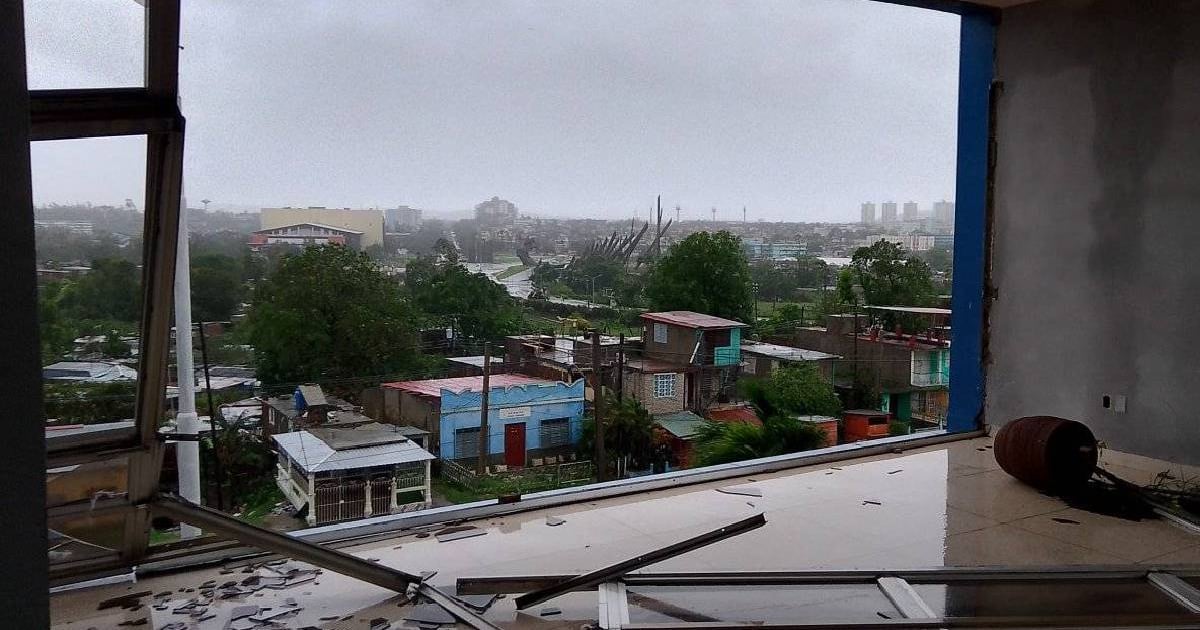
The National Electric System (SEN) faces one of its most critical moments of the year this Saturday, November 1, with widespread blackouts across the country and a particularly severe situation in eastern Cuba, where Hurricane Melissa left behind flooding, structural damage, and hundreds of communities without electricity.
According to official data, the maximum impact due to generation deficit reached 1,063 MW on Friday night at 7:20 PM, reported the Unión Eléctrica in a statement.
The system was unable to recover overnight, so the electricity service has been interrupted for more than 24 consecutive hours in large areas of the country.
In the provinces from Las Tunas to Guantánamo, the situation is particularly critical.
The prolonged blackouts are compounded by the devastation caused by Hurricane Melissa, which led to the overflowing of the Cauto River, road closures, landslides, and thousands of evacuees.
In places like Río Cauto, Guamo, and Bayamo, the lack of electricity complicates rescue operations and access to drinking water and food.
At 06:00 hours today, the availability of the SEN was just 1,360 MW, compared to a demand of 1,700 MW, resulting in a deficit of 330 MW. For the midday period, a shortfall of up to 500 MW is expected.
The main incidents are concentrated at Unit 2 of the Felton CTE and Unit 6 of the Diez de Octubre CTE, both out of service due to malfunctions.
In addition, other plants like Santa Cruz and Carlos Manuel de Céspedes (Cienfuegos) are halted for maintenance. In total, 524 MW of thermal capacity remain offline.
The crisis of fuel and lubricants further exacerbates the situation: 60 distributed generation plants are inactive, with a total of 546 MW idle due to this reason.
For the evening peak hours, the electrical system itself forecasts a deficit of 1,090 MW, which could result in power outages lasting over 10 hours in most provinces. The eastern regions will continue to be the most affected, as Hurricane Melissa left downed lines, damaged transformers, and flooded substations.
Despite the fact that the 21 photovoltaic solar parks installed in the west and center of the country contributed 1,770 MWh during the day, peaking at 354 MW, solar energy remains insufficient to meet the demand in a system reliant on oil and lacking stable energy reserves.
The combination of blackouts and natural disasters keeps eastern Cuba in a state of emergency. In Granma, Holguín, and Las Tunas, the rains have not stopped, and the lack of electricity prevents the refrigeration of food, communications, and medical services.
Meanwhile, in Río Cauto and Guamo, hundreds of people remain evacuated in makeshift shelters, without electricity or water, after being rescued by trains and boats amidst the flooding.
"The darkness and uncertainty are the worst," commented a neighbor from Bayamo on social media.
The government has not announced specific emergency measures for the restoration of electrical service in the eastern part of the country, as reports of total blackouts also persist in areas of Camagüey, Sancti Spíritus, and Villa Clara.
In a context of prolonged energy crisis, the current collapse of the SEN confirms the structural fragility of the Cuban electrical system, a result of decades of lack of investment, poor maintenance, and near-total dependence on fossil fuels.
Filed under: