
Related videos:
At nine months into his second term, President Donald Trump is facing his lowest point in foreign policy.
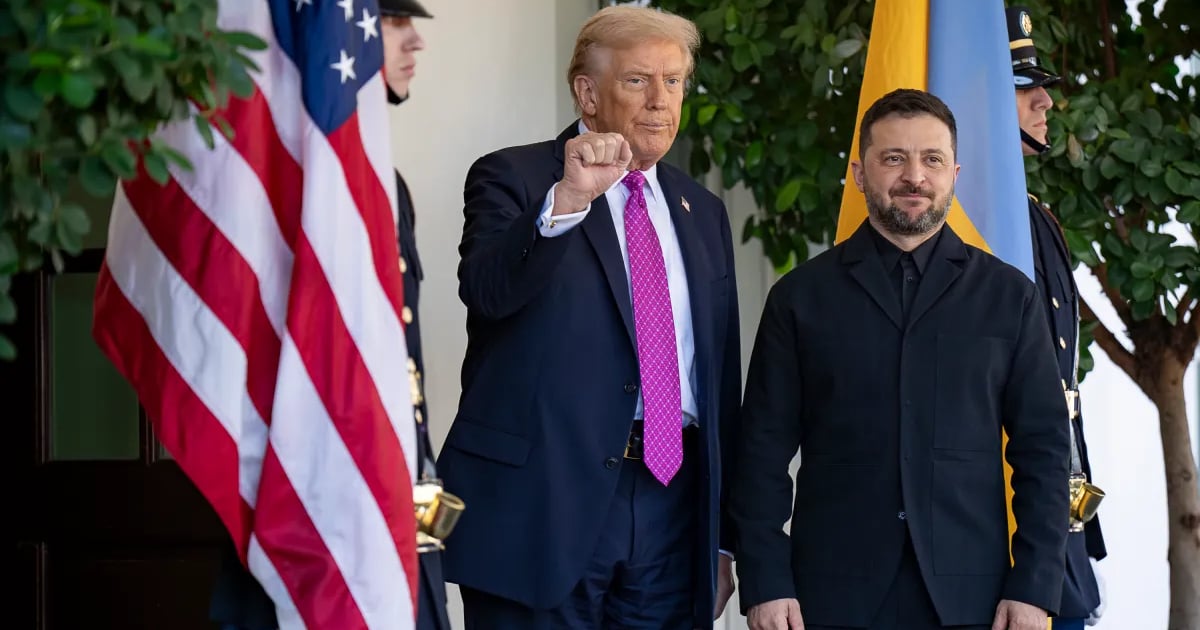
A joint survey by the Washington Post, ABC News, and Ipsos revealed that 46% of Americans believe that Trump has supported Russia too much in the war against Ukraine, while only 8% think he has done too little for Kiev.
The data confirms a trend supported by other studies. A survey from YouGov/The Economist conducted in February 2025 showed that 62% of Americans are more sympathetic towards Ukraine, compared to a mere 4% who feel the same for Russia.
And according to Reuters/Ipsos, 62% of citizens support imposing sanctions on countries that trade with Moscow, indicating a broad consensus in favor of isolating the Kremlin, even beyond the war.
Despite this, the Trump administration has reduced direct assistance to Ukraine and eased pressure on Russia, arguing that it seeks to “end the war through diplomatic means.”
But the result has been the opposite: 60% of respondents disapprove of their handling of the conflict, and 48% believe that the leadership of the United States in the world has weakened since their return to the White House.
In the Latin American context, Venezuela and Cuba are once again appearing on the public's radar.
More than half of Americans (54%) support Washington maintaining diplomatic pressure and sanctions against governments allied with Moscow, including that of Nicolás Maduro in Caracas and the Cuban regime.
However, a study by YouGov in September 2025 revealed that 53% oppose using military force for regime change in Venezuela, compared to only 18% who support it.
In other words, the American electorate wants to contain Russia's allied dictatorships, but without direct intervention.
In this context, Trump's strategy—more focused on agreements with authoritarian powers than on actively defending Ukraine or democracy in the region—seems to be undermining the country's confidence in its international leadership.
“Trump projects a forceful foreign policy without direction,” warned the analysis from Ipsos. “The country is tired of interventionism and the contradictions in its dealings with authoritarian regimes.”
With the legislative elections of 2026 on the horizon, the international front emerges as one of the president's greatest challenges, arriving with a 59% disapproval rate and a loyal Republican base that is becoming increasingly isolated in global opinion.
Filed under: