
Related videos:
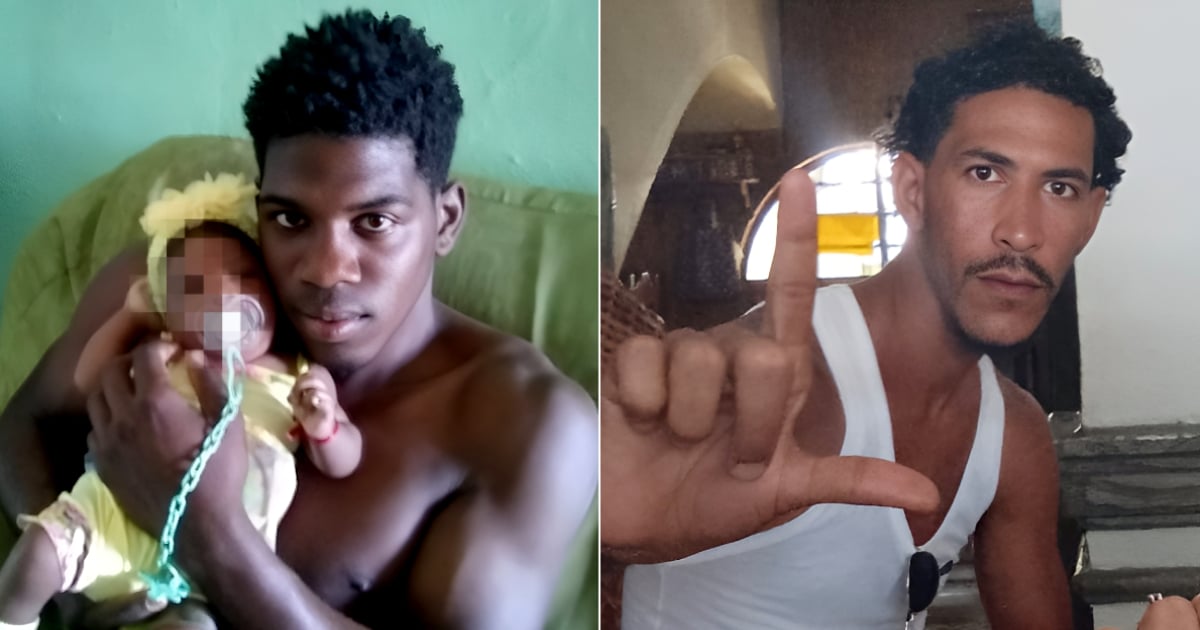
The Cuban regime has once again used forced transfer as a method of punishment against political prisoners, recently sending activists Ángel Cuza and Walnier Luis Aguilar from the Combinado del Este in Havana to prisons in Artemisa and Matanzas, respectively.
Both prisoners, known for their opposition to the government, were taken out of the Havana prison under the pretense of a supposed list of inmates planning to start a hunger strike, according to their relatives.
Wilber Aguilar, Walnier's father, explained that his son was transferred on Monday to the Agüica prison in Matanzas, nearly 200 kilometers from their home in the Cuban capital.
"This is an abuse," the father reported, denying that the young man had any intention of leading a strike. Aguilar is waiting for a call from his son from the high-security prison in Matanzas, where the opposition figure Félix Navarro is also serving a sentence.
For his part, activist Ángel Cuza was taken on Sunday to the Guanajay prison in the province of Artemisa, under the same arguments.
In an audio shared by journalist Yaima Pardo, Cuza reported that he is in a solitary confinement cell, without contact with other inmates. “Supposedly I have a visit tomorrow. We'll see what the situation is like here. I'm in a sealed cell all alone,” he recounted.
The transfer of both dissidents is part of a common practice of the Cuban regime, which distances political prisoners from their home provinces as an additional form of punishment for both them and their families, who face difficulties in visiting them.
Various human rights organizations have repeatedly denounced this tactic of prison repression, employed by the government of Miguel Díaz-Canel to break the resistance of political prisoners and isolate them from their family and social environment.
Transfer as Punishment: A Tactic of the Cuban Regime to Isolate Political Prisoners and Their Families
The transfer of political prisoners to prisons far from their families is a common practice in the Cuban penitentiary system, used by the regime as a means of repression and additional punishment against prisoners of conscience and their loved ones.
Independent media and human rights organizations have documented multiple cases where the aim of these measures is not logistical or judicial, but rather psychological and coercive, seeking to isolate the prisoners, limit family visits, and hinder communication with the outside world.
In June 2023, CiberCuba reported that five protesters from the 11J were taken out of the Agüica prison (Matanzas) without prior notice to their families or an official explanation, in what activists described as a punitive transfer.
Similarly, in May 2025, this outlet reported that the authorities denied the transfer of political prisoner Eider Frómeta to a prison in his home province, prolonging his isolation and complicating his family’s ability to visit him.
The current case of Walnier Luis Aguilar Rivera and Ángel Cuza fits this repressive pattern. Both were detained at the Combinado del Este in Havana and have recently been sent to prisons in Matanzas and Artemisa, respectively, under the pretext of an alleged hunger strike.
Walnier's father, Wilber Aguilar Bravo, has repeatedly denounced police harassment and the regime's reprisals against the family members of political prisoners.
The Inter-American Commission on Human Rights (IACHR) granted him precautionary measures in 2025, recognizing the seriousness of his situation. Aguilar Bravo, who has become a visible voice for the relatives of the 11J, has publicly denounced that "the dictatorship punishes even mothers and fathers for demanding justice."
For his part, Ángel Cuza has faced repeated detentions due to his civic work. In 2023, he was arrested after participating in a peaceful protest in Havana and remained disconnected from the outside world for several weeks in a punishment cell, according to reports from opposition organizations.
These cases reflect a common pattern of institutional cruelty: dispersing political prisoners to distant jails, isolating them, and emotionally wearing down their families—a policy that the Cuban authorities continue to uphold despite international condemnation.
Filed under: