
Related videos:
Cuba and South Africa have decided to strengthen their military cooperation despite the multiple scandals that have surrounded their joint projects for years, criticized in the African country for cost overruns, lack of transparency, and dubious benefits.
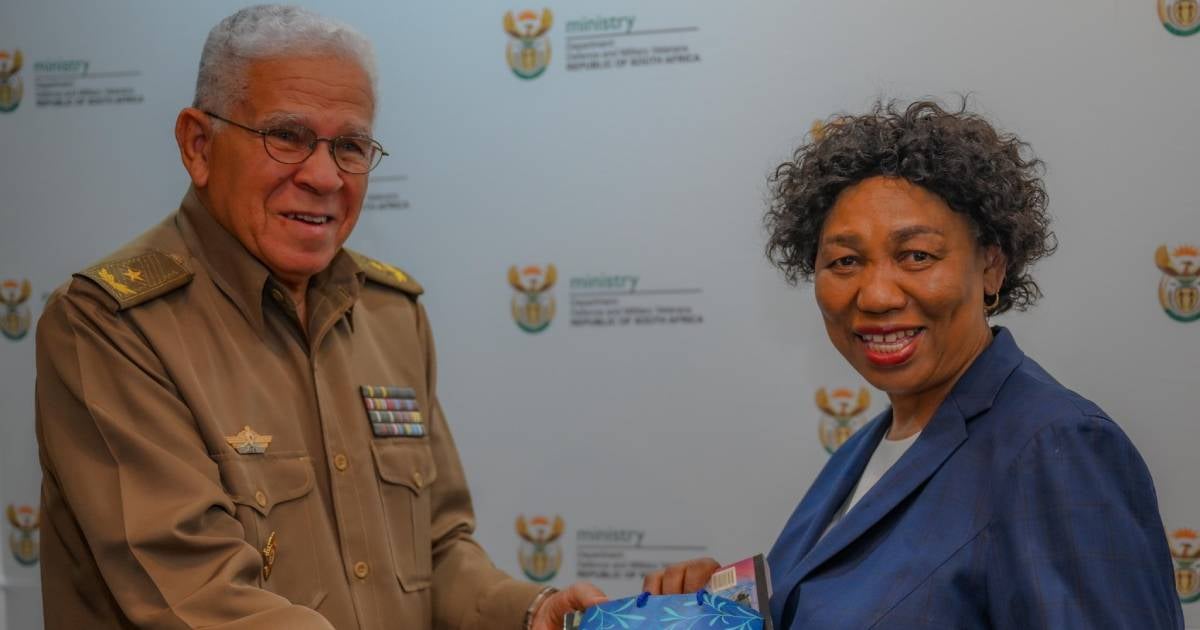
According to the specialized portal DefenceWeb, Brigadier General José A. García, the Cuban Deputy Director of Military Industry, recently visited the South African Ministry of Defence to meet with the Minister of Defence and Military Veterans, Angie Motshekga, accompanied by the Cuban ambassador Fakri Rodríguez Pinelo.
The meeting, held on October 31, focused on "strengthening defense relations" between the two countries through training programs, industrial collaboration, and technical support. "The commitment aims to advance the sustainability of the military industry and promote technological exchange," reported the statement cited by DefenceWeb.
However, behind the diplomacy and the speeches of cooperation lies a story marked by financial irregularities and questions about the actual usefulness of these agreements.
Projects under scrutiny
The military link between Pretoria and Havana dates back over a decade and reached its peak with the Thusano Project, through which Cuban technicians participated in the repair of nearly 11,000 South African military vehicles.
Although the Department of Defense defended the agreement by claiming it allowed for the recovery of "irreparable" equipment, a subsequent audit revealed that the project resulted in irregular spending of 1.7 billion rands (about 90 million dollars) due to violations of public procurement standards.
The Auditor General of South Africa concluded that the costs of Cuban personnel were up to 3.8 times higher than those of local technicians and that no cost-benefit analysis was conducted before signing the contracts.
Despite the criticisms, the program was followed by the Kgala Project, which, according to the South African government, will reduce spending by 82%, although it already faces new controversies.
In September, the opposition reported that the project will send 20 South African officers to Cuba for unaccredited training, at a cost of 28 million rands (1.5 million dollars).
"It is a waste that does not bring real benefits. Our soldiers can be trained in local academies with official certification," warned Deputy Chris Hattingh of the Democratic Alliance, in statements reported by DefenceWeb.
A questioned partner
Military cooperation with Havana has been defended by the African National Congress (ANC) as part of a "historic alliance of solidarity" that dates back to the apartheid era.
Nonetheless, South African public opinion views the relationship with growing skepticism, especially after it was revealed last July that a luxury charter flight valued at nearly 1.9 million dollars was used to transport more than 200 soldiers to Cuba, while soldiers in South Africa lack boots and uniforms.
For the Cuban regime, these agreements represent much more than cooperation; they are a vital source of foreign currency amidst its worst economic crisis in decades. Meanwhile, the population on the island faces daily blackouts, food shortages, and under-resourced hospitals.
Filed under: