
Related videos:
Moscow has moved from diplomacy to action. A senior official of the Russian parliament confirmed that Russia is already supplying weapons to the regime of Nicolás Maduro and warned that the United States “could face surprises” if it escalates its military presence in the Caribbean.
The deputy Aleksei Zhuravlev, vice president of the Defense Committee of the State Duma, stated to the media Gazeta.ru that Russia is actively sending arms to Venezuela and does not rule out strengthening that support with air defense systems and new-generation missiles.
"Russia is one of Venezuela's key technical-military partners. We supply virtually the entire spectrum of weaponry, from small arms to aviation," said Zhuravlev.
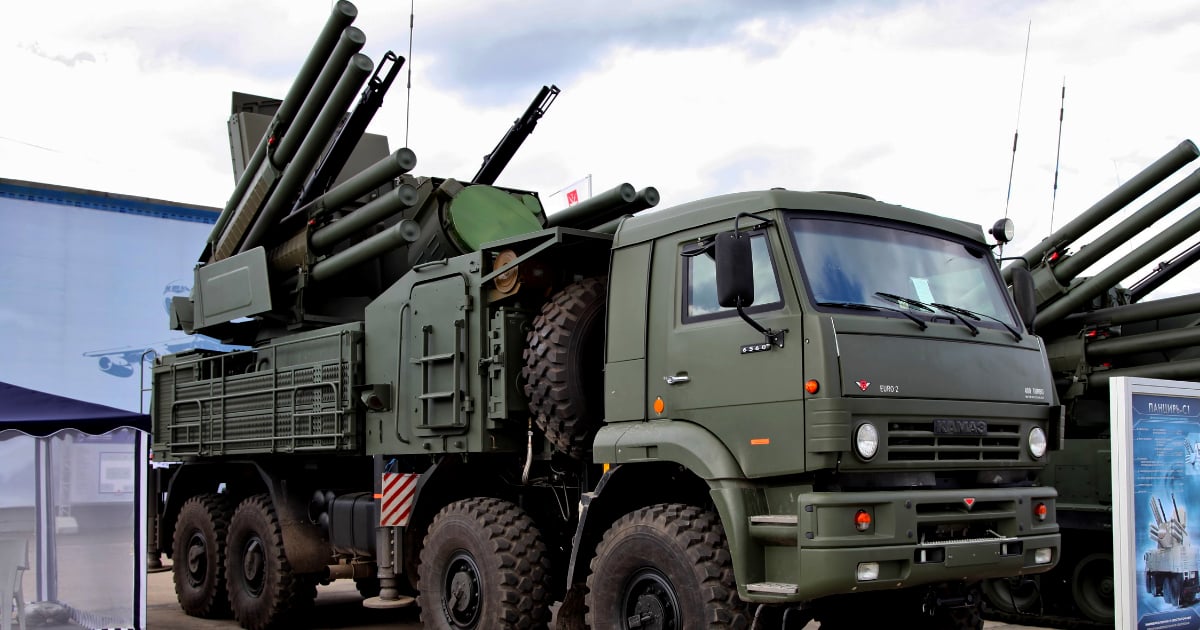
"The Su-30MK2 fighters are the backbone of their Air Force, and recently the Pantsir-S1 and Buk-M2E systems were delivered via Il-76 transport aircraft," he added.
The legislator emphasized that there are no international obstacles preventing the Kremlin from continuing to supply Caracas.
"Americans might be in for some surprises. There is no obligation that prohibits us from supplying a friendly country with new developments like the Oreshnik or Kalibr missiles," he stated.
The statements confirm what The Washington Post revealed: Maduro requested urgent military assistance from Russia, China, and Iran, asking for missiles, radars, drones, and spare parts for his air fleet.
According to the newspaper, the Venezuelan leader sent a personal letter to Vladimir Putin in which he requested a “three-year financing plan” with the state corporation Rostec and warned of a “direct threat to Venezuelan sovereignty” due to the U.S. naval presence in the Caribbean.
The Kremlin spokesperson, Dmitri Peskov, admitted that Moscow maintains "regular contacts with its Venezuelan friends," while the Foreign Ministry promised to "respond appropriately to emerging threats."
Maduro's Arsenal: Between Propaganda and Reality
According to Russian and Western sources, the military material delivered or requested includes three main systems:
- Pantsir-S1: mobile short-range air defense battery with automatic cannons and surface-to-air missiles capable of intercepting drones, helicopters, or cruise missiles at a maximum distance of 20 kilometers. Although effective in low-intensity conflicts, the system has shown vulnerabilities against coordinated attacks with guided missiles and kamikaze drones, as evidenced in Syria and Libya.
- Buk-M2E: medium-range air defense system (up to 45 km) designed to protect strategic facilities. Its technology, developed in the 1990s, has been surpassed by NATO's electronic defenses and precision missiles. Nevertheless, in the hands of experienced operators, it can still pose a challenge to low-altitude air incursions.
- S-300VM (Antei-2500): the most advanced of the three, capable of intercepting ballistic missiles at distances of over 200 km. However, the Venezuelan units date back to 2013, and their maintenance has been irregular due to a lack of Russian technicians and spare parts.
Russia also mentioned the possible deployment of Oreshnik missiles—an experimental short-range tactical version—and Kalibr missiles, used by Moscow in the war in Ukraine, with ranges of up to 2,000 km.
Experts consider it unlikely that these will be transferred, as Venezuela lacks the necessary infrastructure and advanced radars to operate them effectively.
In comparison, the United States has deployed F-35B fighter jets, Reaper drones, electronic warfare systems, and Tomahawk missiles with a range of 1,600 km in the Caribbean, along with the USS Gerald Ford aircraft carrier, the most advanced in the world.
In light of that capacity, the Russian systems in Venezuela are more of a political gesture than a real threat.
A Cold War battleground in the Caribbean
Despite the limitations, Russian support serves a strategic goal: to force Washington to divide its attention between Europe and Latin America, amid the ongoing war in Ukraine.
While Trump promises that "Maduro's days are numbered" and Congressman Carlos Giménez asserts that "he won't make it to Christmas," Putin escalates hemispheric tension with a high-risk maneuver.
The move recalls the Russian backing of Syrian Bashar al-Assad, which ultimately left devastation and chaos in the country, culminating in the dictator and his family fleeing to Moscow.
Now, Maduro clings to Putin as his last lifeline, although his survival — like Assad's — may depend less on Russian support and more on how much the United States is willing to tolerate.
Filed under: