
Related videos:
Amid the devastation and institutional neglect following the passage of Hurricane Melissa, a wave of citizen solidarity has emerged in eastern Cuba.
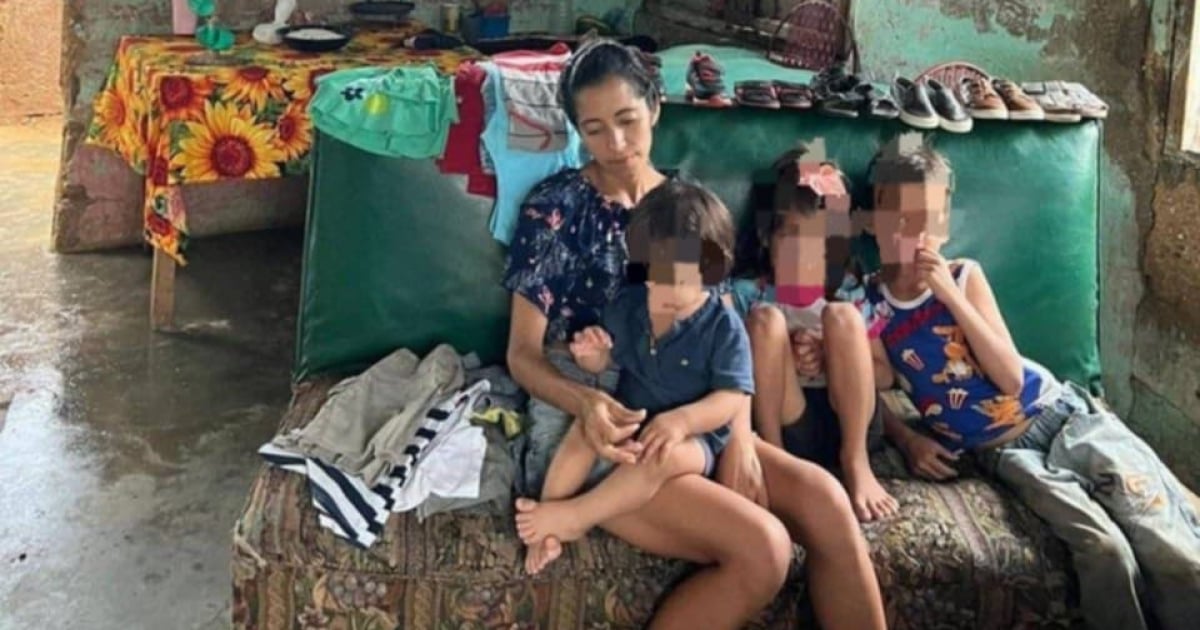
Neighbors, emigrants, and social media users are organizing on their own to help families who have lost everything, including two young mothers from San Germán in the province of Holguín, whose stories reflect both the devastation and the precarious living conditions faced by much of the country.
In the Facebook group "San Germán-Ofertas," user Hassan Lahera expressed gratitude for the donations received for Yarima Álvarez, a mother of three children from the Felicia 1 community.
"A million thanks to the people who donated to the girl from Felicia 1. She sends them thousands of blessings. Anyone who wants to help can message me privately; any support will be appreciated due to her critical needs," she expressed.
The photos show the aid sent, which includes both food and clothing and shoes.
The comments on their post reflect both the empathy of the people and the frustration over the lack of official responses.
"The government needs to build the house; it is in very poor condition," wrote a resident of the municipality. Another user added, "In these times, what makes a difference is this."
But perhaps the most heartbreaking case is that of Rachel Torres Mas, a mother of two young children, whose home was reduced to rubble after the river flooding.
In the Facebook group "Revolico San Germán", Lahera provided details about the family's situation.
"This young mother, with her two small children, was left on the street. Her home and her few belongings were destroyed by the cyclone and the flooding," he detailed.
"They live in the Sain countryside," she specified.
The published photos depict a bleak landscape: soaked mattresses, broken furniture, and collapsed walls and ceilings.
It is overwhelming to see Rachel and her children trying to salvage their belongings from the ruins, like the school books that the little girl placed in the sun in an attempt to save them.
In the comments, dozens of people offer clothing, food, and money, trying to provide with solidarity what the State has not been able or willing to address.
"It is evident that they have nothing, not even a home. The first thing is a room, for God's sake!"; "These people need a home, not just 10,000 pesos and then be forgotten"; and "What a sad reality for the ordinary Cuban, how do they recover everything they've acquired through hard work?" were some of the comments.
The scenes in Holguín are just a glimpse of the humanitarian crisis that thousands of families are experiencing in the eastern part of the country.
The torrential rains swept through entire communities in San Germán, Báguanos, Contramaestre, and Velasco, where many homes were submerged and others became uninhabitable.
A few days ago, a video shared by Martí Noticias went viral, showing a woman crying in front of her flooded home while a relative comforted her with a phrase that became a symbol of hope: "Don't cry, we are alive".
The scene, as ordinary as it was painful, encapsulated the tragedy of a community facing the onslaught of cyclones without resources, infrastructure, or effective state support.
While the authorities "assess the damages" and promise aid that rarely arrives, it is the citizens who rise up to help their neighbors.
In Havana, projects like Aliento de Vida and Palomas gather food and medicine to send to the east, while Cubans in exile organize fundraising campaigns from Miami.
The official response, however, is limited to generic statements and vague promises. There is no transparency in the delivery of international aid, nor are there urgent solutions for those who sleep on the dirt or under makeshift roofs.
Instead, it is the Cubans themselves—often also impoverished—who bear the responsibility of sustaining the country through empathy and self-management.
Hurricane Melissa has left a trail of destruction that the government is neither able to nor seemingly willing to fully acknowledge.
But in the midst of pain, the people show that solidarity among Cubans remains stronger than any storm.
Filed under: