
Related videos:
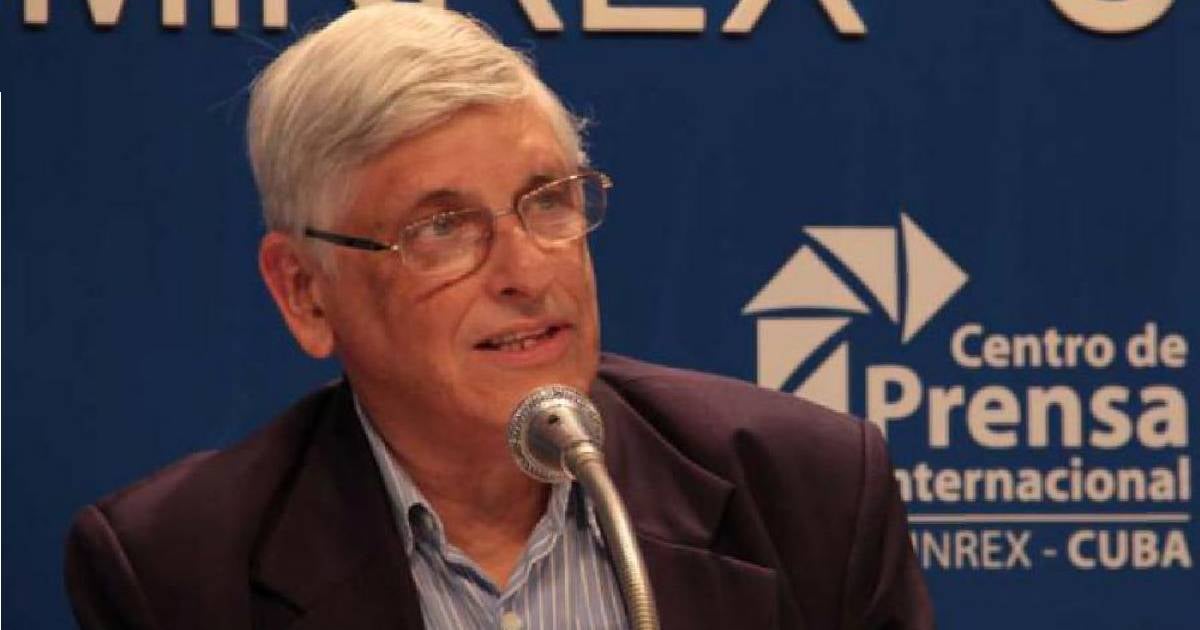
The Ministry of Foreign Affairs of Peru announced on its account on X this Friday that the ambassador of Cuba, Carlos “el Gallo” Zamora, “has completed his duties and left the country permanently”, after being summoned by Deputy Foreign Minister Félix Denegri Boza on October 28 to discuss the activities conducted during his tenure.
The diplomat's departure comes amid regional political and diplomatic tensions, following Mexico's request for a safe conduct pass for Betssy Chávez, the former prime minister during the term of the ousted leftist president Pedro Castillo, who is being prosecuted in Peru for alleged rebellion.
In the official statement, the Foreign Ministry reported that, after a legal analysis and consultations with experts, the Government believes that the practice of diplomatic asylum has been "distorted" by being used to protect individuals accused of common crimes.
According to the document, the Peruvian government described the interpretation that allows common crimes to be classified as political persecutions as an "abuse" of the Caracas Convention of 1954, arguing that it distorts the original spirit of the agreement.
"The right to asylum has been distorted by being granted to those who do not suffer persecution in democratic states," states the text released by the Foreign Ministry.
The Peruvian government also announced that it will present a proposal to the Organization of American States (OAS) to modify the Caracas Convention, in order to prevent its "misinterpretation" and ensure that "the rule of law is respected by all inhabitants of the Americas."
Although the statement does not specify the reasons for the departure of the Cuban ambassador, the reference to his “activities” suggests that the Peruvian government questioned the performance of the diplomatic mission during its time in Lima.
Zamora, who presented his credentials as ambassador to Peru at the end of 2021, left the country amid a growing atmosphere of tension between Lima, Mexico City, and Havana.
The Peruvian Foreign Ministry concluded that the decisions made will be communicated "in a timely manner," while consultations with other OAS member countries take place.
Meanwhile, the departure of the Cuban representative marks a new episode of diplomatic tensions in the region, where discussions about the use of political asylum are once again taking center stage.
According to the Peruvian newspaper El Comercio, Zamora began his tenure as Cuba's ambassador in Ecuador in 1984. He later held diplomatic positions in Panama (1998), Brazil (2009), and El Salvador (2017-2018).
In March 2019, he presented his credentials to then-president Evo Morales as the new ambassador to Bolivia.
On its part, the newspaper Perú 21 stated that the diplomat began his career in Cuban Intelligence in 1968. Since then, his various diplomatic positions may have served as a cover or façade for his actual activities.
This dual role was confirmed by the former Cuban agent Enrique García in statements to Perú 21, who stated: “His colleagues nicknamed him 'the Rooster'. I worked alongside his wife Maura Juampere; both hold the rank of colonels within the Cuban Intelligence Directorate.”
More recently, in August of this year, retired Navy officers in Peru issued a public letter directly naming Carlos Zamora Rodríguez as an intelligence operator and demanded his immediate expulsion from the country, viewing him as a threat to national security, especially in light of the 2026 elections.
The Government of Mexico, through the Secretariat of Foreign Affairs (SRE), rejected the day before the declaration of “persona non grata” issued by the Congress of Peru against President Claudia Sheinbaum Pardo.
Mexico argued that the decision of the Peruvian parliament is based on "false claims" and categorically denied that the Mexican president has interfered in the internal affairs of Peru.
The Mexican Foreign Ministry reaffirmed that the granting of political asylum to former Prime Minister Chávez was done in "strict adherence to international law" and the principles of Mexico's foreign policy.
The SRE reminded that political asylum is a humanitarian and peaceful act, according to the UN.
This incident escalates the diplomatic tensions between both countries, partners in the Pacific Alliance.
The disputes arose from the support that former president Andrés Manuel López Obrador provided to Pedro Castillo, who has been detained since December 2022.
The situation became even more strained with the break in diplomatic relations by the interim government of Peru, led by José Jerí, earlier this week.
Filed under: