
Related videos:
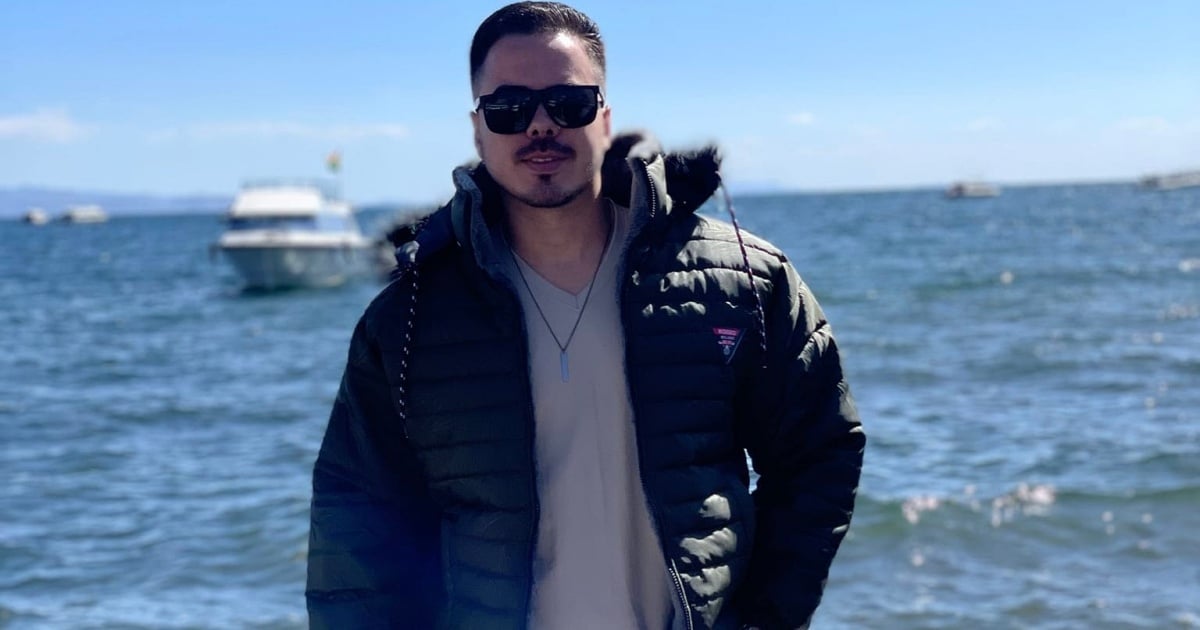
The Cuban activist Magdiel Jorge Castro urged the new president of Bolivia, Rodrigo Paz Pereira, to review his case of expulsion from the country, ordered in December 2022 during the government of former president Luis Arce Catacora and carried out by then Minister of Government, Eduardo del Castillo.
In an open letter published this Sunday from Madrid, Magdiel Jorge Castro recalled on his X profile that he was expelled from Bolivian territory despite having legal residency in the country and without any judicial process or accusation against him.
He described the event as a political decision made under external pressure, which violated due process, freedom of expression, and the most fundamental principles of the rule of law.
The communicator explained that on December 19, 2022, the General Directorate of Migration notified him of Mandatory Exit Resolution No. SCD-562/22, which ordered his expulsion and a three-year entry ban.
According to the document, the measure was based on an alleged “disturbance of public order” arising from their opinions on social media, without describing any facts or citing evidence.
Castro also noted that the resolution invoked non-existent sections of Article 38 of Law 370 on Migration, as well as Article 37 and Supreme Decrees 1923 and 4574, which he emphasizes are "procedural, not causal."
On December 21, he filed a Motion for Revocation in Santa Cruz de la Sierra, arguing the lack of grounds, absolute lack of motivation, and violation of Articles 13, 14, 21, and 106 of the Political Constitution of the State, in addition to the ruling SCP 0212/2014-S3, which requires justification for all administrative acts.
In his statement, he asserted that there was never any disruption of public order, that he had no prior records or proceedings, and that his publications "pertained to the Cuban reality, not to Bolivian internal politics."
The activist, one of the most critical voices of the Cuban regime from exile, indicated that the authority accepted the appeal and suspended the measure, acknowledging the lack of support.
However, eight days later, on December 29, 2022, a new resolution (SCD-589/22) was issued, signed in Santa Cruz, which reinstated the expulsion and the same prohibition of entry, without any new facts or additional justification.
"This is how a contradictory and illegal act was consummated, executed under the instruction of then-President Luis Arce Catacora and carried out by Minister Eduardo del Castillo," he wrote.
The Cuban communicator also linked his case to the ALBA-TCP Summit held in Havana, which was attended by Arce and Miguel Díaz-Canel.
He stated that his expulsion “was in response to a context of political alignment with the Cuban regime”, which identifies him as a critical journalist and opponent.
Castro believed that turning Bolivia into an echo of foreign censorship was a blow to press freedom and to the country's institutional sovereignty, which has historically been open and pluralistic.
He added that the Ombudsman, Amnesty International, and other human rights organizations warned about the arbitrariness of the case, pointing out that it posed a dangerous precedent for foreign journalists and activists.
The activist, who received threats from the Bolivian government, recalled that the three-year entry ban will expire in December 2025, and clarified that his request is not aimed at material restitution, but rather “an act of symbolic and moral reparation.”
"My expulsion, Mr. President, not only affected me personally, but also impacted the image and institutional prestige of Bolivia by putting its migration apparatus at the service of a political decision from a foreign government," he stated.
In his letter, he requested that the current administration publicly acknowledge the arbitrariness of that measure and order an official review of resolutions SCD-562/22 and SCD-589/22, not as a formal procedure, but as "a gesture of justice that reaffirms the commitment of the Bolivian State to freedom of expression, due process, and human dignity."
He remembered that he lived in Bolivia with legal residency, worked, and was welcomed by a generous community.
"This request arises from respect, gratitude, and love for a country I have always admired, and I trust it will know how to rectify what should never have happened," she expressed.
The activist, currently residing in Spain, also stated that a gesture of acknowledgment and rectification from the Bolivian government would be “a hopeful sign for the Cuban community in Bolivia, which seeks refuge from dictatorships, and for all journalists who still believe in the power of truth.”
He closed his letter wishing success to the new Bolivian leader and reiterating his confidence that the review of his case "will honor the democratic memory of the country and strengthen its moral leadership in the region."
Filed under: