
Related videos:
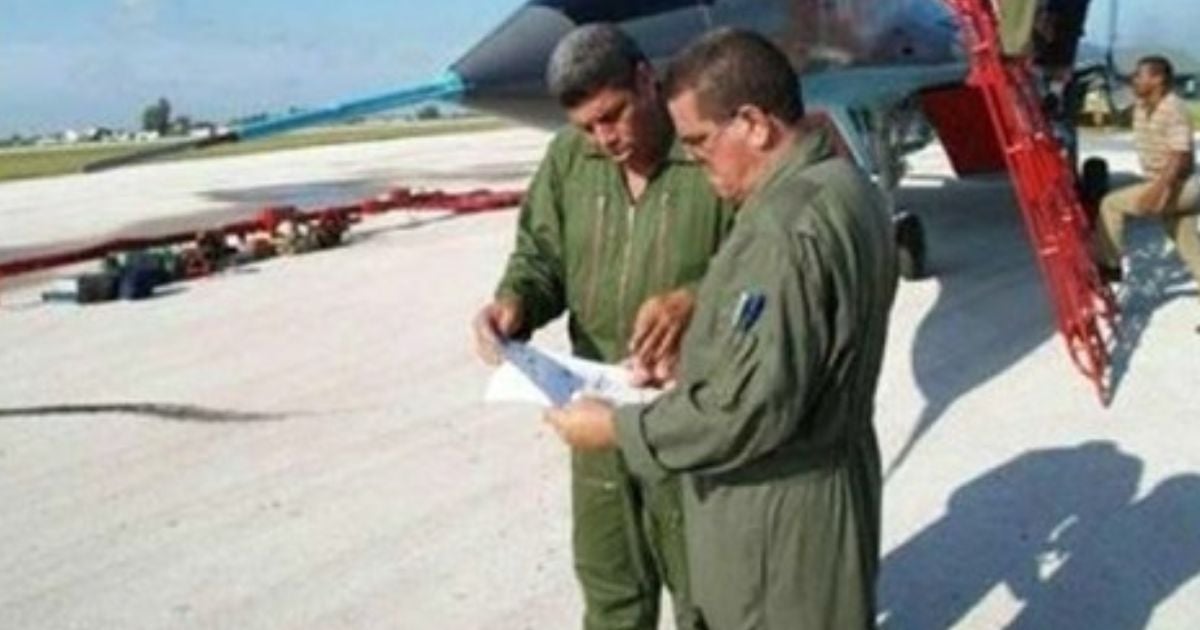
U.S. authorities reported on Wednesday the arrest and formal charges against 64-year-old Cuban Luis Raúl González-Pardo Rodríguez, a former member of the Revolutionary Air Force, for alleged immigration fraud and falsification of federal documents.
The accusation was presented by the prosecutors of the Middle and Southern Districts of Florida, according to a statement from the United States Department of Justice (DOJ).
According to the record, González-Pardo Rodríguez submitted an I-485 form to the Department of Homeland Security on April 20, 2025, requesting permanent residency.
In that application, he allegedly concealed his military past and falsely stated that he had never received weapons training or been part of any military or police force, despite having served for nearly three decades in the Cuban Air Force and Air Defense from 1980 to 2009.
The Deputy Attorney General, Pamela Bondi, stated that “this man's past as a military pilot for the evil Castro regime, which has caused so much suffering to the Cuban people, should have been a key factor in his immigration file.”
He added that the Department of Justice will rigorously pursue anyone who lies about their past to benefit from the U.S. immigration system.
The statement indicates that the accused could face up to 15 years in federal prison if found guilty of all charges, which include fraud and the misuse of visas, permits, and other documents, as well as making false statements to a federal agency.
The investigation was led by the FBI office in Miami, with support from the Jacksonville field offices, U.S. Citizenship and Immigration Services (USCIS), Immigration and Customs Enforcement (ICE), and the Diplomatic Security Service (DSS).
The case will be prosecuted by attorneys Kelly S. Milliron and Abbie D. Waxman in the federal courts of Florida.
The Department of Justice reminded that a formal accusation does not imply guilt and that the accused enjoys the presumption of innocence until proven otherwise.
Who is Luis Raúl González-Pardo Rodríguez?
The retired colonel Luis Raúl González-Pardo Rodríguez, a former pilot of the Anti-Aircraft Defense and Revolutionary Air Force, was identified for his alleged involvement in the downing of the Brothers to the Rescue planes, which occurred in 1996 over international waters and resulted in the deaths of four Cuban-American pilots.
After his retirement, he held positions in the Cuban civil aviation, including that of deputy head of Terminal 4 at José Martí International Airport, known as the International Cargo Terminal, which operated alongside foreign companies.
In 2024, it was revealed that González-Pardo was residing in Jacksonville, Florida, where he reportedly arrived under the humanitarian parole approved by the administration of then-President Joe Biden.
According to various sources, he was working in a bakery while waiting to reunite with his wife, still in Cuba, and his case sparked criticism from the Cuban exile community and from lawmakers who warned about the entry into the United States of former repressors of the regime.
In 2024, it was reported that Cuban exile leaders in Miami subsequently demanded an investigation into the former pilot and urged Florida authorities to review the evidence of his alleged involvement in the downing.
During a conference at the American Museum of the Cuban Diaspora, family members of the victims and activists such as Nelson Morales, Marcell Felipe, and Alex Rizo called for the opening of a formal case.
According to those sources, González-Pardo is believed to have piloted a MiG-29A that took part in the pursuit of the plane belonging to the organization's leader, José Basulto, alongside pilot Raúl Simanca Cárdenas.
Although he is not attributed with firing the missiles, he was identified as part of the operation under the orders of Rubén Martínez Puente, then commander of the Cuban air force.
In 2024, the exile community kept alive the call for justice for the victims of the 1996 airstrike, while the name González-Pardo reemerged in a legal case in the United States concerning immigration fraud and document forgery.
Filed under: