
Related videos:
Independent journalist José Raúl Gallego ignited social media with a critical message about the recent coverage by the newspaper Granma, which promotes Havana as a "smart and sustainable city."
The post on Facebook by Gallego directly questions the contrast between the official fantasy and the harsh reality that the people of Havana experience.
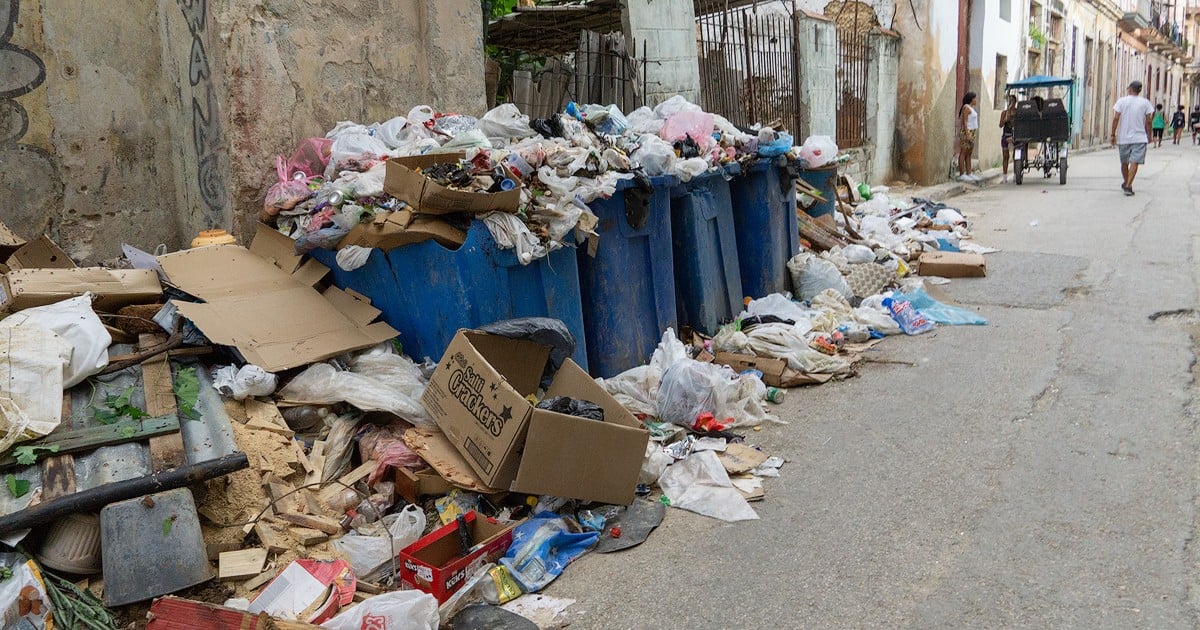
"Smart and sustainable city when they are unable to collect the garbage, ensure minimally efficient transportation, or provide paracetamol," wrote Gallego.
According to him, behind the 'joke' lies a strategy of the regime to continue "sucking" resources from international organizations and the European Union, which allocate money and infrastructure for new development projects.
"Then they present as results a QR code on a wall and a PowerPoint, while the country continues to fall apart and its people are dying," he emphasized.
Her post received hundreds of supportive comments, in which internet users described a devastating urban landscape: streets filled with trash and sewage leaks, houses on the verge of collapsing, hospitals lacking basic supplies, and a city marked by structural neglect and chronic scarcity.
The activist Lara Crofs commented:
"Seeing this makes me feel like I'm in a parallel world… meanwhile, apathy, plague, infections, and a circus without bread advance like a dark shadow over the city."
Other users were not far behind, expressing criticism filled with irony and indignation.
"A city as smart as President Limonardo, Doctor of Sciences," one joked.
"Granma's jokes are one of a kind! They could easily put on a show at a theater to make us die laughing," added lawyer Manuel Viera.
"Nowadays, Granma holds the award for Meme of the Year and Best Virtual Show on social media," wrote another.
The comments reflect the inability to meet "smart city" standards due to infrastructure issues.
"Yes, of course, and with what internet? And the electricity? And the infrastructure? For them, being smart is putting a TV on the street and a QR code that will probably only work for the first week. These people are either sick or smoking something truly powerful," stated a professor.
Dissatisfaction is also coming from the diaspora.
"They mock the Cubans. Díaz-Canel claims not to have a bed to give to a lady affected by Hurricane Melissa, but he does have resources to turn Havana, which is crumbling day by day, into a smart city. He himself is not smart; if he were, he would have already resigned," commented a Cuban from Las Vegas.
The article from Granma that inspired the criticisms argues that Havana is moving towards a model of smart and sustainable city, through the integration of digital tools, efficient resource management, and citizen participation, in which technology is harnessed for the benefit of people and the preservation of heritage.
However, the comments from Gallego and other users highlight that the "smart city" promoted by the official media does not reflect the daily reality of the city, where a lack of basic services, health insecurity, and urban precariousness condemn the population to survive in a deteriorated environment.
The reaction from the digital community reflects the gap between the official narrative, which promotes symbolic technological achievements, and the real experiences of Cubans, who question the use of façade projects as a tool to attract external resources.
Meanwhile, the people continue to confront the collapse of infrastructure, shortages, and government neglect.
Filed under: