
Related videos:
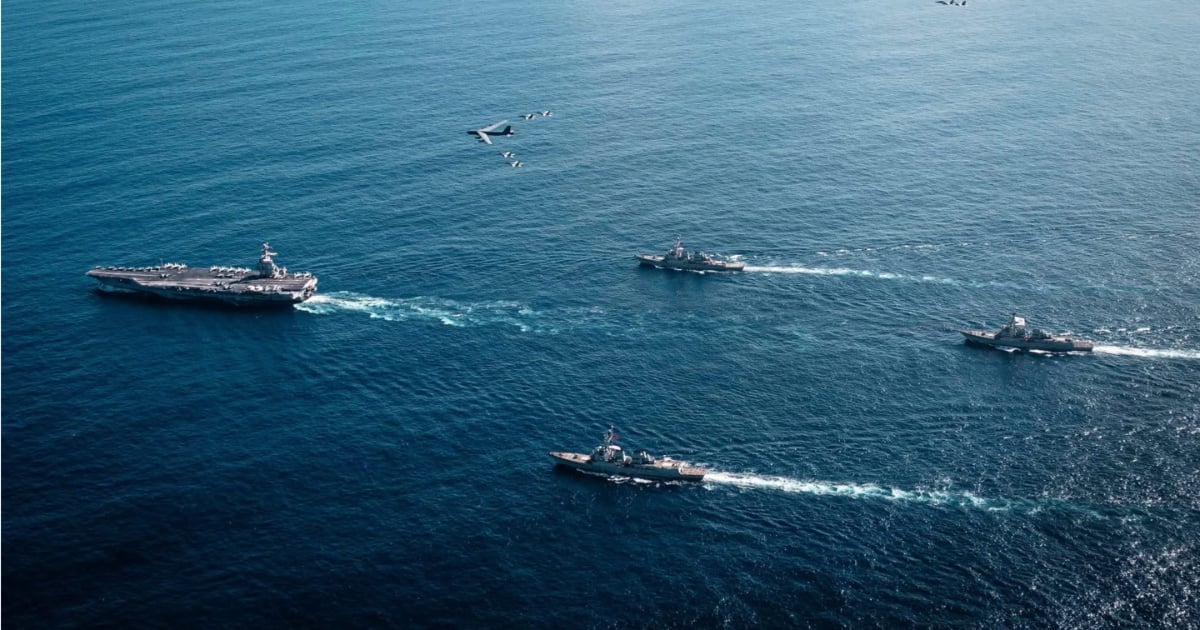
The USS Gerald R. Ford, the largest aircraft carrier in the United States and the world, entered Caribbean waters this Sunday with the aim of “combating transnational threats” in the region, against a backdrop of increasing pressure from Washington on Venezuela, according to the head of the U.S. Southern Command, Admiral Alvin Holsey.
According to the statement issued by the SouthCom portal, Holsey asserted that, “through a strong commitment and the precise use of our capabilities, we are ready to combat the transnational threats that seek to destabilize our region.”
The deployment of the USS Gerald R. Ford strike group responds to orders from U.S. Secretary of Defense Pete Hegseth and is in line with President Donald Trump's directives to dismantle transnational criminal organizations and counter narcoterrorists, arguing to defend the security of U.S. territory and the Western Hemisphere.
Holsey described the operation as a “critical step” to strengthen the ability of the United States to protect the security of the Western Hemisphere and the country itself, through an enhanced military presence in the area of responsibility of Southern Command.
The aircraft carrier will accompany Expeditionary Unit 22 aboard the amphibious ship USS Iwo Jima, as part of the military operation known as "Southern Spear," a campaign linked to Washington's fight against drug trafficking originating in Latin America and taking place amidst rising tensions with the Venezuelan government.
The USS Gerald R. Ford is described by the U.S. Navy as the “most capable, versatile, and lethal combat platform in the world.”
Can operate with about 4,500 crew members and embark up to 70 aircraft, including fighters, helicopters, and other aerial vehicles.
With more than 335 meters in length and nuclear propulsion, the aircraft carrier features an electromagnetic catapult system for launching aircraft, advanced radars, and reactors capable of keeping the engines running continuously for extended periods.
During its testing period in 2021, the Gerald R. Ford was subjected to three high-magnitude underwater explosions, known as “ship-level shock tests,” designed to certify its ability to withstand extreme impacts and continue operating in combat conditions.
The deployment of the Ford in the Caribbean occurs alongside U.S. naval movements near Trinidad and Tobago and in a context of increased friction with Caracas.
Since the beginning of the operation, U.S. forces have destroyed 20 vessels and taken out 75 alleged narcoterrorists in actions in the Caribbean and the Pacific, as part of what Washington describes as a "direct offensive against Latin American cartels."
The Pentagon spokesperson, Sean Parnell, explained that the deployment aims to “detect, monitor, and disrupt illicit activities that affect the stability of the region”.
The Gerald R. Ford is accompanied by eight warships, a nuclear submarine, and F-35 aircraft, making its presence the largest display of American military power in the area since the 2000s.
Meanwhile, the regime of Nicolás Maduro announced a "massive deployment" of troops, aircraft, and civilian militia to respond to what it termed an "imperial threat." Caracas insists it will defend "every inch of Venezuelan territory" against a possible foreign incursion.
Filed under: