
Related videos:
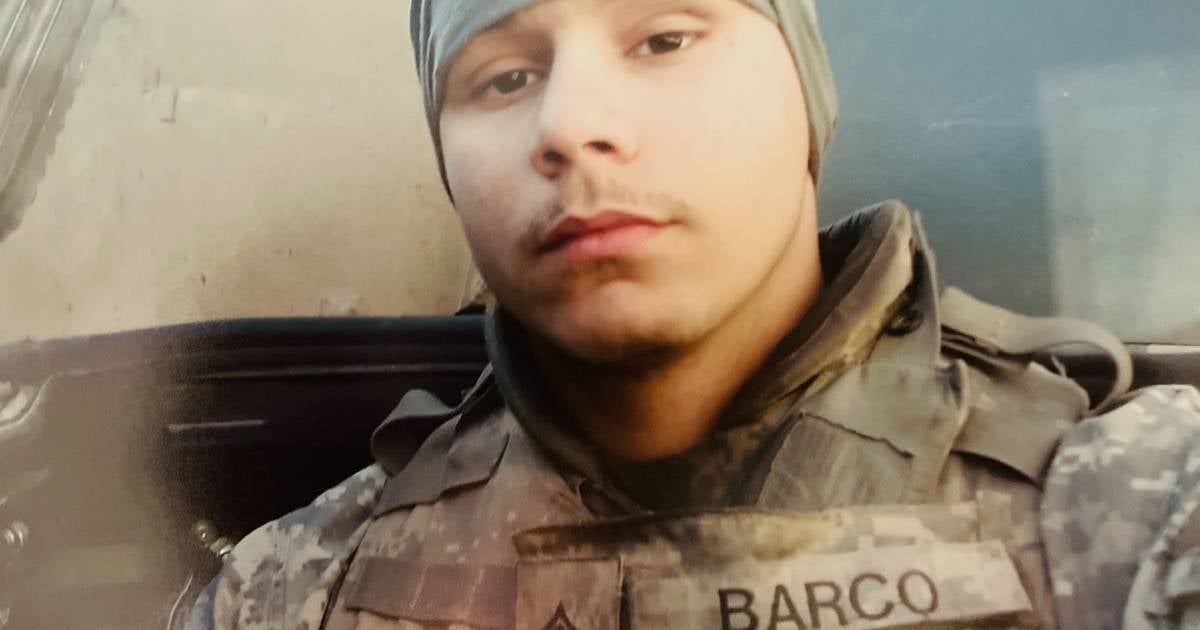
The time leading up to the U.S. Immigration and Customs Enforcement (ICE) deporting José Barco-Chirino, a 39-year-old sergeant, reveals an even darker, more shattered, and unjust story than what the Cuban public already knew.
Military documents, testimonies from doctors, statements from his wife, and press reports confirm that the wounded veteran in Iraq, son of Cuban exiles and awarded a Purple Heart, should never have been sent back into combat, never received proper treatment for his injuries, and the State was the one who lost his citizenship application.
"It is the story of multiple failures of the U.S. military with one of its own soldiers, of a man who fought and shed his blood for the United States believing he was earning the right to be called an American, only to find himself in a deportation process, and of the tragic confluence of a new era of immigration policy and an unfortunate coincidence at the time of parole," said to NPR Anna Stout, former mayor of Grand Junction, Colorado.
"Cuba": the nickname of the veteran in detention
According to a report from NPR published in April, inside the ICE detention center in Texas, José Barco was neither “the hero” nor “the Purple Heart recipient.” He was simply known as “Cuba.”
Although he was born in Venezuela, Barco is a direct product of the Cuban exile. His father was a political prisoner in Cuba, incarcerated for opposing the regime. After his release from prison, the family first fled to Venezuela, where José was born, and then sought political asylum in the United States.
He was only four years old when he arrived in the country where he would grow up, study, and eventually serve as a soldier.
Throughout his childhood, he heard the story of the Cuban exile in his own home. That's why, when he was detained by ICE, other immigrants recognized him as someone who spoke with a Caribbean accent; the son of Cuban dissidents, raised in the United States.
That origin, ironically, ended up worsening his tragedy. When ICE attempted to deport him to Venezuela, the Venezuelan authorities rejected him. According to a report by NPR, they doubted his birth certificate, stating that it “sounded Cuban” and that his story did not match that of a Venezuelan.
One of the officials told him: “It’s not good for you to be here. You don't belong here. You have no one,” highlights NPR.
On that topic, the veteran told CNN: “My service, my sacrifice, my spilled blood did not matter. I am basically a man without a country.”
A hero in Iraq whom the Army did not protect
The military history of José Barco is extensively documented by Frontline (PBS), which aired a report in 2010 about his unit titled "The Wounded Platoon”. He was deployed to Iraq on two occasions, participated in intense combat, and in 2004, survived a car bomb attack that threw him against a wall while his comrades were trapped under a burning Humvee.
The military doctor Ryan Krebbs stated to NPR: “They were unconscious when he pulled them out. The boat was on fire after lifting the vehicle.”
For that action, he received the Purple Heart, a military decoration from the United States Armed Forces awarded to members who are wounded or killed in combat against enemy forces. However, the most critical part occurred afterward when his traumatic brain injury went undiagnosed and untreated.
Frontline confirmed that there is no evidence in their initial medical records indicating that he became unconscious or that a TBI was suspected, despite the fact that months later he suffered from insomnia, nightmares, irritability, and hearing loss.
The Army sent him back to combat despite his injuries
His wife, Tia de Barco, explained exclusively to Fuser News that nowadays the Army does not allow a soldier with injuries of that magnitude to return to combat: “That is now prohibited. But they did send José back.”
Barco returned to Iraq in 2006, during one of the years of most intense violence.
Upon returning to the United States, he was prescribed Ambien, a medication that can cause episodes of sleepwalking and automatic behaviors. However, two weeks before the incident that would land him in prison, his medication was changed, as his wife explained.
"You are at war for four years, you come back, they change your medications, and you find yourself in a discussion where you are being attacked… you can feel like you are back in combat," he noted.
That 2008 incident, in which he injured a pregnant young woman, resulted in a 15-year sentence. The day he was released from prison, ICE was already waiting for him.
An important piece of information was confirmed by NPR, when they reported that their commander in Iraq, Lieutenant Colonel Michael Hutchinson, certified that Barco completed his naturalization application in 2006 and that he was fully eligible.
In her memo, cited by NPR, Hutchinson wrote: “Its approval should have occurred at the end of 2006. The package was lost.”
Years later, he attempted to apply for citizenship again, but without success, as documented by CNN, Arizona Mirror, and NewsNation.
A campaign on GoFundMe has also become an essential document for understanding the magnitude of his case. In addition to raising funds, it serves as a public denunciation of the way the United States treated a soldier who bled for that country.
The campaign highlights the Cuban origins of his family and the symbolism of his military service: “Sergeant Barco did what most Americans do not, and he did it because this country gave him and his family a home when they fled the Cuban regime.”
He is seeking assistance to cover legal expenses, basic needs, and medical care, noting that Barco can no longer access VA services following the deportation
“Your contributions will help cover legal fees, secure basic needs while rebuilding their life in a foreign country, and provide the down payment for their medical care as their family faces the few options available through the VA's Medical Program for Foreigners.”
In April 2025, the Department of Homeland Security (DHS) acknowledged that there were over 900 veterans deported or at risk of deportation, despite their military service.
For veterans organizations, this data is devastating. As Ricardo Reyes, director of VetsForward, stated to Arizona Mirror: "When a veteran is deported, all veterans are dishonored."
Filed under: