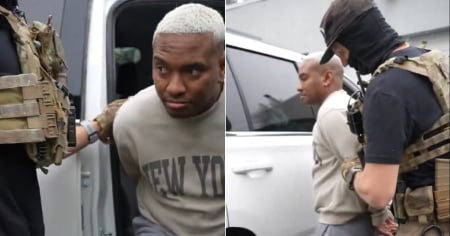
The Cuban nurse Iván García Pérez, 26 years old, has broken the silence from the detention center Alligator Alcatraz, where he is being held, to thank those who have supported him and to express the suffering he has endured since being arrested by agents of the Immigration and Customs Enforcement (ICE).
His testimony, shared through a telephone call by the Univision, journalist Javier Díaz, is not only moving but has also highlighted the legal fragility faced by thousands of Cuban migrants with I-220A status.
“I want to thank all the people who are supporting me out there. You have no idea what that support means to me,” said Iván, his voice trembling.
“It is very difficult to be confined here, but knowing that [the support] gives me a lot of strength to keep going and keep resisting and have hope of getting out”, she added.
The young man, visibly affected by his situation, has expressed his desire to reunite with his loved ones.
“I am eager to embrace my family, my wife, to see my friends again, my university classmates, and tell them how much they mean to me. Truly, thank you from the bottom of my heart”, he concluded.
Iván García was arrested on November 7 during a routine appointment with ICE in the city of Miramar, the same day he had received authorization to take the NCLEX exam, the final step to obtain his professional nursing license in the United States.
His unexpected arrest sparked a wave of outrage in the Cuban community, particularly among his peers at Miami Regional University, who have condemned the case as an "unjust detention."
Iván's story is that of thousands of young Cubans who have bet on hard work, professional training, and personal growth in the United States.
According to his cousin, Rubén Enrique Banegas Pérez, in a video posted on the social media platform X, the young man has no criminal record and has not committed any immigration offenses.
"The only thing Iván has done is study, make sacrifices, put in effort, and do everything within the framework of the law. We are outraged because he is an exemplary person who has chosen the difficult but right path: that of effort and hard work," Banegas stated.
In a subsequent message addressed to journalist Mario J. Pentón, the cousin reiterated the family's distress: “Iván is not a criminal. He is a normal, calm young man who only wanted to better himself. Today he is scared, far from his family, and we are devastated without understanding how something like this can happen.”
In the legal limbo of the I-220A
Iván García has an I-220A immigration status, a form of supervised release that is not recognized as parole, leaving its beneficiaries in a legal gray area.
Although the young man had fulfilled all the requirements and was in good standing while awaiting the resolution of his case, he was detained without further explanation.
"Everything was in order," insisted his cousin, who has called on lawmakers and public figures to prevent the young man's deportation and demand his immediate release.
"We demand justice, humanity, and your immediate release," he emphasized.
The detention of Iván reflects the growing fear of the more than 400,000 Cubans in the U.S. who are in the same status.
Immigration lawyer Willy Allen has warned that the I-220A represents a "huge danger" for those who hold it, as it does not provide real protection against deportations, even in the absence of a final removal order.
Allen has explained that while this figure could eventually be recognized as a parole—which would allow its holders to invoke the Cuban Adjustment Act after a year and a day—the judicial process will be lengthy and, very likely, “will leave victims along the way.”
Filed under: