
Related videos:
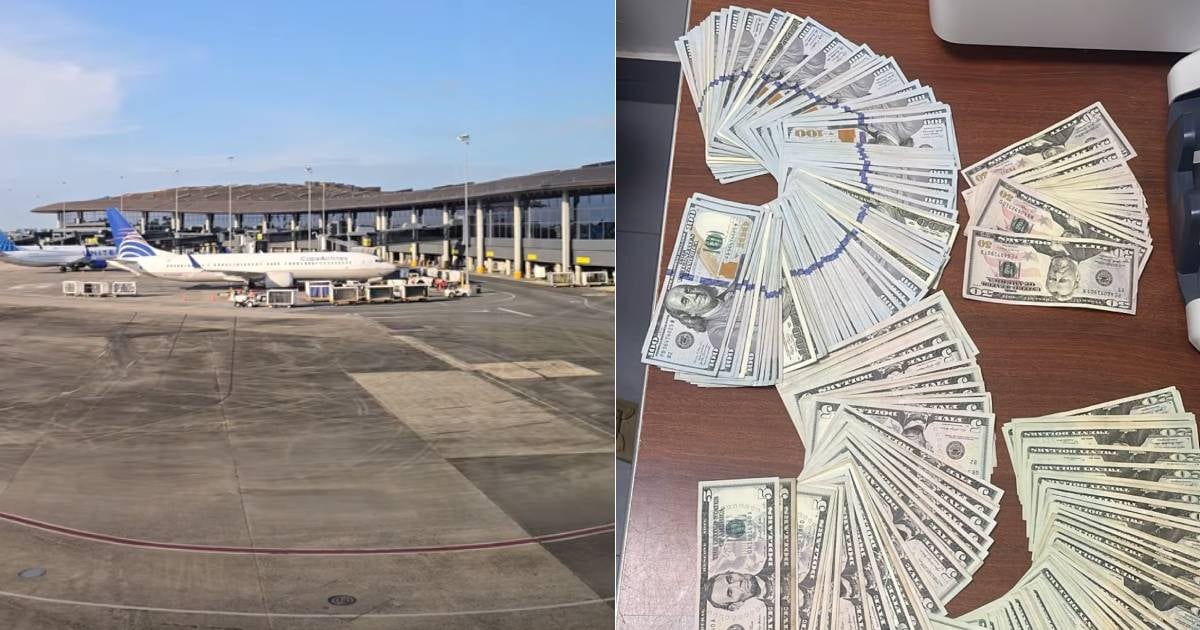
Panamanian authorities have raised migration alarms once again after detecting a passenger from Havana with over 16,000 balboas (16,000 dollars) hidden in her body and undeclared, a case that adds to a long series of incidents involving Cuban travelers at the country's airports.
The National Customs Authority reported that the woman arrived at Panama Pacific Airport with a risk alert activated from the earliest screenings. During the secondary inspection, she voluntarily handed over an envelope containing 4,900 balboas (4,900 dollars); however, the inspectors continued their examination after identifying inconsistencies in her account and behavior.
What they found next surprised even the agents, as the traveler had additional money hidden in her intimate parts. When everything was counted, the total amounted to 16,067 balboas (16,067 dollars), far exceeding the 10,000 that Panamanian law requires to declare cash upon entering the country. The case was referred to the Public Ministry and received support from the Panama Police.
The official notification comes just one day after authorities reported another Cuban traveler, a 48-year-old man, detained at Tocumen International Airport with $135,300 hidden in double bottoms of two backpacks. In that case, the passenger was also traveling from Havana and initially claimed he was only carrying five thousand dollars, until the scanner revealed hidden compartments filled with bundles of cash.
For Panamanian authorities, these two consecutive episodes confirm a concerning increase in travelers from Cuba carrying undeclared money, a trend that has already raised suspicions this year. In June, August, and September, cases were recorded of Cubans attempting to enter with between 10,000 and 15,000 dollars hidden in luggage or personal belongings.
The phenomenon occurs amidst a complex migratory reality where thousands of Cubans use Panama as a transit point to third countries, whether for commercial purposes, migration, or irregular routes to the United States. In this context, the transfer of large sums of cash, sometimes family savings and at other times resources for starting a journey, has become more frequent, but also riskier.
Authorities warn that concealing or failing to declare cash can lead not only to the complete confiscation of the money but also to lengthy legal proceedings, investigations for alleged money laundering, and future travel restrictions. Panama emphasizes that the regulation applies regardless of the traveler's origin or the purpose of the money.
Filed under: