
Related videos:
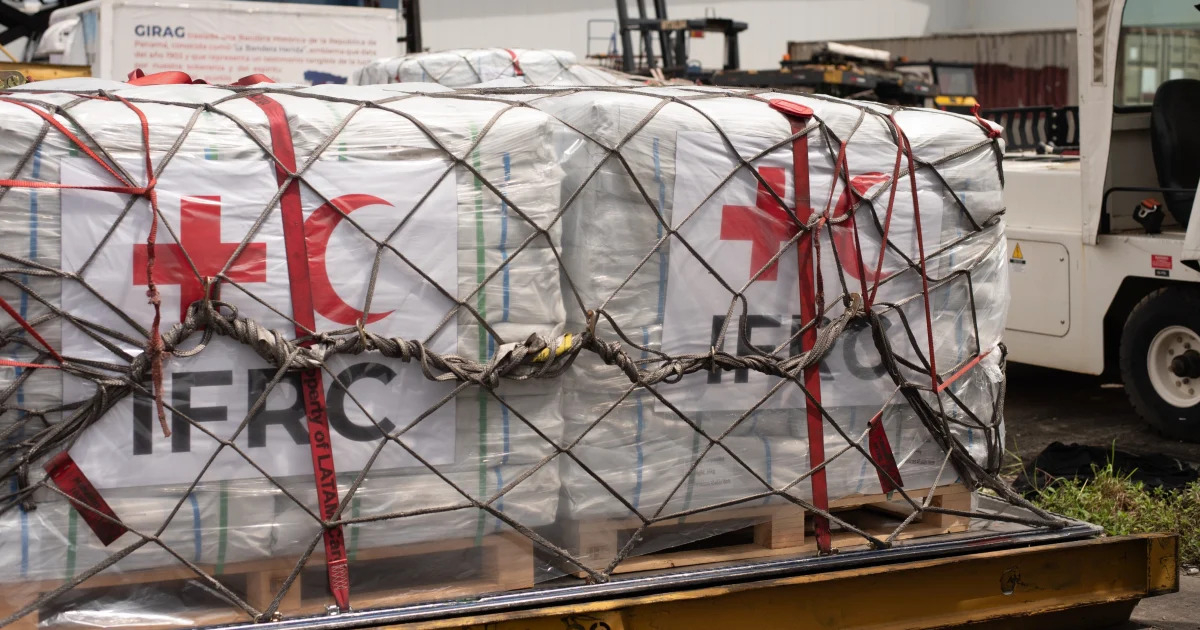
Panama announced the shipment of 24 tons of humanitarian aid to Cuba as part of the international response following the devastating impact of Hurricane Melissa, which left entire communities underwater, homes collapsed, and thousands of families without food, electricity, or shelter in the eastern part of the island.
The shipment, which will depart in the coming hours from the Regional Logistics Center for Humanitarian Assistance (CLRAH), includes basic supplies to respond to emergencies, such as cooking kits, hygiene items, plastic tarps, tools, blankets, and buckets.
It will be transported by Copa Airlines planes, as confirmed by Stephany Murillo, regional manager in the Americas of the International Federation of Red Cross and Red Crescent Societies (IFRC).
Murillo explained to the agency EFE that the operation is part of a coordinated regional response by the United Nations and the Red Cross, which also sent 38 tons of similar materials to Jamaica.
"We will likely move around one hundred tons of humanitarian aid in the coming months," the official announced, describing the operation as one of the most significant in recent years in the Caribbean.
Several countries and communities are sending aid to Cuba in the wake of the devastation
In addition to the aid sent from Panama, other nations and international organizations have mobilized resources to Cuba to assist those affected by Hurricane Melissa.
Colombia dispatched 22 tons of humanitarian aid, coordinated by the National Unit for Disaster Risk Management (UNGRD) and the Foreign Ministry.
The shipment includes food, personal hygiene kits, bedding sets, and tarps, intended to meet the basic needs of those affected in the eastern provinces.
China has also contributed resources, sending one thousand emergency family kits through the China Red Cross.
These kits contain hygiene items, clothing, and essential utensils, and were distributed in coordination with the Cuban Red Cross and local authorities.
Venezuela has contributed 26 tons of aid to the eastern region of Cuba, in a gesture that falls within the traditional cooperation between both governments.
At the same time, the Cuban community in Miami has organized campaigns to provide direct support to those affected in Cuba.
The initiative "Help for Eastern Cuba" gathers donations from citizens, activists, and artists who aim to send food, medicine, and clothing to the provinces affected by the storm.
These donations demonstrate regional and international solidarity with the Cuban people.
However, the magnitude of the damage and the sluggishness of the state response keep thousands of families in critical conditions, without electricity, drinking water, or safe shelter, while they face the devastation of their homes and livelihoods.
The contrast between external solidarity and internal crisis
While Panama, Colombia, China, Venezuela, and UN agencies mobilize resources to Cuba, the situation on the ground remains critical.
Numerous areas in Santiago de Cuba, Granma, and Holguín remain underwater, with roads cut off, bridges destroyed, and thousands of people taking refuge in schools or makeshift shelters.
The situation, described by humanitarian organizations as "devastating," reflects not only the aftermath of the hurricane but also the structural fragility of a country in deep crisis, unable to respond effectively to natural disasters without relying on foreign aid.
Residents of Santiago de Cuba claim that many families are still without assistance, despite having lost everything during the storm.
The skepticism of the people regarding the arrival of aid
Although the government of Havana has publicly thanked the solidarity of its "friendly countries," the population receives the news with skepticism.
On social media, many Cubans recalled that in previous disasters, such as hurricanes Sandy or Ian, international aid was stored, resold, or diverted to military institutions and did not reach the victims.
This distrust is fueled by the lack of official information regarding the distribution of resources.
The authorities of the regime have not published a detailed inventory of the aid they receive, nor do they allow independent oversight in the delivery processes.
A devastated country that awaits answers
Hurricane Melissa made landfall in eastern Cuba on October 29 with winds nearing 300 km/h, leaving a trail of destruction in the eastern provinces.
According to preliminary estimates, more than a million people have been affected, including tens of thousands who remain evacuated.
Entire neighborhoods in Santiago de Cuba and Granma remain cut off due to the rising waters of the Cauto and San Juan rivers. In Cauto del Paso, residents reported spending nights trapped on the roofs of warehouses and homes, with rescue teams unable to reach them in time.
The regime continues to withhold an official account of victims and material damages, a stance that contrasts sharply with the swift assistance mobilized by Latin American countries and international organizations.
Between propaganda and survival
While state television devotes extensive coverage to the gestures of solidarity from allied governments, ordinary Cubans continue to demand the essentials: food, potable water, medicine, and safe shelter.
The Panamanian shipment, although significant, represents a drop of relief amid a disaster of enormous proportions.
The real question—echoing on social media and in the streets flooded in the east—is whether that aid will actually reach those who need it or if it will be lost again in the bureaucratic maze of the Cuban state.
Filed under: