
Related videos:
The United States officially congratulated Bolivia's elected president, Rodrigo Paz Pereira, and promised to collaborate with his government on the country's economic recovery, institutional strengthening, and trade openness, following two decades of dominance by the Movement for Socialism (MAS).
We are proud to join regional leaders in congratulating the elected president Rodrigo Paz on his victory in Bolivia. We look forward to supporting Bolivia's efforts to stabilize its economy, strengthen its institutions, and deepen global partnerships for a safer and more prosperous hemisphere, stated the Office of Western Hemisphere Affairs of the Department of State through its official account on X.
The statement was accompanied by a joint communiqué signed by the governments of Argentina, Costa Rica, Dominican Republic, Ecuador, El Salvador, Panama, Paraguay, Trinidad and Tobago, and the United States, in which the countries recognize the Bolivian electoral process as an example of “commitment to democracy.”
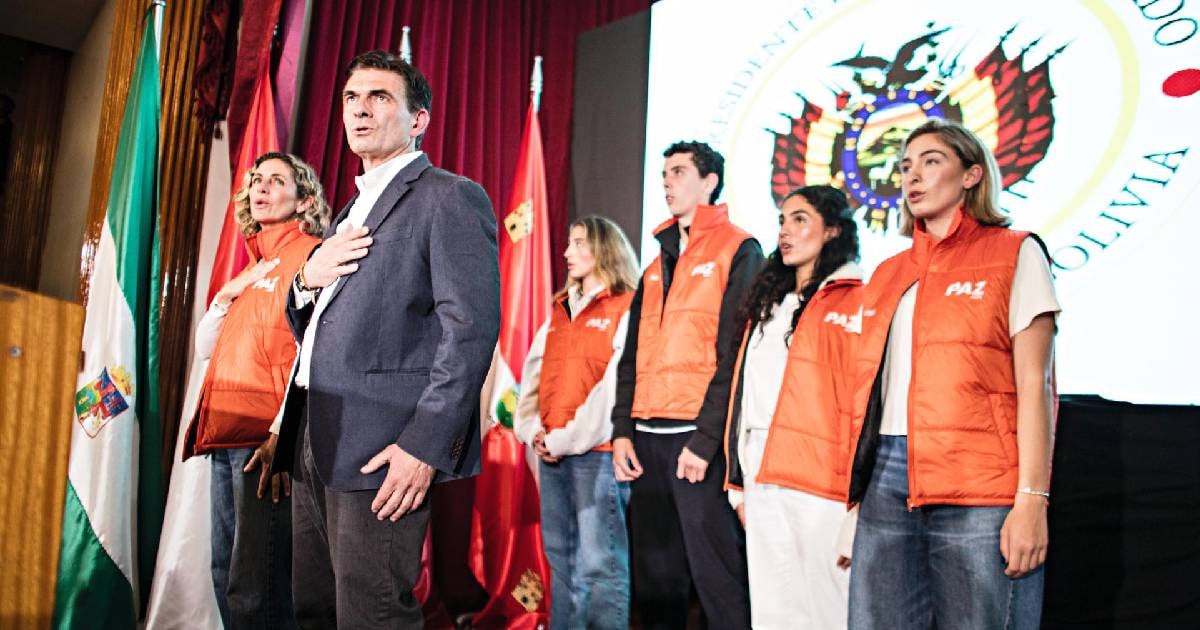
The triumph of Rodrigo Paz, from the Christian Democratic Party (PDC), marks a decisive political shift after twenty years of MAS hegemony.
With 54.6% of the votes, Paz defeated former president Jorge “Tuto” Quiroga and promised a government focused on macroeconomic stability and the reintegration of Bolivia into international markets.
“The country is starting a new story. It is a time for unity and to work for the homeland. Bolivia first,” declared its elected vice president, Esman Lara, during the celebration of victory in La Paz.
The new leader, son of former president Jaime Paz Zamora, will take office on November 8 with the challenge of tackling rising inflation, fuel shortages, and a significant drop in international reserves.
His campaign slogan, “capitalism for all and money for the people”, summarizes his proposal to attract private investment, reduce inefficient subsidies, and open trade with the United States, Brazil, Argentina, and Paraguay.
In their statement, Washington and the signing countries expressed their willingness to “work closely with the new Bolivian government to advance shared goals of security, prosperity, and economic growth.”
The document also refers to the “desire of Bolivians to move past the poor economic management of the last two decades,” clearly alluding to the state-driven policies of the MAS and the governments of Evo Morales and Luis Arce.
Washington's support marks a new chapter in bilateral relations between Bolivia and the United States, which have deteriorated since 2008, when Morales expelled the U.S. embassy and the DEA.
U.S. diplomats noted that the Donald Trump administration - which also pledged to support Javier Milei in Argentina - sees Bolivia as a "key ally" in the political realignment of Latin America.
The political shift in Bolivia also impacts the regional landscape. Analysts note that the departure of MAS from power represents a strategic loss for the governments of Cuba, Venezuela, and Nicaragua, which have maintained close ties with La Paz through energy, medical, and logistical agreements for years.
Diplomatic sources confirmed that the new government will review several agreements signed during Morales's era, including cooperation contracts with Cuba in the health sector and the maintenance of the airline route of Boliviana de Aviación (BoA) to Havana, which resulted in million-dollar losses for the state.
In economic circles, Paz's victory is interpreted as a signal that Latin America is seeking greater openness and pragmatism in the face of centralized models. “Bolivia sends a clear message: economic populism has an expiration date,” stated Argentine economist José Luis Espert.
The State Department reiterated that Bolivia's success in the coming months will be crucial for regional stability. “The economic recovery of Bolivia is a shared priority. Its prosperity and stability strengthen hemispheric democracy,” a spokesperson told Reuters.
Filed under: