
Related videos:
A shocking and dark case of corruption has just come to light in Cuba, following the arrest of several workers from the Camagüey cemetery accused of selling burial plots.
The official profile Verdades a Través del Móvil reported this Monday on that several workers from the provincial cemetery of Camagüey were detained for their alleged involvement in the sale of vaults and burial spaces in exchange for money.
According to the publication, the arrests were made by the Cuban Police and the Ministry of Interior, which accused the employees of obtaining "illegitimate economic benefits" through practices that, according to the official version, "diminish the dignity of funeral services."
The official media indicated that those involved will be brought before the courts, where it is claimed that procedural guarantees and rights provided for in the Constitution will be respected.
However, it did not provide details about the identity of those arrested nor the extent of the alleged corruption scheme.
Independent journalist Yaima Pardo revealed on her Facebook profile that neighbors and residents of the municipality have reported the existence of "under-the-table prices" for funeral services due to the collapse of the state system and lack of resources.
According to collected testimonies, the cost of a cremation can reach up to 30,000 Cuban pesos, an amount that is unbearable for many families.
The regime authorities claim that investigations are ongoing to determine the full extent of the events and whether there are more individuals involved.
From Camagüey, the official rhetoric of "combating irregularities and protecting the rights of the population" is reiterated, although cases of corruption within state entities have become increasingly common on the island.
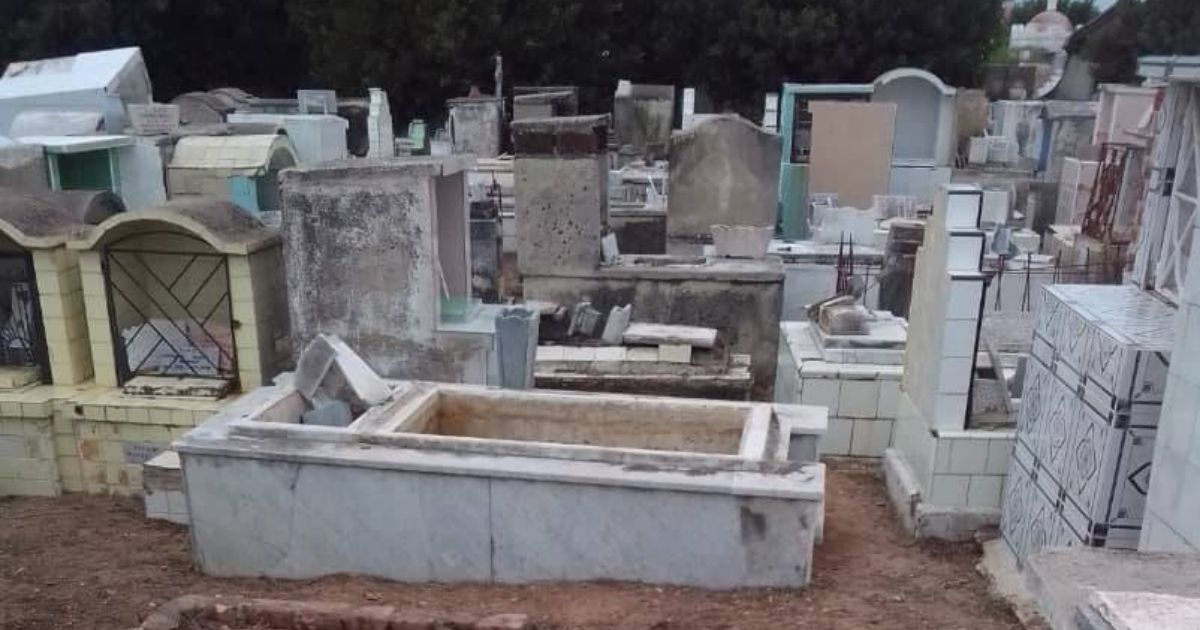
This case of corruption at the Camagüey cemetery adds to recent criticisms regarding the deplorable condition of the site, which have sparked a wave of public outrage.
Comunales tried to justify the conditions of the cemetery by citing a shortage of materials and resources, without taking clear responsibility for the visible neglect in vaults, pathways, and funeral structures.
The controversy is not new. Images circulated a few days ago showed human remains exposed among weeds and trash, while mourners publicly denounced the disrespect and decay in a necropolis that should provide solace and peace.
"Not even in death does one find rest in this country," wrote a citizen while showing broken bones and tombstones.
In August, reports were made of thefts of gravestones, crucifixes, and even entire structures, which raised further alarms among families concerned for the safety of their loved ones' remains.
Neighbors pointed out the lack of security and institutional neglect as factors that allow these vandalistic acts to occur without visible consequences.
Filed under: