
Related videos:
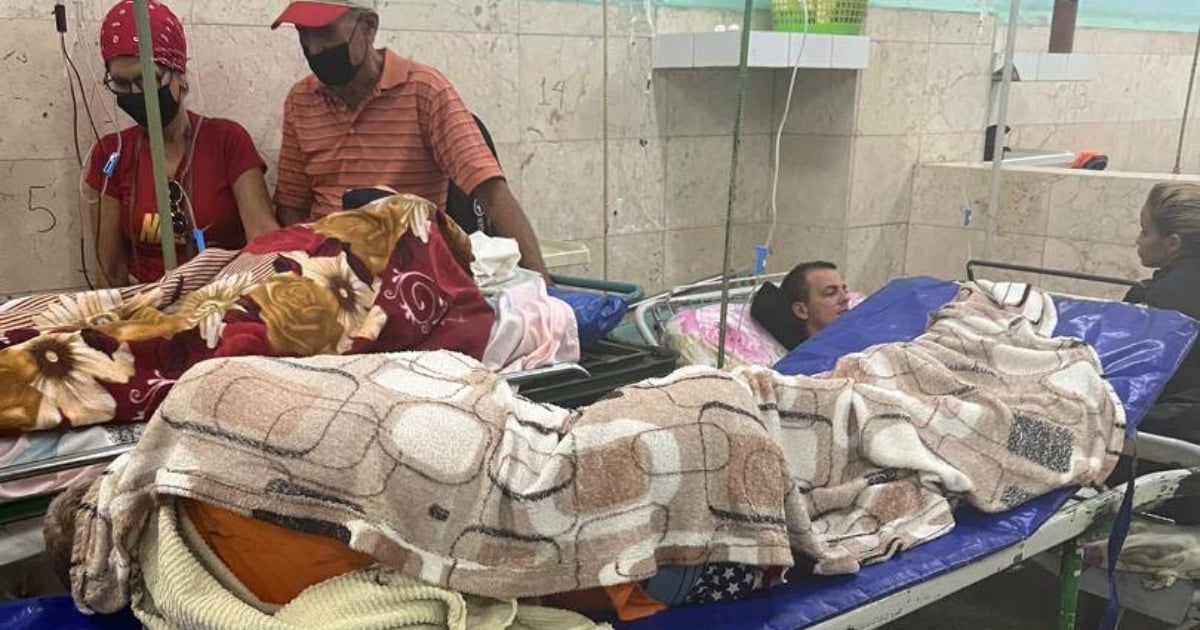
Cuba recorded an average of 700 new daily cases of chikungunya during October, mostly concentrated in the provinces of Havana and Matanzas, the Pan American Health Organization (PAHO) reported this Tuesday.
The information, confirmed to EFE by sources from the OPS, comes just a week after the Cuban government officially acknowledged an "epidemic" of chikungunya, dengue, and oropouche in the country, describing the epidemiological situation as "acute," although without providing detailed figures.
According to records from the World Health Organization (WHO), the island identified 15,590 cases of chikungunya between October 11 and November 1, accumulating 20,062 infections so far in 2025.
With that total figure, Cuba reaches a cumulative incidence of 183.43 cases per 100,000 inhabitants, the highest in all of America this year.
The country significantly surpasses Brazil (112.07 cases per 100,000 inhabitants), the Caribbean average (43.53), and the continental average (26.00). The Cuban regime has acknowledged the crisis in public health.
The international organization warned that, according to the epidemiological analysis and risk stratification from the Ministry of Public Health (MINSAP), the provinces of Havana, Matanzas, and Cienfuegos "remain at very high risk of infection."
"The highest proportion of cases is recorded among those aged 19 to 54, that is, in the working-age population, resulting in absenteeism due to the disabling pain caused by the disease," noted the OPS.
In his recent televised report, Dr. Francisco Durán García, director of Epidemiology at MINSAP, acknowledged that the official figures “do not match reality”, as many people do not seek medical attention when experiencing symptoms.
Durán himself reported that just yesterday “1,706 patients with unspecified febrile syndrome were recorded,” most of which are attributable to chikungunya, the virus currently in highest circulation.
The OPS detailed that cases of dengue have also surged this year. Between January and September, 9,602 cases were reported (115 severe and three fatalities), nearly ten times more than the 985 recorded in the same period in 2024.
The agency specified that the serotypes 2, 3, and 4 of the dengue virus are circulating on the island, which may have increased the severity of clinical cases due to successive infections.
The incidence rate of dengue in Cuba is 87.79 cases per 100,000 inhabitants, lower than the average in the Southern Cone (1,262.23) and the Andean region (183.23), but higher than that of Latin Caribbean (54.59).
On its part, the oropouche virus continues to be present with 29,040 cases reported between the second half of 2024 and the early months of 2025, 123 of which showed neurological complications.
The OPS report highlights that Cuba leads the incidence rates of chikungunya and oropouche across the American continent.
This latest virus currently affects 36.4 people per 100,000 inhabitants, significantly surpassing Panama (14.36) and Brazil (5.60).
Experts warn that the combination of the three viruses —chikungunya, dengue, and oropouche— reflects the collapse of the epidemiological control system on the island.
The lack of systematic fumigation is compounded by sanitation problems and a shortage of medications, which complicates patient care.
Filed under: