
Related videos:
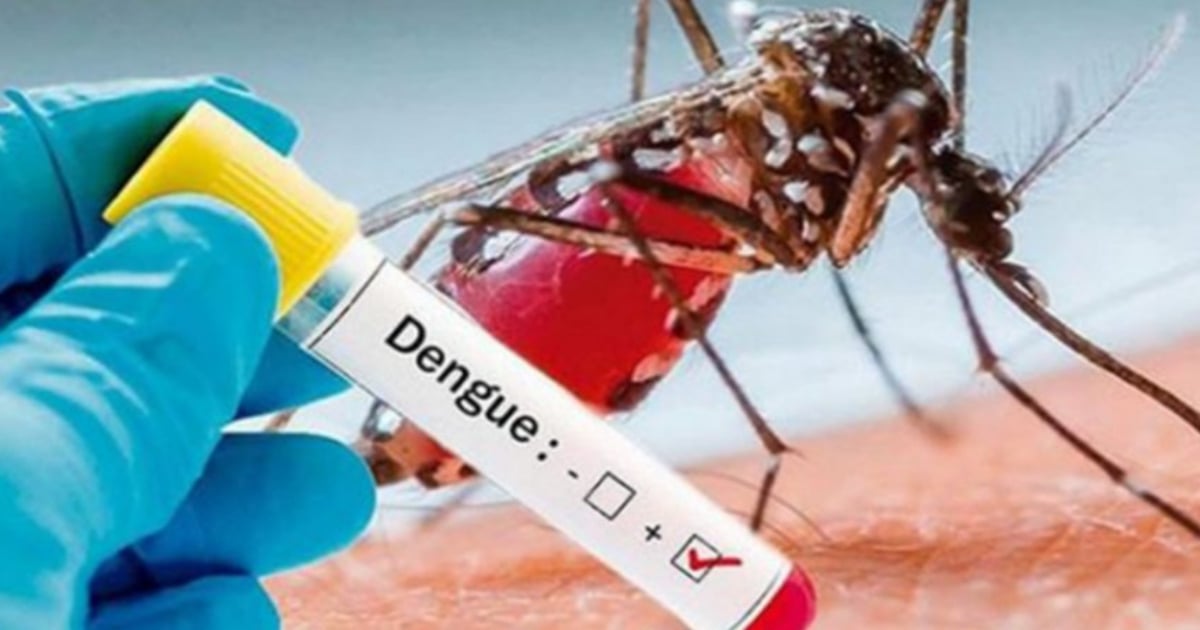
For decades, dengue has been impacting the Cuban population, and although this year it coexists with chikungunya and oropouche, everything suggests that the Aedes aegypti mosquito is far from disappearing.
The official journalist Ricardo R. González interviewed the specialist Wilfredo Castañeda López, who explained the reasons why the disease continues to spread across the country.
The head of the Entomological Surveillance Department at the Provincial Center for Hygiene, Epidemiology, and Microbiology of Villa Clara stated that dengue remains an endemic disease in Cuba due to the high adaptability of the mosquito and the lack of effective control over breeding sites.
The expert revealed a troubling fact: the mosquito can be born already infected with the virus, a phenomenon known as vertical transmission.
"The mosquito transmits the virus to its offspring. From an infected female, the eggs and larvae can reach adulthood, which means there are insects capable of spreading the virus without having bitten any sick human," he explained.
Castañeda also detailed that the eggs of the Aedes aegypti do not deposit directly in the water, but rather at the waterline of tanks or containers, where they can withstand desiccation for over a year.
When the water fills those reservoirs again, the larvae hatch, and the transmission cycle starts over.
According to the specialist, Villa Clara is among the most affected provinces in Cuba, with over 1,300 recently detected hotspots.
43% of them are concentrated in the provincial capital, followed by Manicaragua, Placetas, Encrucijada, and Sagua la Grande.
The causes of the increase are numerous. Among them, Castañeda pointed out the lack of personnel in the vector control brigades, which have only 49% of their staff; the shortage of fuel for fumigation; the low perception of risk among the population; and the accumulation of garbage and water in uncovered containers, which have become breeding grounds for mosquitoes.
The specialist warned that while fumigation is necessary, it cannot be intensive due to resource limitations, and he alerted about the genetic resistance that mosquitoes develop with the repeated use of the same pesticides, which reduces their effectiveness.
Despite state campaigns and propaganda, the expert acknowledged that only 40% to 50% of the urban population is inspected, meaning that real control of the vector is far from being achieved.
"Dengue kills, and it does so with the help of human negligence," he stated.
The official figures from the Ministry of Public Health confirm the magnitude of the problem: Cuba reports a rate of 20.66 suspected cases of dengue per one hundred thousand inhabitants, while chikungunya and oropouche are also circulating in several provinces.
In Latin America, the Pan American Health Organization reported nearly four million cases of dengue and over seven thousand deaths in 2025 alone, with Brazil, Peru, and Bolivia being the most affected countries.
Castañeda emphasized the need to strengthen self-care at home and not to self-medicate in response to fever symptoms.
Paracetamol, rest, and hydration continue to be the basic recommended measures to prevent serious complications.
Amid the surge of mosquito-borne diseases, the Cuban regime recently acknowledged the uncontrollable situation of arboviral diseases in the country, where dengue, chikungunya, and oropouche continue to affect thousands of people.
Health authorities admitted that the infestation levels of Aedes aegypti are out of control and that fumigation campaigns are failing to contain the spread of the virus.
In light of this situation, health professionals have reported the seriousness of the outlook and the lack of basic resources in hospitals.
Some doctors have called for the intervention of international organizations to address a health crisis that is worsening due to a shortage of medications, the lack of diagnostic equipment, and the limited responsiveness of public institutions.
Faced with pressure and criticism, the government announced the production of natural repellents as part of an emerging plan to reduce infections.
However, this measure was viewed by specialists as a delayed and ineffective response to a structural problem that requires sustainable solutions, investment in sanitation, and a more efficient monitoring system.
Filed under: