
Related videos:
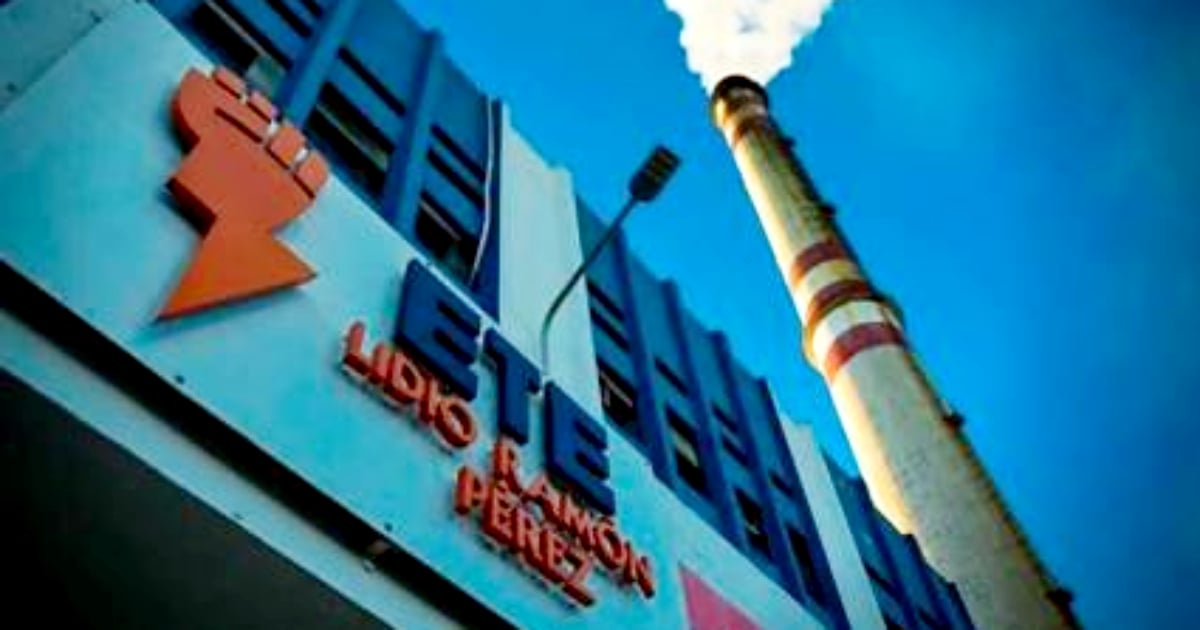
The National Electroenergetic System (SEN) faced a critical situation again this Wednesday, after unit 6 of the Renté Thermoelectric Power Plant in Santiago de Cuba went out of service due to a "leak in the economizer on the left side," as reported by the Electric Union (UNE) through its official channels.
The evening report from the state-owned company detailed that, at 7:00 PM, the system availability was 1,270 megawatts (MW) compared to a demand of 3,202 MW, which resulted in a deficit of 1,930 MW and consequently caused widespread disruptions in nearly the entire country during peak hours.
Additionally, the UNE announced that a "technical stop" took place at the Energas Puerto Escondido plant in the western part of the country "to ensure operational safety."
According to the official journalist Bernardo Espinosa, this intervention is aimed at the annual maintenance of gas processing systems, which are deemed essential for electricity generation and the production of domestic gas intended for Havana.
The company did not specify the expected duration of the work at Energas nor when the Renté unit might return to service, although it is estimated that the impacts could remain at high levels in the coming days.
With this new breakdown, the SEN has accumulated a week of increasing tensions, with deficits exceeding 1,800 MW, marking one of the most critical phases of the year.
The Cuban government attributes these failures to technical causes and limitations in fuel availability, but the population continues to suffer from prolonged blackouts that, in some municipalities, exceed 18 hours a day.
Although the UNE claims that it carries out "scheduled maintenance" to preserve the stability of the system, the continuous breakdowns in Renté, Felton, Guiteras, and Mariel confirm the structural deterioration of the Cuban thermoelectric network, affected by decades of underinvestment and insufficient maintenance.
When the problem is darkness… and the blame lies with the independent press
In any normal country, a deficit of nearly 2,000 MW would be a national scandal. In Cuba, it's merely the daily report. But what is even more striking than the blackout is the official discourse's ability to blame everyone but itself.
While Renté shuts down due to a leak and Energas "rests" to maintain its "operational safety," state propaganda paradoxically directs the spotlight—ironically dimmed—toward El Toque, the independent outlet that publishes the informal market rate.
It seems that the Cuban regime has found in El Toque the ultimate scapegoat, and it’s only a matter of time before they blame a website that publishes the dollar's value for the electrical collapse, instead of a government that has ruined the national electrical system due to technological obsolescence and lack of investments.
The logic is impeccable: the dollar rises, gas leaks; the euro falls, a transformer fails; El Toque publishes the rate and the current disappears. If tomorrow dawns without power, it's already known who is to blame: that journalist who, with a spreadsheet and the wicked algorithm, spreads darkness over the island.
Meanwhile, the UNE is issuing statements with emojis and technical phrases like "three-stage intervention" or "gas processing," as if the issue were merely semantic and not a result of a collapsed generation, with clear and evident culprits within the government.
Every "technical stop" is, in practice, a blackout disguised as maintenance, and every "service disruption" is the euphemism the government uses to avoid telling the truth: the system is broken. There's no investment, no modernization, and fuel is scarce not because of any blockade, but due to mismanagement and endemic corruption.
The irony is that, in official Cuba, electricity doesn't depend on oil, but on rhetoric. If there's a blackout, an ideological scapegoat is sought; if there's a protest, the response is met with slogans. But neither slogans illuminate nor speeches light bulbs.
The UNE promises to "restore stability in the system," while the population learns to calculate blackout times even more accurately than the electrical offices themselves. And in that daily darkness, the regime finds its perfect metaphor: a country in the dark, ruled by those who cannot bear the light that emanates from the truth.
Filed under: