
Related videos:
Fifty years after the beginning of the Spanish Transition, a process that transformed a nearly four-decade dictatorship into a stable democracy, Cubans should closely examine the lessons left by that journey. Not because Spain is a perfect model, nor because history repeats itself the same way everywhere, but because it shows that it is indeed possible to exit an authoritarian regime without descending into chaos or violence.
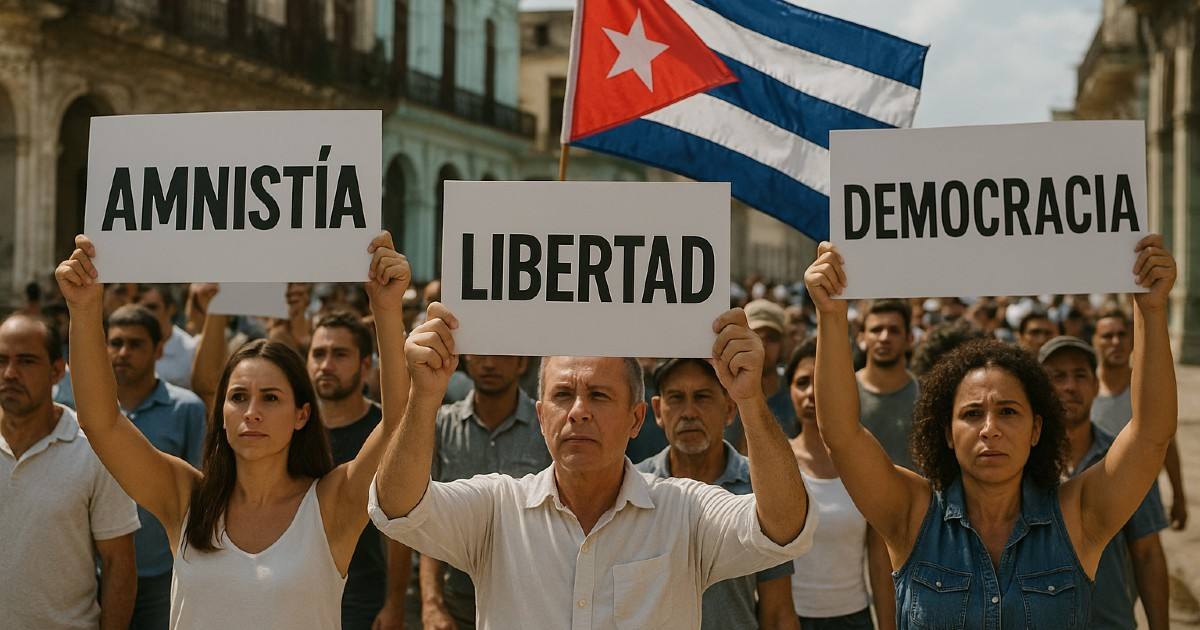
Cubans should understand, above all, that negotiating does not mean surrendering. In Spain, the reformists of Franco's regime and the democratic opposition realized that neither could completely erase the other; so they sat down to find a middle ground. For Cuba, where there is a deep divide between exile, internal opposition, system militants, and moderate sectors, the lesson is clear: if we do not recognize each other as an inevitable part of the future, the change will be much more painful.
We should also understand that a transition can only be sustained through minimal agreements among those who think differently. The Spaniards reached pacts even when they politically despised each other. Their goal was not to convert the other, but to ensure rules that would allow coexistence. In Cuba, where the logic of the enemy has been cultivated for decades, it will be essential to abandon the idea of "all or nothing."
The Spanish experience also teaches that the rules must be agreed upon first, followed by the policies. The Constitution of 1978 did not resolve all conflicts, but it established a framework of freedoms, pluralism, and separation of powers that allowed for competition without destruction. For Cuba, this means that the first step will not be to decide what economic or social model we want, but rather to ensure institutions that are not dependent on a caudillo or a single party.
Another uncomfortable lesson is related to amnesty. Spain released political prisoners, but it also allowed many officials from the Franco regime to go unpunished at the beginning. It was the price paid to avoid a clash that could lead the country to disaster. In Cuba, where there is also a past filled with wounds and abuses, it will be necessary to decide whether we seek immediate punishment or stability to build a democratic future. And perhaps it will not be possible to achieve everything at once.
The Spanish Transition also demonstrated that military loyalty is vital. Without professionalized Armed Forces, with clear guarantees and a well-defined role in democracy, any process of change can derail. In Cuba, where the FAR and MININT are crucial structures, they must be integrated, not sidelined.
And an essential lesson: freedom of expression is the oxygen of any transition. Spain was able to debate, criticize, and dissent in the press, on television, in discussions, and in the streets. Without plural voices, democracy is impossible. For Cuba, this means breaking the media monopoly, allowing for an independent press, and defending the right to free debate, even when it hurts.
Finally, the Spanish experience shows that the economy cannot wait until the end. While negotiating democracy, the Spaniards also implemented deep economic reforms that modernized the country and attracted investment. When its time comes, Cuba will need to open its economy, free private initiative, include the diaspora as a growth engine, and gradually dismantle the state monopoly.
Fifty years after the Spanish Transition, we Cubans should recognize that a new country isn't built by erasing the old one, but by learning to coexist with it. Freedom does not come on its own: it must be negotiated, protected, and upheld. And although the journey may be long, history shows that it is possible.
Filed under:
Opinion article: Las declaraciones y opiniones expresadas en este artículo son de exclusiva responsabilidad de su autor y no representan necesariamente el punto de vista de CiberCuba.