
Related videos:
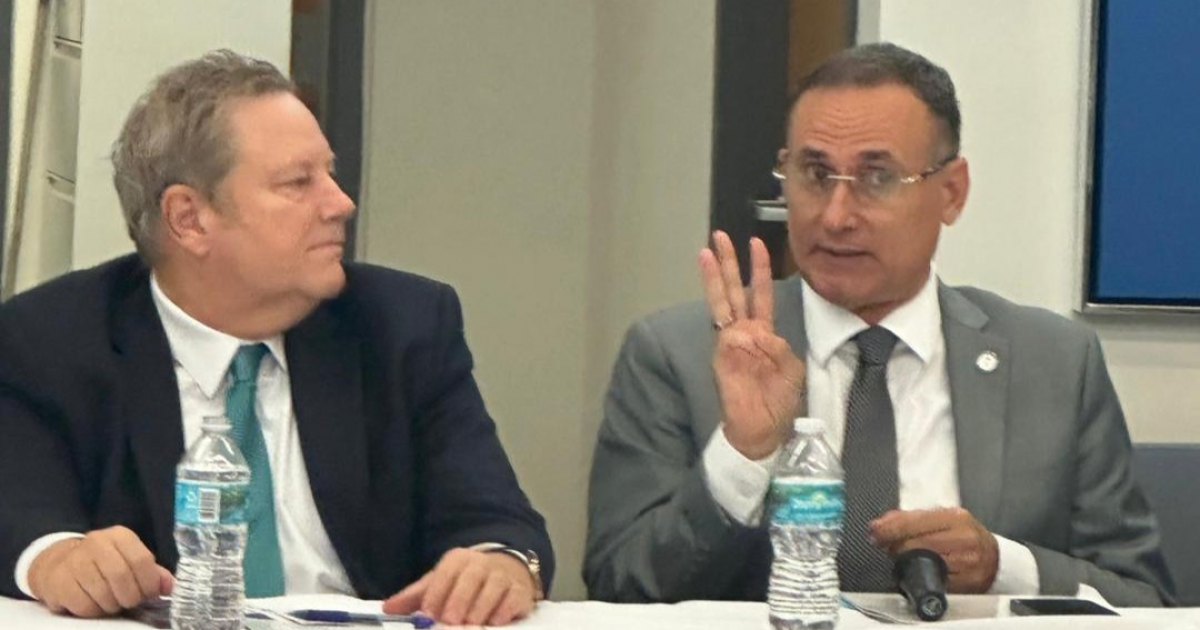
The Cuban dissident José Daniel Ferrer stated that the dialogue with representatives from the United States was "very fruitful," and he assured that Washington not only shows solidarity with the Cuban people but could also become a key ally in the country's reconstruction when a change occurs.
In a message posted on X, Ferrer noted that recent conversations with Mike Hammer, the Chief of Mission at the United States Embassy in Havana, have opened a new perspective for future collaboration.
"We are confident that, in addition to the current solidarity, the United States will also be our best ally in the process of rebuilding our homeland," he wrote, emphasizing the importance of building bridges towards a different future for Cuba.
A call for peaceful action
Ferrer’s statements come in a particularly tense and significant political context.
This Thursday, the opposition leader emphasized that the Cubans must take advantage of the current conditions to drive change in their country, detach themselves from the regime's structures, and play a leading role in a broad movement for freedom and democracy.
In a message, he urged the population to sever ties with state organizations and to join pro-democracy groups either publicly or discreetly.
"They should create profiles with pseudonyms on social media and express their true feelings while denouncing all injustices and the many serious problems affecting Cubans," he requested.
"They should add to the demands for the release of political prisoners; those who are able should paint graffiti with messages in favor of freedom. It is something easy to do and has a great impact," he added.
For Ferrer, the current situation demands not only denunciations and statements but also concrete actions from citizens that reflect a real commitment to freedom, democracy, and well-being.
International solidarity and reconstruction
Although Ferrer's publication is concise, the reference to a "fruitful conversation" with the diplomat provides a significant political signal: an acknowledgment that the Cuban civil society in exile and the authorities in the United States have engaged in dialogue about the future of Cuba and the role that the North American country can play in its transition process.
During 2025, the head of the U.S. Mission in Cuba, Mike Hammer, has maintained an active profile, visiting artists and representatives of civil society, while reaffirming the commitment to support fundamental freedoms and freedom of expression, despite the surveillance by Cuban security agents.
In addition, Washington provided humanitarian aid through the Catholic Church to alleviate the conditions of families affected by the crisis, emphasizing that this assistance aims to alleviate the suffering of the population in the context of rapidly deteriorating living conditions.
A strategic ally in times of tension
Ferrer’s words come at a time of increasing tension between the United States and Havana, marked by initial diplomatic contacts following a military operation in Venezuela that culminated in the capture of Nicolás Maduro.
In this context, Ferrer has openly expressed that he sees the United States as an essential partner for achieving a free and prosperous future for Cuba, and not as an enemy, distancing himself from the official narrative that has historically portrayed Washington as an adversary.
On Monday, in a message to Díaz-Canel, he expressed: "If you continue to oppress and suppress the people, you will be the ones responsible for what happens. An enslaved people wish for someone to save them, and if it is the United States that does it, the vast majority of Cubans will be grateful. (...) You are very abusive towards the unarmed people, but too cowardly to confront the United States."
The idea that the United States could play a central role in the reconstruction of Cuba after decades of economic crisis and rights violations has been embraced by sectors of the Cuban opposition and the exile community as a key element for a transition that includes international support and cooperation to overcome poverty, lack of freedoms, and the structural issues affecting the country.
The role of Ferrer in the Cuban opposition
José Daniel Ferrer is the founder of the Patriotic Union of Cuba (UNPACU) and has been a prominent figure in the pro-democracy struggle on the island for years, facing detentions, imprisonment, and persecution.
Their current political strategy combines calls for internal change with the pursuit of international support to increase political and moral pressure on the regime.
His call to consider the United States as a strategic ally in the reconstruction of Cuba represents another step in his vision of a transition that includes the cooperation of external actors committed to democracy and human rights.
In that regard, Ferrer has emphasized that the liberation of the Cuban people relies on a combination of internal actions, civic organization, and international relations that promote political openness.
Filed under: