
Related videos:
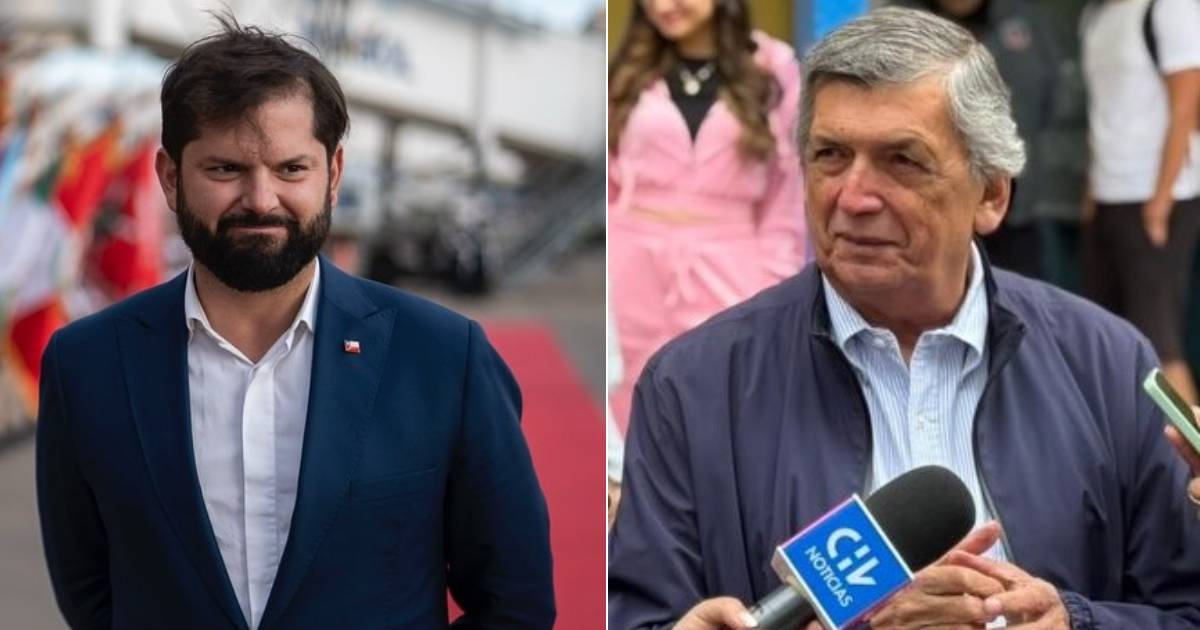
The political situation in Cuba has once again become a point of tension within the Chilean government, after President Gabriel Boric publicly reiterated his classification of the Cuban system as a dictatorship, openly contrasting with the stance of the Communist Party of Chile (PC), which defended the Havana regime and questioned the president's remarks.
The fissure was exposed following an extensive interview granted by Boric to El País, in which the Chilean head of state discussed his views on foreign policy and was directly asked about Cuba.
In his response, Boric left no room for ambiguity and stated that there is no democracy on the island, describing it as a one-party regime without freedom of expression. He portrayed a country marked by shortages of food, medicine, and transportation, as well as by the exodus of young people. While he acknowledged the effects of the U.S. embargo, he emphasized that the primary responsibility lies with those who govern Cuba.
The statements provoked an immediate reaction from the president of the Chilean Communist Party, Lautaro Carmona, who publicly questioned the leader and defended the Cuban political system.
In radio statements and subsequently to the press, Carmona asserted that there is indeed democracy and freedom of expression in Cuba, arguing that millions of tourists visit the island with diverse ideas and that the debate about liberties must be contextualized within the economic blockade imposed by the United States.
The communist leader emphasized that, although the President of the Republic is the one who steers Chile's foreign policy, his party will maintain its own perspective on international matters.
In this context, he recalled the historic friendship between the Communist Party of Chile and the Communist Party of Cuba, and asserted that valuing the "Cuban process" does not mean attempting to replicate it in Chile.
Carmona even compared the situation on the island to the media concentration in his own country, questioning how broad the right to free expression is in Chile.
The words of the communist leader deepened the discomfort within the ruling party, especially days before a crucial conclave to outline the future of the governing coalition.
Allied voices distanced themselves from the defense of Cuba and more clearly aligned with the President's position. From the Party for Democracy (PPD), its president Jaime Quintana maintained that political science does not allow for any other designation than dictatorship in the case of Cuba and suggested that progressivism needs to reevaluate its definitions regarding foreign policy.
From the Frente Amplio, Deputy Jaime Sáez also rejected labeling Cuba as a democracy, although he introduced nuances by stating that this condition does not justify external interventions. Nevertheless, he acknowledged that the discussion reveals internal contradictions and chose to downplay its impact on the Chilean national agenda.
For Boric, however, the issue goes beyond a semantic debate. In the interview, the president defended the need to apply the same standard to judge human rights violations, regardless of the ideological affiliation of the governments involved.
He stated that this coherence is essential to maintain political credibility, especially within a left that, in his view, must learn from past mistakes and avoid justifying authoritarianism in the name of old loyalties.
Filed under: