
Related videos:
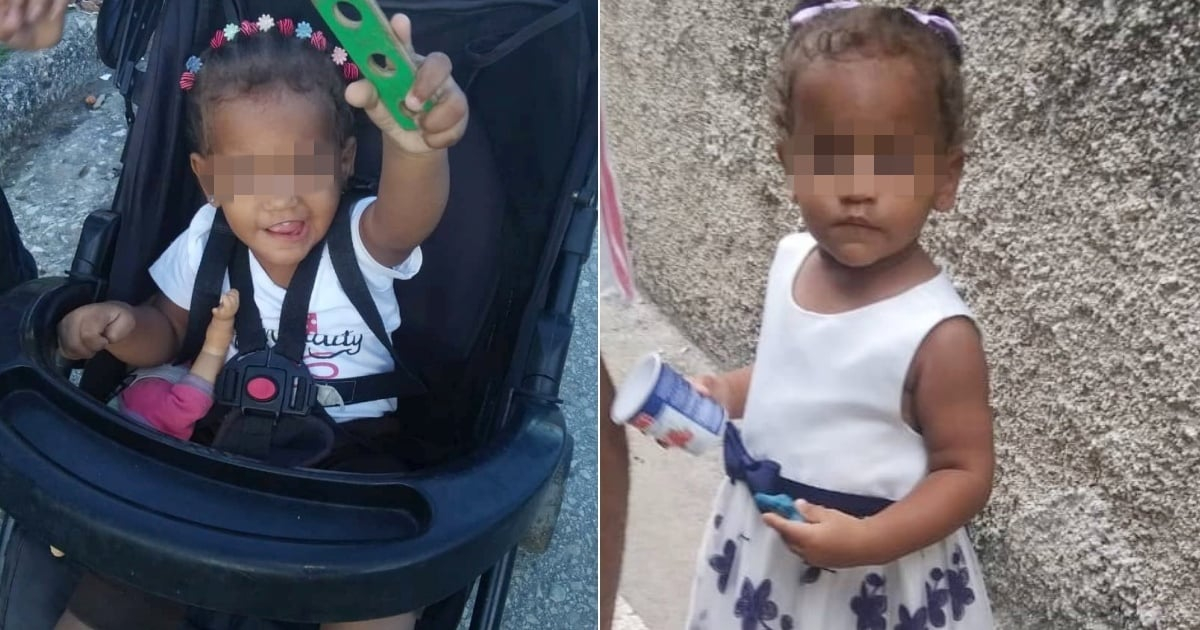
The intensivist doctor and deputy to the National Assembly Franciso Ricardo Sagaró Rosales came to the defense of the Children's Hospital North “Juan de la Cruz Martínez Maceira” in Santiago de Cuba, following the strong commotion generated by the allegation of medical negligence in the case of the girl Sheila Sinai Escobar Puente, who is one year and two months old, and whose family blames the healthcare staff for the critical worsening of her health condition.
In a social media post, Sagaró Rosales asserted that the staff of the pediatric hospital —commonly known as ONDI— “dedicates themselves wholeheartedly to their patients” and warned that the case should not be used to “fuel hatred” against institutions or health professionals.
"Within Medicine, I have always admired three specialties in a nearly reverent way due to the level of sacrifice they entail: Oncology, Pediatrics, and Hematology. Given the current conditions we face due to the epidemiological situation, our staff is wholly dedicated to their patients," he wrote.
The official, who works at the “Dr. Juan Bruno Zayas Alfonso” Clinical and Surgical Hospital, questioned that people “without complete knowledge of the situation or scientific expertise” use social media to “discredit this work.”
In particular, he defended the "Juan de la Cruz Martínez Maceira" Children's Hospital, claiming that it "has always been and continues to be an example of sacrifice and dedication from its staff" and reminded that his fellow intensivists “spent countless sleepless hours during the COVID-19 pandemic, just like everyone else throughout the province, and even today they continue to give their all.”
The words of the deputy doctor come after a family from Santiago publicly reported on Facebook an alleged medical negligence at the same hospital, where little Sheila Sinai Escobar Puente was admitted and subsequently went into critical condition.
The tragic case of Sheila
The report was disseminated by her uncle, Richard Puente Barreiro, who recounted that the girl had been taken to the center on November 17, 2025, with fever, vomiting, and diarrhea.
According to family testimony, although she showed mild dehydration, the attending doctor decided to administer a 30% dextrose IV and send her home.
Minutes later, the girl began to convulse, registered a high fever, and had to be urgently transferred to intensive care, where specialists diagnosed her with diabetic ketoacidosis.
The girl was diagnosed with type 1 diabetes, with a blood glucose level of 34 mmol/L, a pH of 6, tachycardia, and persistent seizures, according to the report.
Sheila was intubated and in critical condition, suffering from multiple organ failure and brain, liver, kidney, and myocardial damage, and it was even reported that she had experienced “a cardiac arrest for 10 minutes.”
For the family members, the situation was a direct consequence of the "negligent administration of 30% dextrose," which they argue triggered the metabolic crisis and dramatically worsened the child's condition. They also indicated that they filed a formal complaint with the hospital administration and demanded severe penalties against those responsible.
In his complaint, Puente Barreiro accused the medical team of trying to justify the damage by claiming the presence of “a virus,” when for the family it is “evident” that the inappropriate use of the serum was the trigger of the tragedy.
"We ask the medical community, health authorities, and Cuban society not to allow this case to go unpunished."
Although Sagaró Rosales' statement does not mention the girl by name nor offers technical evaluations on the specific case, its message is interpreted as a direct response to the climate of outrage generated by the complaint.
The doctor and deputy emphasizes the importance of highlighting the sacrifice of pediatricians and hospital staff, in response to what he describes as attacks stemming from ignorance, in an effort to safeguard the institutional image amid public scrutiny.
Medical negligence in Cuba
The controversy arises in a context of increasing reports of alleged medical negligence in various provinces of the country.
In Camagüey, family members reported the death of a mother and her newborn daughter at the Ana Betancourt Maternity Hospital, following an alleged delay in diagnosis and a lack of response to evident complications.
In Matanzas, a mother reported the complete lack of resources, medical personnel, and reagents to treat her son, highlighting the structural deficiencies of the healthcare system.
Testimonies from doctors have also been made public, revealing their own ethical conflicts in the face of the crisis.
A physician in Holguín stated that he had to “betray his principles” due to a lack of resources and imposed administrative decisions, while another case in Camagüey involved a young woman who lost her baby after claiming she was not attended to in time.
In all these episodes, patterns of diagnostic delays, neglect, and shortages of supplies are repeated, which contribute to the perception of a collapsing healthcare system, beyond individual errors.
Between the strong defense of the Children's Hospital of Santiago de Cuba by the physician deputy and the family's demand for justice for Sheila, a deep gap is revealed between institutional discourse and the experiences of patients.
While health authorities insist on the sacrifice of personnel and urge not to "discredit" medical work without justification, the affected families are demanding accountability, transparency in the investigations, and guarantees that tragedies like this will not happen again.
Filed under: