
Related videos:
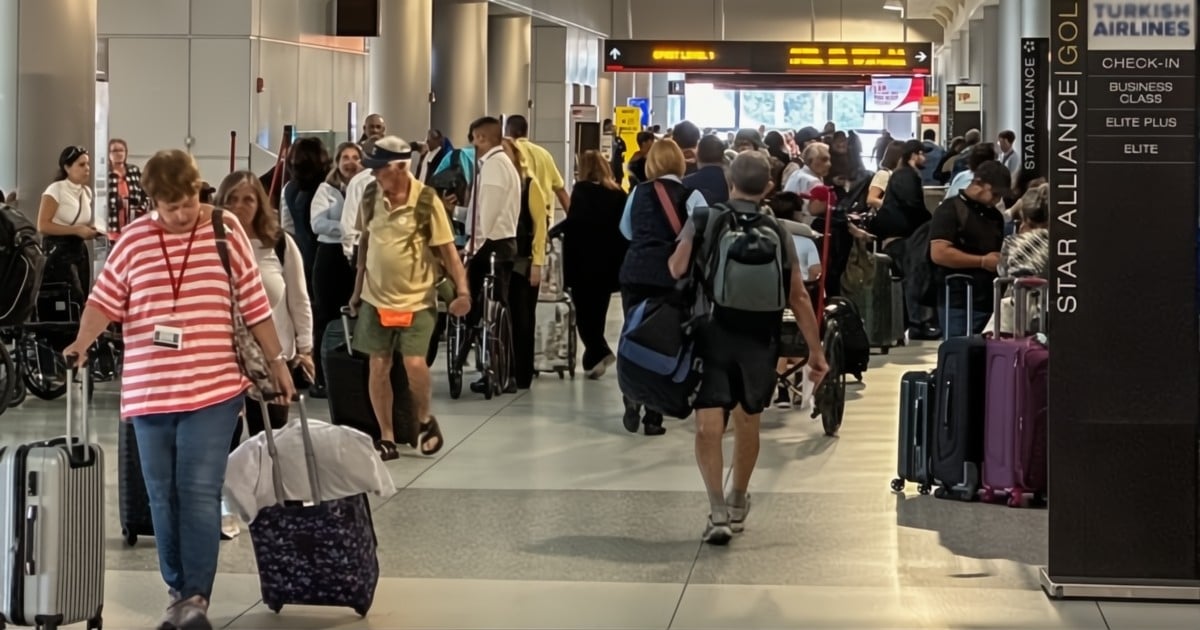
The U.S. Secretary of Transportation, Sean Duffy, has launched a national campaign to "restore civility" in air travel, inviting citizens to dress "smartly" for the airport, maintain a good attitude, assist fellow passengers, and thank airline staff.
The initiative, titled "The Golden Age of Travel Begins with You," was introduced on social media through posts on Instagram and X.
Duffy stated that the increase in disruptive behavior onboard, which has risen by 400% since 2019 according to the Department of Transportation itself, requires a cultural response.
The secretary insists that travelers should reclaim "class and good manners," and that the solution can begin with something as simple as "dressing well to go to the airport," "staying in a good mood," and helping strangers with their luggage.
However, the Department of Transportation has not defined what "dressing with respect" actually means.
In a video released for the campaign, scenes of past flights alternate with current footage of fights on airplanes, people with bare feet dangling from open seats, arguments in the baggage claim area, and altercations with airport staff.
The narrative concludes with Duffy looking at the camera and saying, "Good manners don't stop at the door."
Between Morality and Sanction: Reports of Fines and Warnings
In contrast to the friendly tone of Duffy's posts, the British tabloid The Sun reported that the Trump administration's campaign could lead to fines or even flight bans if passengers do not "dress respectfully," a measure presented as part of the holiday travel rules.
The outlet cited data indicating 1,431 incidents of misconduct in 2025, resulting in $2.1 million in fines.
Meanwhile, Duffy insists on his message of civic responsibility.
In an interview filled with references to the past, he stated that passengers should avoid "dressing as if they were going to sleep."
He also requested assistance for pregnant women and the elderly, that parents supervise their children, and that everyone says "please" and "thank you."
Critiques: idyllic nostalgia, symbolic solutions, and a system that continues to fail
Although the government is trying to promote a "golden age" based on manners and attire, experts, consumer advocates, and travelers express doubts about the effectiveness of the message.
Analysts consulted by CBS News agree that asking people to dress "respectfully" will not change the root of the problem: stress, poor flight design, overcrowding, and the decline of air service.
Chris Elliott, a consumer rights specialist, emphasized that this nostalgia for the past overlooks a fundamental difference: "Coach class used to be really nice. Now, everyone is crammed into the planes."
For millions of passengers, dressing elegantly would not alleviate the discomfort of hours-long journeys in increasingly cramped seats.
Others emphasize that, in the 60s and 70s, when most people traveled well-dressed, flying was a privilege almost exclusively reserved for the wealthy.
Scott Keyes, founder of Going.com, recalled that the supposed "golden age" was worse than the present in many ways. "Flights lasted longer, they didn't have Wi-Fi, and tobacco smoke filled the cabins," he noted.
A moral message following a controversial administration
Although he advocates for courtesy, Duffy faces criticism for his recent track record as the official in charge of transportation.
During his tenure, he oversaw reductions in flight schedules and thousands of cancellations during the government shutdown, in an already overloaded system.
Furthermore, just months prior, the Trump administration revoked a rule that required airlines to compensate passengers for delays and cancellations caused by the airlines themselves, a decision viewed as regressive for the consumer.
For critics, demanding elegance in clothing while stripping away protections for passengers amounts to focusing on appearances while ignoring the structural issues that create chaos.
Courtesy or distraction?
Although the campaign is advertised as an attempt to raise standards of behavior, experts consulted by the U.S. press insist that it will have no practical impact, warning that it could serve as a symbolic veil for a transportation management that has failed to ensure better infrastructure or rights for travelers.
As Daniel Green, co-founder of Faye Travel Insurance, summarized: "It's just a well-intentioned campaign about how to behave in public, which will probably not have any real implications for people."
Meanwhile, airlines remain overcrowded, seats continue to shrink, and consumer protection regulations have been weakened...
According to Duffy, the "golden age of travel" begins with the passenger. For many, it should start with the government that regulates the industry.
Filed under: