
Related videos:
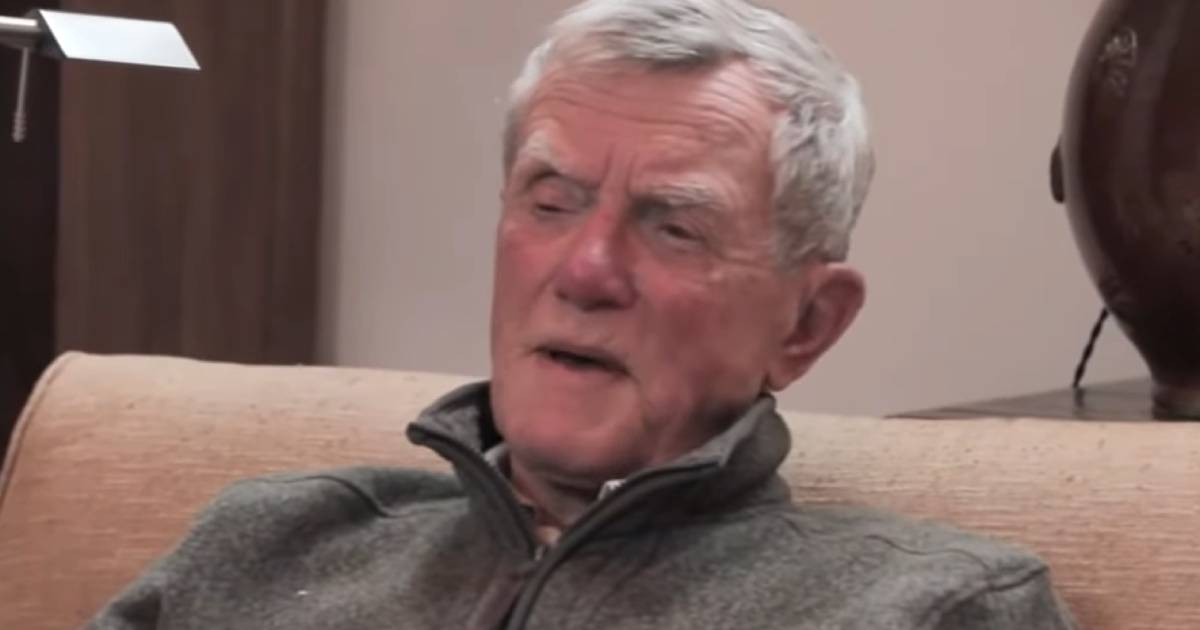
The life of American rancher Lawrence Kirby Lunt Jr. might seem like something out of a spy novel, but it took place in the heart of post-1959 Cuba. His story, reconstructed by the newspaper Cowboy State Daily, blends idealism, the Cold War, risky decisions, and a captivity that affected an entire family.
Lunt, a veteran of World War II and Korea, moved in the 1950s to a 2,000-acre ranch north of Havana, acquired alongside his Belgian wife's family. There, he raised cattle and led a relatively quiet life until the CIA came knocking at his door.
Since then, he began collaborating with the agency, recruiting informants, tracking Soviet military movements, offering his farm for covert operations, and helping to obtain photographs of Russian missiles on Cuban territory.
But the game turned deadly when Fidel Castro's regime consolidated total control over the island. In 1965, while attempting to travel to the United States for his parents' wedding anniversary, he was detained by Cuban authorities. Days later, State Security agents officially arrested him, and a 14-year nightmare began.
The New York Times reported his arrest in May 1965, noting a wave of repression against foreigners. In 1966, Lunt was sentenced to 30 years in prison for espionage.
His family launched a titanic battle to free him. His father died without achieving that goal. His brother, a doctor and rancher from Wyoming, turned the cause into a personal mission that ultimately involved presidential memos, discreet negotiations, and a failed exchange with Puerto Rican militant Lolita Lebrón.
Lunt survived interrogations, sleep deprivation, hunger, beatings, and transfers between various prisons. In a subsequent interview, he recounted how he worked in quarries, found worms in his food, and witnessed inmates being shot for trying to help others.
Even so, she never crumbled. "I don't regret what I did," she would say years later. "My love for my country kept bitterness away from my heart."
His youngest son, Larry, was barely three years old when his father was imprisoned. He recalled that Cuban soldiers occupied the family ranch before his mother could leave the island with her children for Belgium, believing that the confinement would last "a year or so." It ended up being almost fifteen.
The liberation finally arrived in 1979, thanks to a negotiated exchange partly orchestrated by the governor of Wyoming, Ed Herschler, and finalized during Jimmy Carter's administration.
Lunt was released along with three other Cuban political prisoners by the U.S. “Cubans saw us as commodities to be exchanged when it was convenient,” he stated at the time.
After his release, he lived between Tucson, Belgium, and Saratoga, Wyoming. He wrote a book about his experience, “Let Me Have My Spirit,” in which he made clear his youthful view of espionage as an adventure, although he acknowledged the harsh reality of paying for that “idealism” with nearly a decade and a half in prison.
In 1986, then-congressman Dick Cheney advocated for federal compensation for his captivity. His family claims that he ultimately received around 250,000 dollars.
Lunt passed away in 2017 at the age of 92. For his son, his father was an idealistic man, proud and convinced that democracy must be defended. But behind the spy was also a man who paid an enormous emotional price: missing out on his children's childhood, family life, and nearly fifteen years in Fidel Castro's Cuba, where politics turned his ranch and his Americanism into an unforgivable threat.
Filed under: