
Related videos:
While Washington increases military pressure in the Caribbean and Nicolás Maduro's government continues to call for “permanent alert,” another concern prevails on the streets of Venezuela: how to secure food for the day.
The geopolitical tension is felt less than the rise of the dollar. This was reported by BBC Mundo, which explored markets and neighborhoods where Venezuelans live amid fear, silence, and an inflation that devours their income.
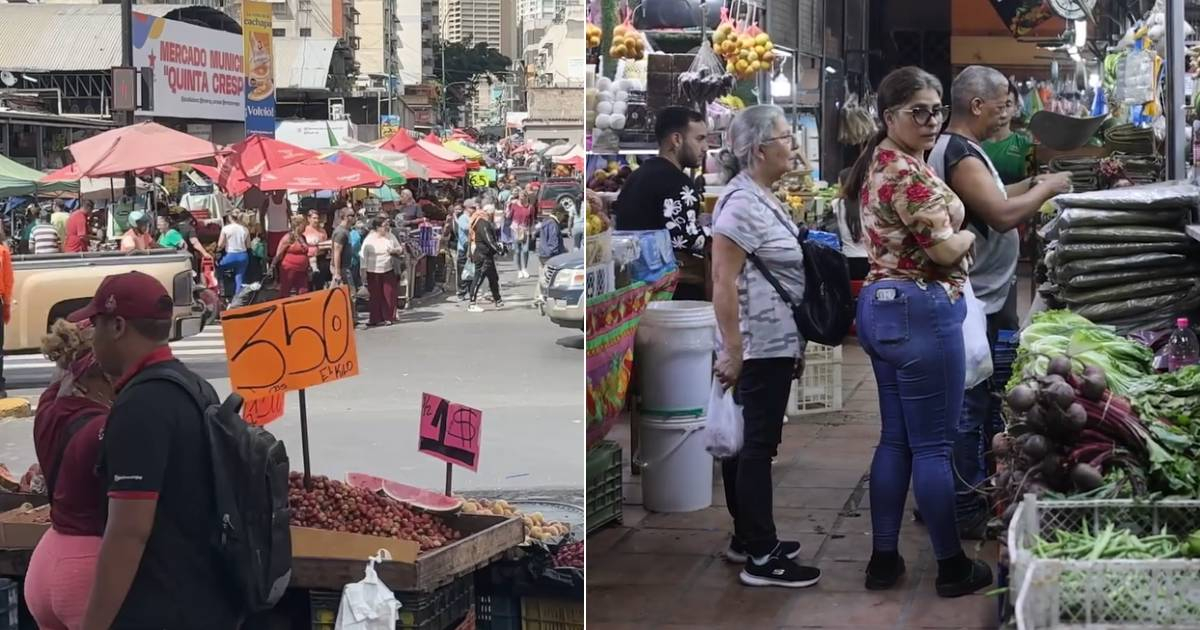
In the popular Quinta Crespo market in Caracas, Alejandro Orellano tries to sell vegetables. “What’s really getting us into trouble here is the rise of the dollar,” he said to the British media. Around him, empty aisles and increasingly expensive food illustrate the internal crisis better than any speech. “Look at how empty it is here,” he insisted.
Despite the military deployment of the United States, which includes about 15,000 personnel and the aircraft carrier USS Gerald R. Ford, many Venezuelans do not believe that an attack is imminent.
But the uncertainty is mixed with a fear that is not voiced aloud. Following the 2024 protests over the fraudulent elections that granted Maduro victory and more than two thousand arrests acknowledged by the government itself, there are many accounts from people who prefer not to speak to avoid reprisals. According to Foro Penal, nearly 900 Venezuelans remain imprisoned for political reasons.
The BBC gathered accounts from citizens who live amidst rumors, anxiety, and a kind of learned resignation. Consuelo, a 74-year-old teacher, confessed that she does not engage in impulsive buying because “one needs to have a lot of money to shop,” and she prefers to focus on taking care of her health.
In Ciudad Bolívar, a merchant recounted that she deleted critical posts about the government out of fear of being "betrayed" by someone close to her. Silence became a defense mechanism.
Personal fears clash with official propaganda. Maduro recently called on the population to have “a thousand eyes” to defend the country and accused the CIA of funding attacks against the Venezuelan economy. Meanwhile, the month-over-month inflation hovers around 20%, and the International Monetary Fund projects a price increase of over 500% this year.
Tensions are rising alongside the deterioration of air traffic. More than half a dozen airlines suspended flights following the FAA's warning, which alerted to the "increased military activity" in Venezuelan airspace.
Washington claims that its deployment aims to combat drug trafficking, while Caracas denounces a maneuver to destabilize the regime.
Amidst the warlike noise and military demonstrations, life in Venezuela unfolds with a mix of fear and exhaustion. “What worries us more is food,” said Javier Jaramillo, 57, who is looking for goods to resell during Christmas. “Venezuela is in a very bad state; inflation is consuming us.” Between the threat of conflict and daily life, most seem to be clear about what weighs heavier.
Filed under: