
Related videos:
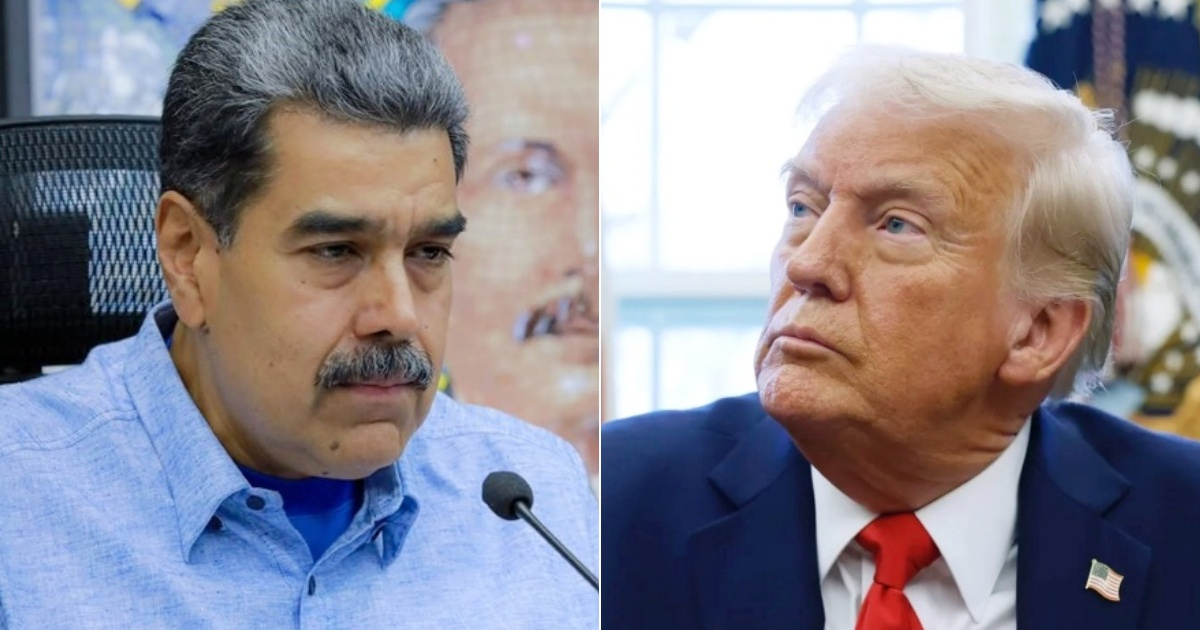
The President of the United States, Donald Trump, and the Venezuelan leader, Nicolás Maduro, held a secret phone conversation last week, according to a report this Friday by The New York Times, citing sources with direct knowledge of the contact.
According to the report, both leaders would have discussed the possibility of a meeting on U.S. soil, although there is currently no confirmed date.
If it materializes, it would be the first meeting in history between a U.S. president and the Venezuelan leader, whom Washington considers illegitimate.
"Trump does not see the military and diplomatic approaches regarding Venezuela as incompatible," White House officials cited by the newspaper stated.
The revelation comes just days after Trump threatened to extend U.S. bombings in the Caribbean to land targets in Venezuela, following weeks of attacks on alleged drug trafficking vessels.
"The terrain is easier, and that will begin very soon," the president stated on Thursday, reiterating that he will not rule out any option to "eliminate the threat of narco-terrorism in the hemisphere."
Since September, the United States has carried out dozens of bombings against ships allegedly linked to drug trafficking as part of the operation “Southern Spear”.
Experts and human rights organizations have reported that the attacks constitute "extrajudicial executions".
The Trump administration has described Maduro as the leader of the "Cartel of the Suns", a drug trafficking organization that Chavismo denies.
Nonetheless, the leaked conversation suggests a dual approach: maintaining military pressure while exploring diplomatic channels.
The agency Reuters, for its part, consulted other sources that indicated that the CIA has intensified its covert operations in Venezuela to “prepare options for political transition”, including the possible overthrow of Maduro through secret actions.
This very Friday, another major newspaper, The Washington Post, reported that the Pentagon authorized "double tap" attacks—repeated bombings to eliminate survivors—against ships in the Caribbean. The order is said to have been issued by Secretary of Defense Pete Hegseth.
The Pentagon denied the accusations, but the information has intensified concerns about the legality of the U.S. operations in the region and their potential humanitarian impact.
Some neighboring countries, such as Colombia, have denounced these American maneuvers and called for investigations into them.
In response, Maduro led a military march in Caracas on Monday, where he accused Washington of “preparing an invasion” and reaffirmed that Venezuela “will not yield to threats”.
"We do not want war, but if we are attacked, we will respond with the full power of the nation," said Maduro during the event at Fuerte Tiuna.
International analysts warn that tension between Washington and Caracas has reached its highest point in years, with an increasing risk of direct confrontation in the Caribbean.
Filed under: