
Related videos:
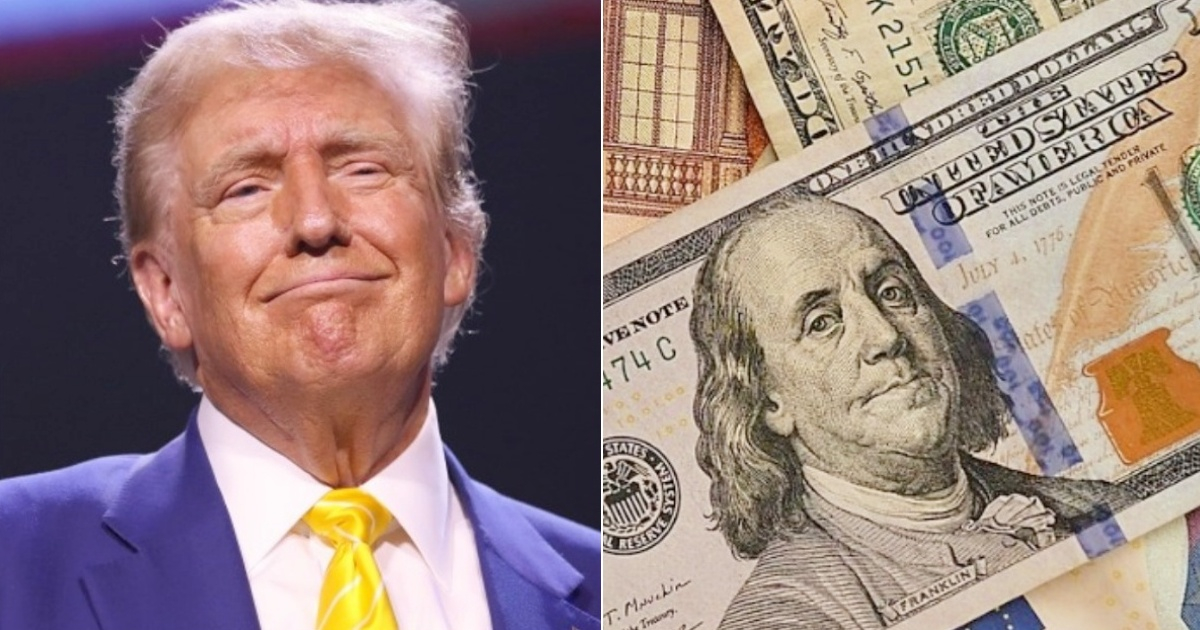
President Donald Trump has revived his proposal to distribute direct checks of at least $2,000 to middle and low-income Americans, using revenue from tariffs on imported goods as the source.
The initiative, which generates enthusiasm in some sectors and strong criticism in others, faces a complex political and economic landscape that still hinders its immediate implementation.
From the White House, Trump declared on Monday that the payments will be issued "between mid and late 2026", and that they will be supported by the profits earned by the government through increased tariffs on foreign imports.
"We have obtained hundreds of millions of dollars in tariff money. We will issue dividends later, probably in the middle of next year, or a little later," Trump assured reporters.
According to Trump, the use of these funds would not only alleviate the economic burden on millions of families, but it would also help reduce the national debt, which currently exceeds 37 trillion dollars.
“Those who oppose the tariffs are FOOLS! We are collecting billions of dollars and we will soon begin to pay off our HUGE DEBT,” he emphasized from Truth Social.
The stance of Trump's economic team
Kevin Hassett, director of the National Economic Council, was even more emphatic in stating that many Americans have already received benefits similar to the proposed check, thanks to the impact of the government's fiscal policies.
"In a moment when we are grateful for everything, don't forget... we have already sent checks of about US$ 2,000 to all the individuals who have overtime or tip income," he pointed out in an interview with Fox News.
Furthermore, Hassett defended the tariff policy as a tool that has helped generate a fiscal surplus in recent months, and he promised that Trump will intensify his efforts to alleviate inflationary burdens that he claims are a result of Joe Biden's administration.
"A typical family had to spend an additional $20,000 or $25,000 each year just to cover Biden's inflation," Hassett stated.
Opposition among the Republicans themselves
Despite the optimistic statements from the White House, the proposal faces a difficult political path.
Some Republican lawmakers have expressed their disagreement, arguing that the country is not in a fiscal position to take on that commitment.
Senator Ron Johnson was emphatic: “I wish we were in a position to return their money to the American public, but we are not.”
Johnson recalled that the projected deficit for this year reaches two trillion dollars, a figure well above the levels recorded during the administrations of Obama and Trump himself.
The representative Andy Biggs also expressed his disapproval: "I would prefer that we reduce the general tax rate and that it be permanent."
For his part, Senator Rick Scott proposed to use those tariff revenues directly for the payment of the national debt.
Who would receive the checks?
Although Trump has indicated that the payments would be aimed at "Americans with middle and low incomes," there are still several uncertainties.
It is unclear whether minors will be included, nor what the specific income threshold will be to qualify.
The Treasury Secretary, Scott Bessent has expressed skepticism and warned that the proposal will require congressional approval, which poses a significant obstacle given the internal divisions even within the Republican Party.
Where would the money come from?
According to the Tax Foundation, tariffs could generate US$ 158.4 billion in 2025 and US$ 207.5 billion in 2026.
However, the estimated total may not be enough to cover the cost of sending payments of $2,000 to tens of millions of people.
JPMorgan Bank has also estimated that American consumers are bearing about 20% of the actual cost of tariffs, which contradicts the government's claims that it is the importing companies that absorb the impact.
Parallel legislative initiatives
Before Trump's announcement, Senator Josh Hawley had introduced the American Workers Refund Act, which proposed using tariff revenues to send checks of at least $600 to each adult and dependent child.
A family of four could receive up to $2,400, according to that initiative.
However, the project has not progressed in Congress since its presentation in July.
Could it become a reality?
Trump's proposal appeals to a combination of immediate economic relief and a narrative of nationalist economic success, but it faces legislative barriers and internal objections.
In the context of persistent inflation and fiscal pressures, many are wondering whether this is an electoral strategy or a feasible policy.
Meanwhile, from the White House, they insist that the president is committed to the idea.
“President Donald Trump is committed to sending $2,000 rebate checks using revenue from tariffs on imported goods,” stated press secretary Karoline Leavitt.
There is still a lack of clarity regarding the logistical details, distribution mechanisms, and political viability of the measure, but what is certain is that Trump has once again brought to the forefront a proposal that directly impacts the wallets of millions of Americans.
Filed under: