
Related videos:
In the midst of an economic crisis and daily blackouts, the Cuban government inaugurated the Havana International Fair (FIHAV 2025) on Monday with a message of optimism for foreign investors.
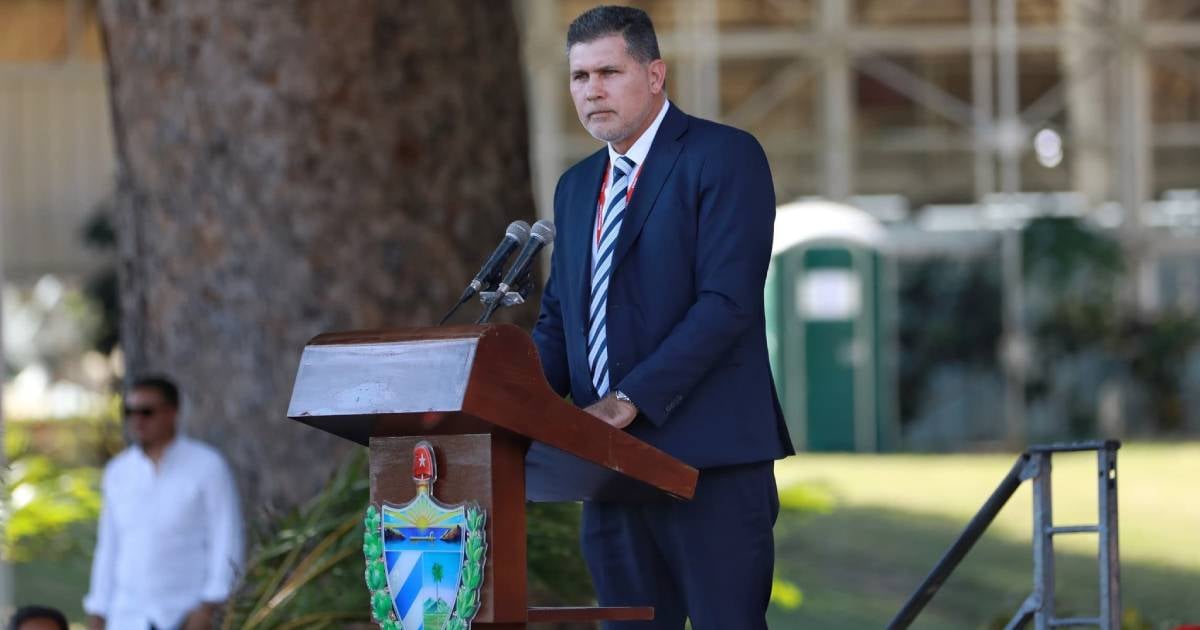
At the VIII Investment Forum, which is part of the activities of FIHAV 2025, the Vice Prime Minister and Minister of Foreign Trade and Foreign Investment, Óscar Pérez-Oliva Fraga, stated that Cuba today offers a “more modern, agile, and transparent” environment, and even asserted that Cubans residing abroad will have the same opportunities as any foreign investor.
But this speech comes just days after the government itself imposed a financial "corralito" on the foreign currency accounts of foreign companies and diplomatic missions, blocking the withdrawal and repatriation of funds. This contradiction has highlighted the regime’s urgency to attract foreign currency and the deep mistrust that persists among those already operating on the island.
Pérez-Oliva, who is the great-nephew of Fidel and Raúl Castro, acknowledged at the inauguration of FIHAV that Cuba is facing "financial difficulties," but he assured that the country is making "steady progress" in modernizing its economy.
During his speech, he emphasized that there are 376 active businesses with 40 countries, 56 projects in the Mariel Special Development Zone, and that, in 2025 alone, 32 new projects were approved totaling over 2.1 billion dollars.
In parallel, the government-aligned journalist Lázaro Manuel Alonso shared details of the new policy on social media, among which stands out:
—More flexibility for investors to choose their workforce.
—Payment of salary bonuses in foreign currency.
—Free wholesale marketing without restrictions.
—Access to fuels in hard currency and even direct importation.
—Possibility to manage underutilized state facilities.
—New portfolio of opportunities with over 400 projects.
The message is clear: the government wants fresh money and, for the first time, openly declares that the Cuban diaspora is also an economic target.
Official enthusiasm clashes with reality: Cuba won't allow money to be withdrawn
The promise of "transparency and assurances" contrasts with what happened last week when the government ordered the blocking of access to foreign currency for all foreign companies in the country. According to a report by EFE, the companies were notified that they would no longer be able to withdraw, transfer, or repatriate their funds deposited in Cuban banks.
It is the largest financial freeze implemented in years, and it also affects embassies: the Foreign Ministry informed the diplomatic corps that their deposits are not guaranteed for transfers or withdrawals either.
As a palliative measure, the Government offered the opening of "real accounts" funded exclusively from abroad, which purportedly would allow transfers and withdrawals. However, several companies reported that they have also been unable to withdraw foreign currency or repatriate money from those accounts, exacerbating the uncertainty.
This is coupled with the public warning issued by the United States last July, describing the Cuban economic system as a “rigged environment designed to benefit the regime and its associates,” with historical defaults and contractual manipulation.
The result is a scenario in which the Government asks for trust while the rules of the game are changing on the fly, and the companies already operating on the Island cannot recover their funds.
Pérez-Oliva also acknowledged that Cuba is experiencing "difficult weeks" following the passage of Hurricane Melissa and amidst an energy crisis that causes blackouts of over 10 hours daily in several provinces.
Nonetheless, he assured that the FIHAV celebration is a “demonstration of will” and pointed to sectors such as renewable energy and tourism as key drivers of recovery.
However, the population is experiencing a very different reality with inflation, empty markets, salaries that are insufficient to cover basic needs, and an electrical system on the brink of collapse.
Filed under: