
Related videos:
Investment in "hotels, business services, and real estate activities" accounted for half of the total in Havana during 2023, according to official data shared today by the Cuban economist Pedro Monreal.
The specialist emphasized that this figure is 10 times greater than that allocated for the supply of electricity, gas, and water, and more than 70 times higher than that dedicated to communal services, responsible for urban maintenance and city cleanliness.
"Now apathy is mentioned as a cause of the serious problems in Havana, but it does not seem that in the official narrative this refers to the negligence of either the central or local government," Monreal pointed out on his Facebook page, The State as such, referring to the power discourse that seeks to shift responsibility onto the citizens.
He also questioned the recent establishment of "working groups" led by local authorities to address public grievances.
“So what are the 1,335 municipal delegates, the 140 provincial delegates, and the 72 national deputies from Havana for?”, the economist scoffed.
Monreal's statements arise following a series of meetings led by the ruler and first secretary of the Communist Party of Cuba (PCC), Miguel Díaz-Canel during which the "main issues" of Havana were analyzed.
Government meetings took place after protests were recorded in Centro Havana on the night of Thursday, October 2, where residents took to the streets with banging pots, chants of “Freedom!”, and even bonfires in the middle of the street.
Several intersections were blocked in a peaceful protest, including the participation of minors.
The events occurred after one of the most critical days in the electricity supply, with power outages lasting over 12 hours that affected a large part of the capital.
On Friday, October 3, at the Provincial Party Committee, the leader presided over a meeting focused on the crisis of basic services, attended by high-ranking officials such as Prime Minister Manuel Marrero Cruz, Minister of the FAR Álvaro López Miera, the Secretary of Organization of the PCC Roberto Morales Ojeda, and the Secretary of the Council of Ministers, José Amado Ricardo Guerra, among other leaders.
According to the official report, work teams were formed that “will integrate with local authorities and the population” to address challenges such as water shortages, power outages, and the accumulation of garbage.
Members and resources from the Revolutionary Armed Forces (FAR) and the Ministry of the Interior (Minint) were also involved, in what the Government described as a "fast and intense response" to the city's issues.
During the meeting, Díaz-Canel stated that it was “time to organize and clean the city” and urged to “shake off so much passivity.”
The leader asked to respect the blackout schedules and implement “strict control” in the distribution of fuel and water.
He also warned that citizen demands must be made "in a decent and civilized manner," without "disturbing" with demonstrations and that the Government will take action against those who block public roads during protests, describing public disorder as "unacceptable."
Despite the rhetoric of mobilization, the presidential speech itself acknowledged "irregularities" in key sectors and a lack of control over basic resources.
The Prime Minister added that “there is still much mobilization to be deployed” and called on the heads of institutions to focus on “solving problems on the ground”.
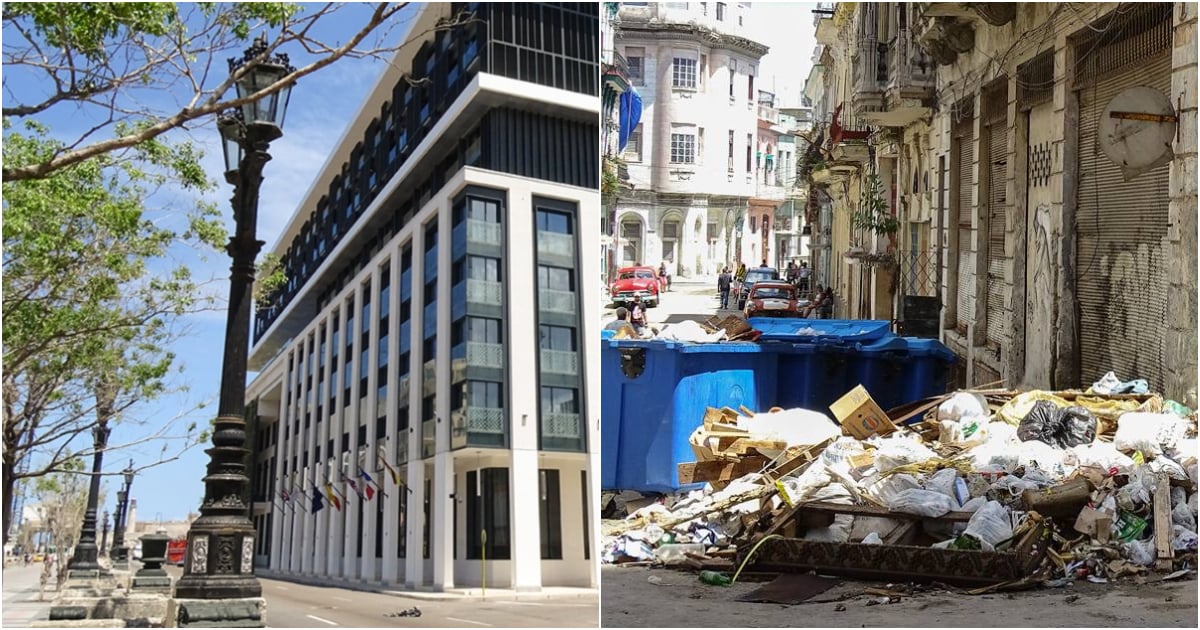
The contrast between investment data and the deterioration of urban services suggests that the rescue plans for Havana are arriving too late and without changing priorities.
While the government calls to "organize and clean the city," half of the capital remains concentrated in hotels and real estate, a strategy that, as Monreal points out, deprives the most urgent needs of the people of Havana of resources.
The official data from the first half of 2025 confirms the collapse of international tourism in Cuba, with declines in visitors, revenue, overnight stays, and a hotel occupancy rate of just 21.5%, one of the lowest in the region, highlighting the failure of billions of dollars invested in the sector.
In contrast to these figures, the government of Havana continues to allocate enormous resources to hotel construction amidst an internal economic crisis, with underutilized tourism infrastructure and no clear prospects for short-term recovery.
The logic of "tourism first" has led to the systematic deterioration of the rest of the productive apparatus, but the regime, despite warnings from several deputies about the need to settle debts, decentralize payment schemes, and adjust supply to real demand, remains anchored to a strategy that yields no results.
Experts and citizens have questioned this strategy, considering that it does not respond to the actual demand or the urgencies of the country, while a devastating contrast deepens: majestic hotels are rising while overflowing trash bins proliferate on the corners of Havana and more and more citizens are experiencing a life marked by misery.
Frequently Asked Questions about Management and Crisis in Havana
Why does the Havana government invest more in hotels than in basic services?
In 2023, Havana allocated half of its capital to hotels and properties, ten times more than what was invested in electricity, gas, and water. This strategy, criticized by experts and citizens alike, prioritizes tourism despite the decline in visitors and the internal economic crisis. Investments in underutilized tourist infrastructure do not address the urgent needs of the Cuban people, exacerbating the deterioration of basic services and quality of life.
How has the Cuban government responded to the protests in Havana?
After the recent protests in Havana, the government created working groups with local authorities to address the complaints, but also mobilized the Revolutionary Armed Forces (FAR) and the Ministry of the Interior (Minint) to manage the crisis. It was warned that the demonstrations must be "decent and civilized," and public disorder was described as "unacceptable." This response mixes attempts at management with repressive measures, reflecting a lack of effective solutions to structural problems.
What are the main issues with basic services in Havana?
Havana is facing serious problems with electricity supply, water availability, and garbage collection. Prolonged blackouts and water shortages have led to protests and noise-making demonstrations by citizens. The accumulation of garbage is also a critical issue, with the Minister of Science, Technology, and Environment admitting that "Havana smells like garbage." These problems reflect the deterioration of urban services and the lack of investment in essential infrastructures.
What impact does the energy crisis have in Cuba?
The energy crisis in Cuba has resulted in blackouts lasting up to 24 hours, severely affecting daily life and the country's economy. The National Electroenergy System is facing collapse due to outdated infrastructure, lack of fuel, and inadequate maintenance. This situation has led to increased social unrest and protests in various locations, reflecting the government's inability to ensure such an essential basic service as electricity.
Filed under: