
Related videos:
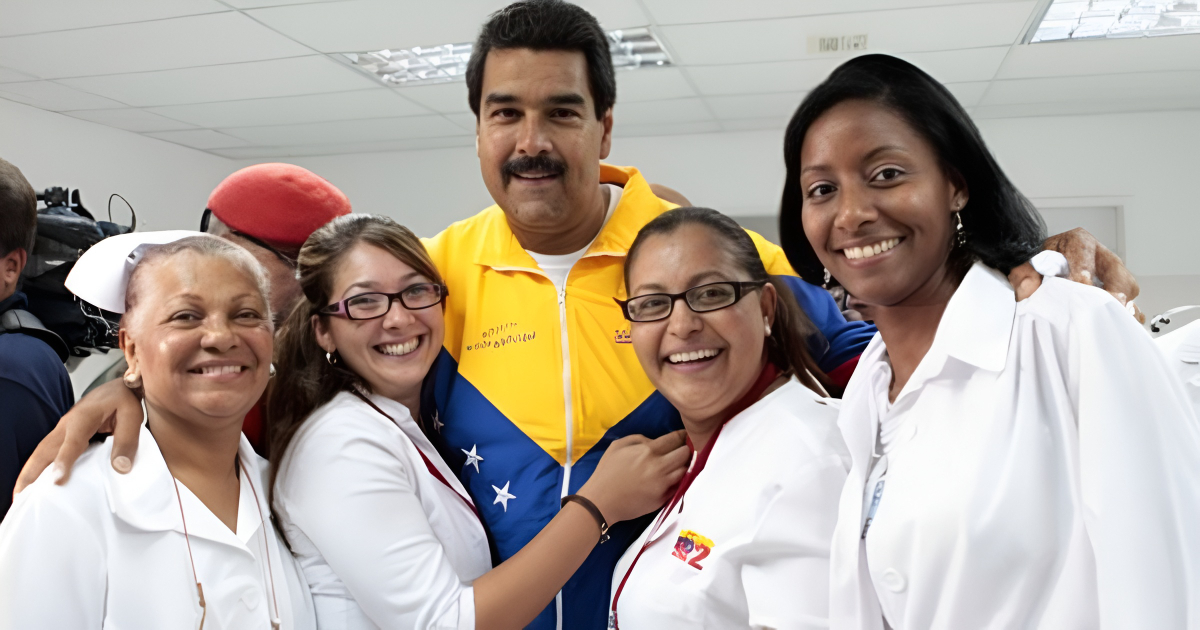
Amid the escalating tensions in the Caribbean —with U.S. warships deployed off the Venezuelan coast, the closure of airspace ordered by Donald Trump, and the threat of ground operations against the regime of Nicolás Maduro— the Cuban government remains completely silent about the situation of the thousands of its cooperants currently in Venezuelan territory.
The activist Norges Rodríguez summed it up in a tweet: “Significant military deployment in the Caribbean, 'closure' of airspace, suspension of flights, threats of ground military incursions, Maduro and his clan declared terrorists… and the Cuban regime remains silent about the Cuban doctors who are currently in Venezuela.”
The concern is legitimate. According to official estimates from Havana, there are between 10,000 and 20,000 active Cuban collaborators in Venezuela, primarily in medical, educational, and technical missions. However, various independent and diplomatic sources raise that figure to 25,000, including personnel for military advisory, intelligence, and logistics.
Cuban Presence: Opacity and Dependency
Despite being its main political and economic ally, Venezuela does not publish official data regarding the Cuban presence in its territory. The bilateral agreements signed since 2000—during the peak of chavismo—are kept under strict secrecy, without parliamentary oversight or audits.
Havana, for its part, presents the figures as an "example of international solidarity," but avoids mentioning the increasing risks faced by its collaborators due to the deteriorating security and the potential scenario of conflict.
International organizations and defense analysts point out that between 2,000 and 5,000 Cubans may be involved in intelligence tasks, political control, and military training, without the regime officially acknowledging them.
Fear in Havana
The silence of the Cuban authorities contrasts sharply with the intensity of the events. While Maduro's regime denounces “imperialist aggression,” Cuba restricts itself to issuing generic statements of solidarity, without mentioning the fate of its personnel assigned to the country.
The silence in Havana inevitably recalls the precedent of Grenada (1983), when Fidel Castro ordered the Cuban cooperators to resist the U.S. invasion with arms. Since then, the regime has maintained that its “collaborators” are also “internationalist soldiers.”
However, in the current context, a call for military defense of Venezuela would be unsustainable: Cuba is experiencing its worst internal crisis in decades and could not bear the political or human cost of getting involved in an open conflict.
Despite this, diplomatic sources and analysts agree that Havana may be preparing evacuation plans in anticipation of a possible collapse of the Chavista regime, particularly for cooperators involved in intelligence and political control tasks.
Silence might be a response to a mix of fear and political calculation: acknowledging the extent of their presence would mean recognizing the dependence on the Chavista regime and the direct exposure of thousands of Cubans in the event of armed conflict.
Havana finds refuge once again in the historical discourse of revolutionary heroism, while its "cooperators" are caught between propaganda and the real risk of a war that does not belong to them.
Filed under: