
Related videos:
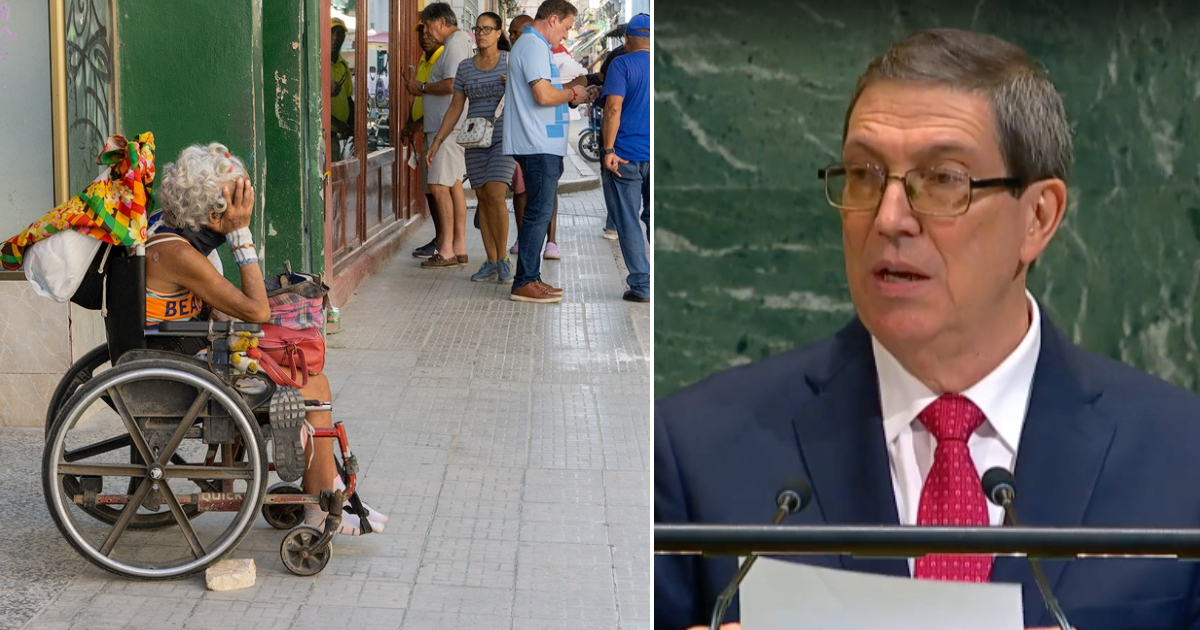
The Cuban chancellor, Bruno Rodríguez Parrilla, once again criticized the United States on social media, this time over rates of poverty and infant mortality. However, his post sparked a wave of criticism and mockery, accusing him of hypocrisy and ignoring the reality in Cuba.
In a message posted on his X account (formerly Twitter), Rodríguez stated that, when comparing the ten largest economies in the Organisation for Economic Co-operation and Development (OECD), “the U.S. has the highest relative poverty rate, the second highest child poverty rate and infant mortality rate, and the second lowest life expectancy.”
The chancellor added that this information “reflects the reality of a society that is increasingly unequal, governed by a plutocracy that increasingly promotes more capital and rights for the wealthiest minority of that country,” accompanying the text with an image of a homeless encampment in a U.S. city.
The post was met with hundreds of critical messages, many from Cuba and exile. “Communists are experts at using tragic statistics from others to hide their jungle of blood and misery. Look at the streets of Miami; you'll see they're cleaner than the wards of their hospitals.” wrote a user, referring to the precariousness of the Cuban healthcare system.
Another user reminded him of the basic shortages on the island: “Where is your supply booklet, where is your card to be able to buy the medications that don't reach the pharmacies. Demagogue.” Others were even more emphatic: “In Cuba, you have the entire population plunged into the most extreme poverty” or “Go to Santiago to see for yourself,” referring to the critical economic and social situation in the eastern provinces of the country.
Some compared the opportunities of both systems: “The one who works has food to eat wherever they are, and many who think like you would love to live in the United States,” while another quipped: “According to your analysis, we would say that Cuba is an economic powerhouse and that they don’t need Mexico’s gift of fuel.”
There were also mentions of food and nutrition in Cuba. A user referenced reports from the United Nations, stating “difficulties in stable access to proteins, diets based on subsidized carbohydrates, caloric insufficiency in vulnerable sectors, and dependence on remittances to complete the diet.”
Other messages resorted to sarcasm: “Bastard communists, in your country the only ones who don’t go hungry are you; the rest live in poverty and misery” and “In Cuba, everyone is equal: equally poor.” One user summarized the general sentiment by stating: “No one risks their life to escape capitalism, but they do to flee from your model.”
This latest verbal attack from the chancellor adds to a series of recent statements in which he has tried to shift attention towards Washington or defend allied regimes of Havana. Days ago, he asserted that “the U.S. is one of the most unequal countries on the planet,” which generated strong criticism from Cubans who reminded him that rafts “always go from Havana to Miami, never the other way around.”
Shortly thereafter, the chancellor publicly challenged the U.S. Secretary of State, Marco Rubio, asking him “if he ever served in the Military”, while defending the regime of Nicolás Maduro and denouncing an alleged “military escalation in the Caribbean.”
In another recent statement, Rodríguez also denied the existence of the Cartel of the Suns, asserting that it is “a fabrication by the US government to justify violent actions against Venezuela.”
The responses to their posts reflect a growing trend among Cuban users: confronting the official narrative with the everyday reality of the island, characterized by power outages, inflation, shortages of food and medicine, and a structural poverty that many compare to what the chancellor denounces beyond its borders.
Filed under: