
Related videos:
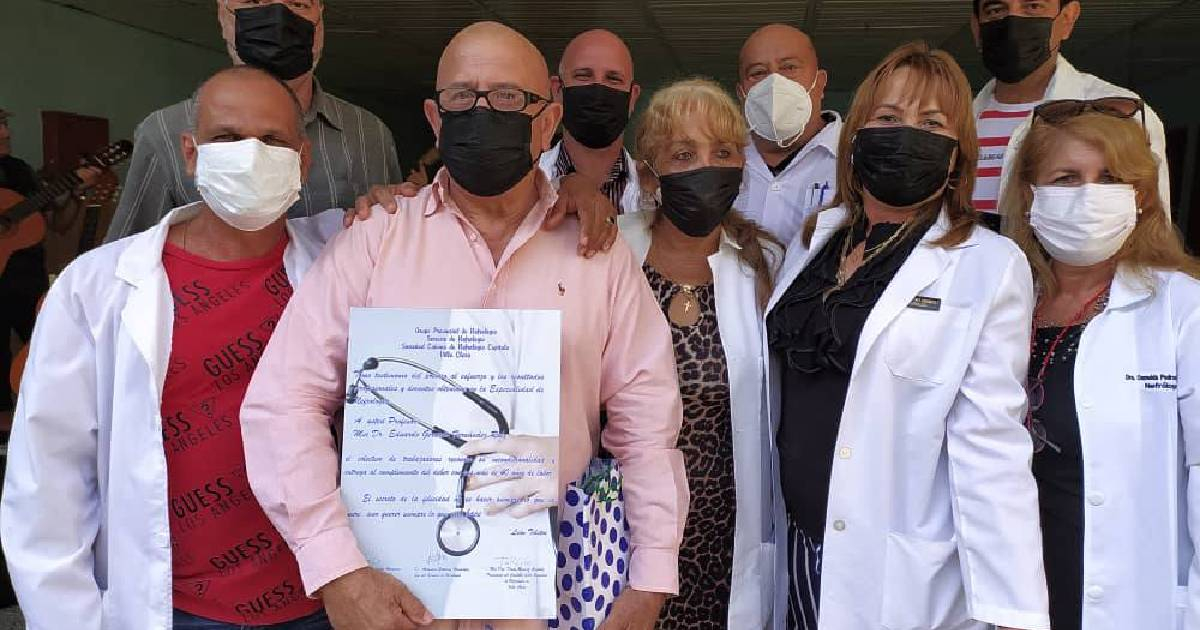
The province of Villa Clara is in mourning this Tuesday following the announcement of the death of Dr. Eduardo Fernández Ruiz, one of the most recognized nephrologists in the region and an important figure in the training of generations of doctors for over five decades.
On the social network , the user Yandry Alfonso Chang announced the news of the doctor's passing at the age of 72, which caused dismay among colleagues, students, and patients who remember him as an exceptional professional and a dedicated teacher.
Born on September 24, 1953, in Santa Clara, Fernández Ruiz trained at the "Victoria de Girón" Medical Sciences Faculty in Havana, and later aligned himself with the regime's ideals by actively participating in political, cultural, and volunteer work activities, as a member of the Young Communist Union and later the Communist Party, according to Alfonso himself.
A pillar in Internal Medicine and Nephrology in Cuba
After graduating, he specialized in Internal Medicine, an area in which he attained a teaching position early on and became a trainer for numerous generations of health professionals.
At the end of the 1990s, in light of the shortage of nephrology specialists in the province, he was sent to the Nephrology Institute in Havana, where he completed a demanding diploma program with outstanding results. Since then, he joined the provincial nephrology service, where he eventually became the head, a trainer, and a fundamental pillar.
In 1996, he earned his second degree in Nephrology, while also taking on the role of founder and head of the department, as well as president of the Villa Clara chapter of the Cuban Society of Nephrology, positions he held for two decades.
Later, he was promoted to assistant professor and in 2009 he attained the rank of master in emergency medicine.
Internationalist commitment and academic legacy
Dr. Fernández Ruiz carried out internationalist missions in Angola and Trinidad and Tobago, in addition to providing training to nephrologists in Ecuador, a work that extended his impact beyond Cuban borders.
His scientific output included articles in national and international journals as well as contributions to books on Internal Medicine, Intensive Care, and Nephrology, solidifying his prestige as an academic authority.
Filed under: