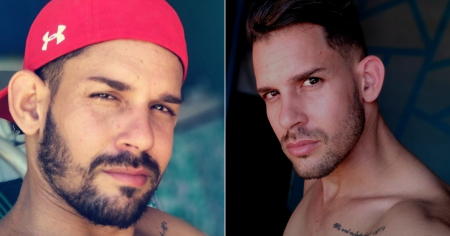
The Cuban content creator Ari de La Habana (@ari_delahabana), known for her reviews of places in the capital, posted a chilling message on Instagram where she denounced the seriousness of the current outbreak of arboviral diseases affecting the country.
In a video recorded from La Piragua in Vedado, Ari confirmed that his grandfather died from complications related to chikungunya and urged Cubans to “take care and protect the elderly and children,” while harshly questioning the continued arrival of foreign tourism amid the health emergency.
The virus is indeed killing. Two days ago, my grandfather died in Fajardo hospital due to complications from the virus. He was 82 years old, but he contracted it and couldn't withstand it, she recounted visibly affected.
The influencer, mother of two young girls, stated that hospitals are overwhelmed and that there are "many children in critical condition", a claim that aligns with recent official figures from the Ministry of Public Health, which admitted the hospitalization of 34 minors in serious or critical condition due to chikungunya.
Ari urged families to use insect repellent, cover minors, and avoid exposure to mosquitoes, but at the same time pointed out the paradox of seeing buses full of tourists while the country is experiencing an out-of-control epidemic.
“Several foreigners got off two buses. What are they coming to Cuba for? To get sick? This is not a game. They shouldn't come now, they should wait, because there is a virus killing people here,” he warned.
The video has gone viral on social media, becoming one of the most significant citizen denunciations in recent weeks. Their testimony joins the hundreds of spontaneous reports about deaths, shortages of medications, and medical negligence that the regime does not officially acknowledge.
Meanwhile, the ruler Miguel Díaz-Canel insists on projecting an image of control and scientific management, with televised meetings from the Palace where they discuss "protocols" and "follow-up actions," but without publishing data, budgets, or concrete results.
The latest of those meetings, held on November 20, did not announce any real measures: only references to "clinical studies" from the Pedro Kourí Institute and promises to "refine the Cuban protocol for chikungunya." There was no mention of the scarcity of insecticides, outbreaks in schools, or the hospital collapse.
The crisis has reached unprecedented levels. According to data from the Pan American Health Organization, Cuba has the highest chikungunya rate on the continent, with over 20,000 confirmed infections as of early November.
The simultaneous circulation of dengue and oropouche has pushed the healthcare system to its most critical point in decades.
Despite this, the Ministry of Tourism continues to allow the arrival of international flights and cruises, without health warnings for travelers or entry restrictions to the most affected areas.
For many Cubans, the image of tourists strolling along the Malecón while hospitals lack antibiotics and children are admitted with high fevers symbolizes the complete disconnection between the regime and reality.
The personal pain of a young woman from Havana has thus transformed into a collective voice. Ari speaks not only for her grandfather but for an entire country that feels sick, abandoned, and deceived.
While the Cuban regime continues to manipulate figures and organize meetings with no results, the truth emerges on social media, in the neighborhoods, and in the morgues: Cuba is facing an epidemic that quietly claims lives, while the government looks the other way.
Filed under: