
Related videos:
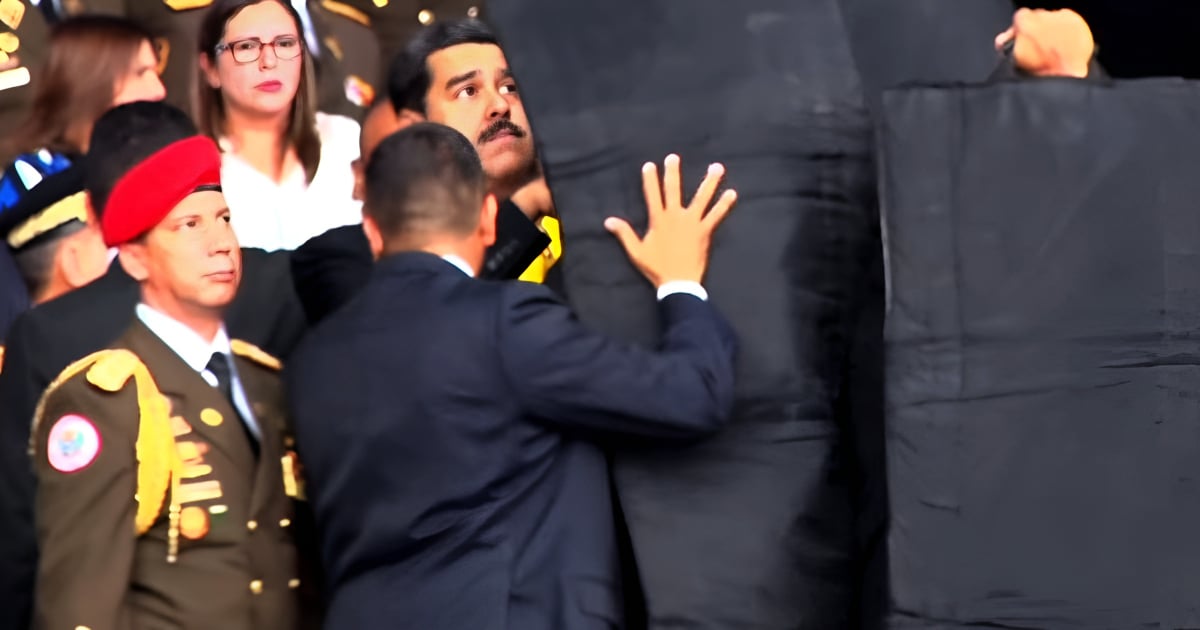
Nicolás Maduro has bolstered his personal security with new Cuban agents in his team and with more undercover intelligence officers infiltrating the Venezuelan army, amid fears that his own allies from Havana may eliminate him if he relinquishes power, according to U.S. intelligence reports and a recent article from The New York Times.
High-ranking U.S. officials cited by the portal Axios claim that the Chavista leader fears being assassinated by his Cuban advisors if he steps down from office, due to the sensitive information he possesses regarding joint operations between Caracas and Havana.
Maduro, those sources affirm, "knows too much" about the secret agreements that have sustained the alliance between both regimes for years, including drug trafficking operations, irregular financial transactions, and intelligence maneuvers in Latin America.
The report adds that the Venezuelan leader has taken extreme measures to protect himself: he frequently changes beds and mobile phones, moves between different residences in Caracas, and has strengthened his security detail with Cuban agents specialized in counterintelligence.
According to The New York Times, Maduro is even distrustful of his military surroundings and has ordered the incorporation of more officers from the G2 Cuban intelligence service into presidential security and the army structure. The goal is to detect potential internal betrayals, but also to ensure Havana's direct presence in the Venezuelan power apparatus.
This influence is not new. Since the death of Hugo Chávez in 2013, Cuba has controlled the main intelligence and security agencies of Venezuela. Thousands of Cuban advisers operate within SEBIN and DGCIM, overseeing both political operations and the surveillance of the military itself.
In return, Havana receives oil, foreign currency, and diplomatic support, which has allowed the Cuban regime to sustain its economy amid the energy crisis.
Washington considers that this alliance is a direct threat to regional stability. U.S. agencies indicate that the Cuban-Venezuelan network facilitates the flow of drugs and money in the Caribbean, in addition to acting as an operational platform for Russia, China, and Iran.
Although President Donald Trump keeps the possibility of a negotiated exit open, the increase in U.S. military pressure in the Caribbean sends a clear message: the end of the impunity of the Caracas-Havana axis.
The naval operation Southern Spear (Lanza del Sur), officially aimed at combating drug trafficking, has destroyed more than 20 vessels linked to Venezuelan networks, leaving at least 80 dead, according to leaked intelligence data.
“Of course we have covert operations, but they are not designed to kill Maduro,” said a senior White House official quoted by Axios. “However, his continued hold on power depends on Cuban protection, as well as the fear he instills.”
Despite this scenario, Maduro tries to project an image of calm. He appears at public events without prior notice, dances, records videos for TikTok, and repeats slogans of "peace and sovereignty," while hiding in different places each night. His defiant rhetoric contrasts with his growing paranoia.
The paradox is that Maduro does not fear Washington, but rather those who support him. Cuba has become both his guardian and his jailer: it controls the security that protects him, but also the one that could eliminate him.
According to analysts, the fate of chavismo is no longer determined in Caracas, but in Havana. Maduro's fear of his own allies marks the twilight of a revolution that, by surrendering its sovereignty to Cuba, has become a prisoner of its own dependency.
Filed under: