
Related videos:
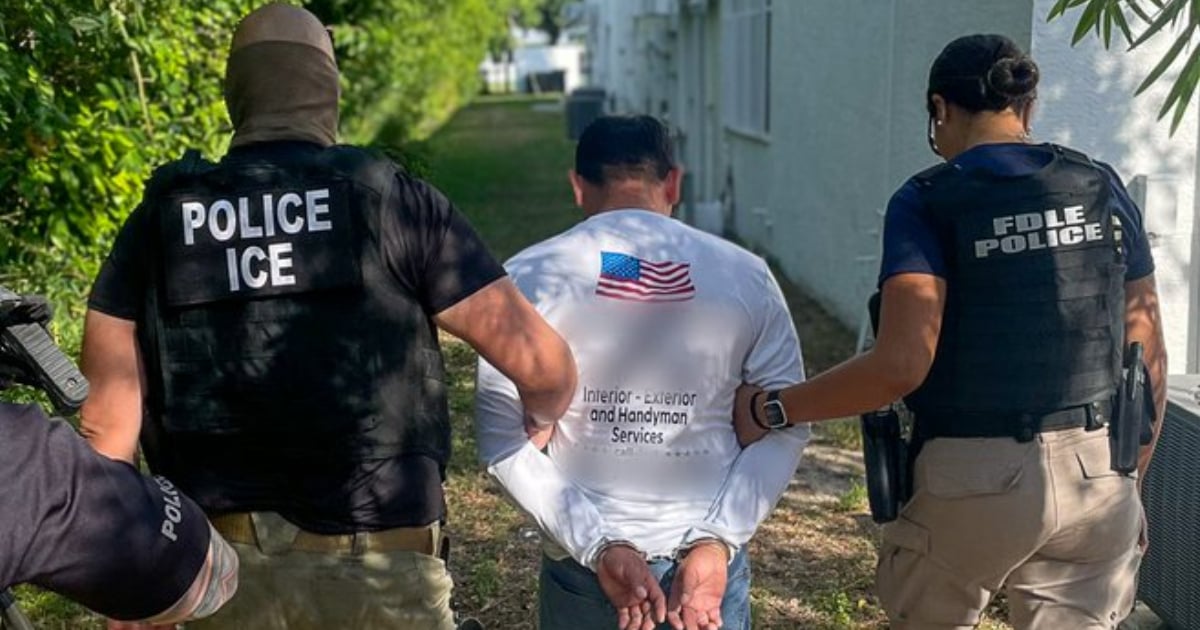
The United States government issued a direct warning to foreigners who have overstayed their permitted duration of stay, emphasizing that they will be identified and deported.
The U.S. Citizenship and Immigration Services (USCIS), through its official account on X, urged those who are "out of status" to use the voluntary self-deportation tool.
"It is possible that you entered the U.S. legally for a temporary visit, but if you stay longer than permitted, you will be identified and expelled. If you have exceeded the allowed time, use the CBP Home app to self-deport," he emphasized.
For its part, the White House publicly backed the stance, writing on X: "MASS DEPORTATIONS WILL CONTINUE!"
Self-deportation with a free ticket, waiver of fines, and a departure bonus
On its website, USCIS reminded about the "Homecoming Project," an initiative by the Department of Homeland Security that encourages self-deportation through the CBP Home mobile application.
According to the official explanation, foreigners who are illegally present in the country will be able to initiate a simplified process to return to their home nation.
Those who use the application will receive a free airline ticket, a $1,000 departure bonus upon arrival in their country, and the cancellation of fines related to illegal stay. After submitting their information, officials from the DHS will contact them.
The agency clarified that the self-departure option is available for those who have lost their temporary status due to revocation.
Migratory pause, mass reviews, and new restrictions under the Trump administration
The announcement comes in the context of unprecedented tightening of immigration policies.
This week, the administration of Donald Trump suspended all immigration applications from citizens of 19 restricted countries, including Cuba, Iran, Sudan, Eritrea, Haiti, Somalia, and Venezuela.
The suspension affects the processing of residency cards, citizenship applications, and asylum procedures, and has resulted in the cancellation of interviews and naturalization ceremonies in several cities.
Immigration lawyers reported cases of Venezuelans, Iranians, and others who attended their appointments only to be informed of cancellations without any explanation.
“Everything has come to a standstill. It’s like a bottleneck and it’s only going to get worse,” stated attorney Ana María Schwartz. Another specialist, Elissa J. Taub, confirmed that even permanent residents ready to become citizens have had their ceremonies canceled.
The decision was framed by the authorities as a security review following recent incidents, including the shooting in Washington involving an Afghan asylum seeker.
USCIS orders total suspension of asylum, residency, and naturalization for 19 countries
On December 2, USCIS issued memorandum PM-602-0192, ordering the immediate halt of all asylum processes (I-589), residency (I-485), green card renewals, condition removals, travel authorizations, and naturalization applications submitted by citizens of the 19 countries classified as "high risk."
The measure is based on Presidential Proclamation 10949, signed by Donald Trump on June 4, 2025.
The order not only halts pending cases but also requires a thorough review of already approved benefits, including permanent residencies granted since January 20, 2021.
All those applicants must undergo new interviews, without exception, to assess any links to criminal or terrorist activities. Officials must verify if the foreigners appear in the Terrorist Screening Dataset (TSDS) and apply the inadmissibility criteria outlined in the Immigration and Nationality Act.
According to the document, the review is in response to two recent cases: Nasir Ahmad Tawhedi, convicted for planning a terrorist attack on Election Day 2024, and Rahmanullah Lakanwal, suspected of the attack in Washington where National Guard members were killed. Both entered the country under humanitarian programs.
The memorandum warns that the suspension will remain in effect until further notice and that any exceptions will require approval from the USCIS Office of Policy and Strategy.
Direct impact for Cubans, Venezuelans, and other countries in the region
The measure affects applicants from countries included in President Trump's travel ban list.
Among the already visible consequences are cancellations of naturalizations, visa freezes, and a new wave of instability for immigrants from the Caribbean and Latin America.
Since June, the United States has suspended tourist, business, study, and exchange visas for Cubans, adding to the current halt on asylum and residency applications.
The spokesperson for USCIS, Matthew Tragesser, reiterated the government's position: "Citizenship is a privilege, not a right."
USCIS indicated that it will prepare a priority list of cases within 90 days that may be called for re-interviews, subject to additional review, or referred to ICE.
The agency was emphatic: "Nothing is off the table until every foreigner has been evaluated to the fullest extent possible."
Review of all Green Cards issued since 2021
At the end of November, the USCIS director, Joseph B. Edlow, announced that, by direct order of the president, a thorough and comprehensive reevaluation of all green cards issued to foreigners from countries of concern will be conducted.
Edlow stated on X: "The protection of this country and the American people remains a priority. The security of the United States is non-negotiable."
The government also ordered a review of all refugees admitted during the Biden administration and warned of a possible further tightening in the granting of immigration statuses such as asylum, parole, and residency.
A paradigm shift in migration
The combined measures—self-deportation with incentives, mass reviews, benefit suspensions, mandatory re-interviews, and visa restrictions—constitute a profound transformation in U.S. immigration policy.
More than 1.5 million asylum seekers and tens of thousands of permanent residents could face delays, re-evaluations, or loss of benefits.
In the midst of this reconfiguration, the government's message is clear: those who overstay their welcome or come from countries under strict monitoring will have no margin for error and could be deported, either through traditional means or via the voluntary mechanism promoted by the DHS.
Filed under: