
Related videos:
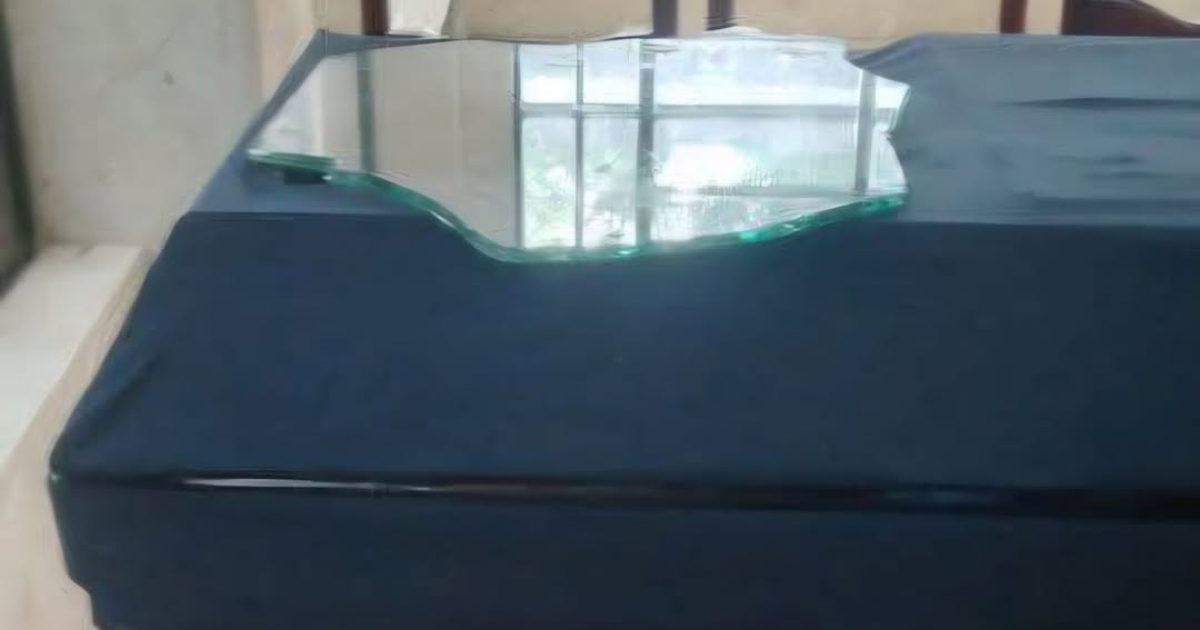
An image shared on shows a coffin draped with a dark cloth and a broken glass placed haphazardly in a funeral home in Guantánamo. The complaint was made by the activist Irma Lidia Broek, who questioned the lack of respect for the deceased and their families.
“Look at the glass they put on this ‘coffin’ (if it can even be called that) so that the family could mourn their deceased in Guantánamo. The disrespect is so immense that it’s almost impossible to overcome. How long will this continue in Cuba?” he wrote.
The independent journalist Yosmany Mayeta Labrada echoed the complaint on his Facebook profile, stating that the image “reveals the cruelty of the crisis the country is going through,” and that the situation demonstrates “the institutional disrespect for human dignity, even after death.”
A reflection of daily indignity
Among the hundreds of comments posted on both reports, many users described similar experiences in funeral homes across different provinces, confirming the widespread precariousness of the funeral system in Cuba. One person recounted that when his father passed away, the glass of the coffin broke, and the funeral home in Alamar refused to replace it, forcing him to remove the glass from a window in order to hold the wake. Another user recalled that his grandfather waited over six hours for a coffin in Bayamo, and when they arrived at the cemetery, “there was neither cement nor water to seal the grave.”
The text also mentions funeral homes where glass panels are reused among several bodies, coffins that must be nailed shut with hammers, or coffins made from recycled materials. In many cases, mourners describe the added pain of witnessing these conditions during a time of grief. One internet user wrote that in Cuba, “there is neither shame nor respect for the people, and even less for the government,” while another summarized: “Neither the living nor the dead have dignity.” Another woman recounted that her mother was laid out “without glass because the only one available was being rotated from one coffin to another.”
Some reported that workers nail the lids with large nails, without any care, or that family members must provide their own resources. “My husband died in Holguín and they didn’t put any glass; the coffin was so poor that blood was visible,” lamented a grieving family member. The comments reflect not only the scarcity of resources but also a loss of sensitivity and respect during times of grief.
Structural crisis and state abandonment
Recent reports from various provinces across the country confirm that these are not isolated incidents but rather a structural collapse of the funeral system. In Holguín, a family waited over 15 hours for the body of a deceased elderly woman to be removed, leading to neighborhood protests when the relatives decided to place the corpse at the entrance of their home. In Villa Clara, the shortage of coffins and the poor quality of those provided are causing delays in burials, while in Camagüey, there is only one operational hearse for the entire city, resulting in delays that extend the wait for bodies in hospitals and morgues. In Contramaestre, Santiago de Cuba, the family of a war veteran reported that his burial was conducted without state support or official honors.
In other provinces, the lack of materials and personnel has led to scenes of desperation and protests, according to various reports on the collapse of funeral services in the country. The conditions in cemeteries also reflect the deterioration: graves without cement, lack of water to prepare mixtures, and insufficient gravediggers. In many funeral homes, there is no lighting, flowers, or ventilation, and coffins must be improvised with low-quality materials or even cardboard.
The added pain of indignity
The testimonies reflect a shared sense of humiliation and collective fatigue. One user summed it up by saying that "even death is not dignified anymore," while another internet user expressed that "in this country, the living are neglected; what will remain for the dead?" For many, the scene of the coffin with a broken glass is merely a visible sign of a deeper crisis, where material scarcity intertwines with human neglect.
The case of Guantánamo, like others that have occurred in different provinces, shows how death in Cuba has become an experience marked by precariousness, waiting, and a lack of respect. What should be a moment of reflection and farewell transforms, for many families, into a final test of endurance against a system that no longer even guarantees the right to die with dignity.
Filed under: