
Related videos:
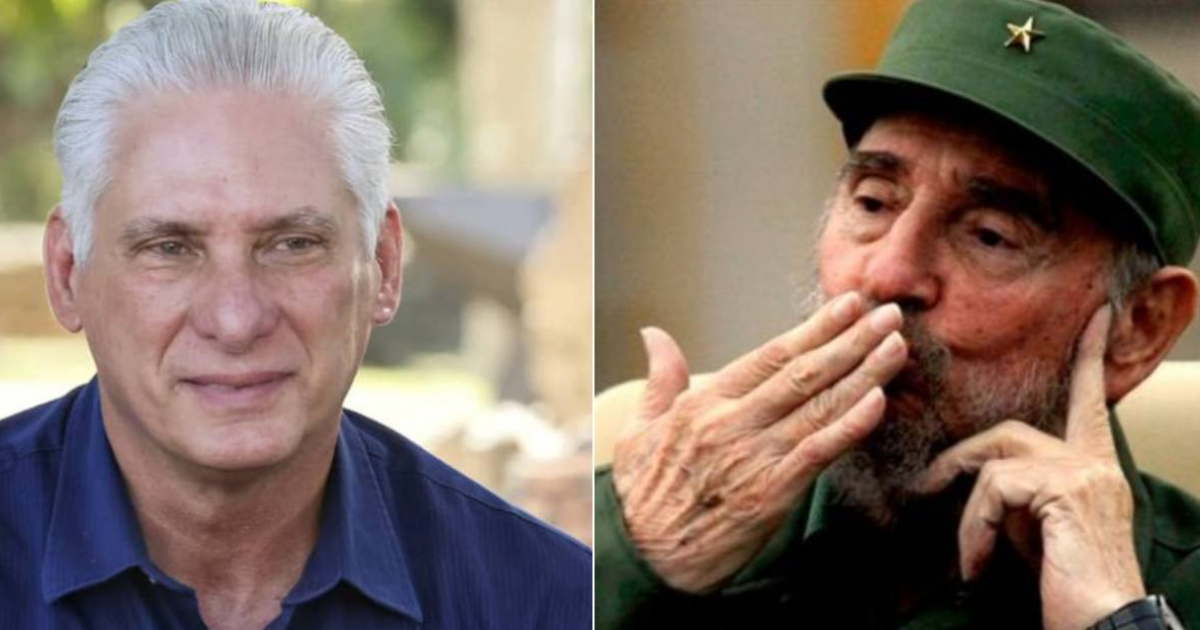
Miguel Díaz-Canel has once again dusted off Fidel Castro's legacy as the cornerstone of political education for Cuban youth.
During a meeting with student leaders, the president stated that "it is time to study Fidel" and called on the new generations to "act as he asked."
The speech, amplified by the official account of the Presidency of Cuba, is part of a new propaganda campaign aimed at reviving the cult of personality of the late dictator amid growing social discontent.
In his statements, Díaz-Canel emphasized the need to "interpret Fidel and bring him into the light of these times," a phrase that encapsulates the aim of imposing the ideologization of youth.
The regime promotes its mission to turn classrooms and student organizations into spaces for indoctrination, where the historical leader is studied not from a critical perspective, but as an unquestionable example of morality and political conduct.
The speech also appealed to the need to achieve a "greater comprehensive general culture," a concept that the leader presented as a means of national salvation.
However, in practice, this idea reinforces a cultural justification of the political doctrine that conflates genuine academic development with loyalty to the Communist Party.
During the meeting, Díaz-Canel awarded the "Panchito" distinction to three outstanding student leaders, a strategy that symbolically uses recognition and rituals through which the regime rewards political obedience more than personal merit.
These gestures, repeated for decades, aim to uphold the heroic narrative of the revolutionary process in the face of a youth that is increasingly disconnected from the official discourse.
The constant references to the historical leader also form part of the attempt to reposition Díaz-Canel as the heir to Fidel Castro, in a context where his leadership is deeply eroded. Lacking charisma and visible results, the leader resorts to the myth of the commander to legitimize his role in power.
The insistence that young people must "act like Fidel" is framed within a narrative of symbolic resistance, which the government uses to present ideological loyalty as a form of patriotism. They aim to justify the current crisis as part of an alleged heroic struggle against external enemies.
Meanwhile, the regime continues to divert attention from the real crisis, avoiding discussion of blackouts, hunger, or the massive exodus that defines the lives of millions of Cubans. Instead of solutions, Díaz-Canel suggests revisiting Fidel, as if the past could save the present.
Filed under: