
Related videos:
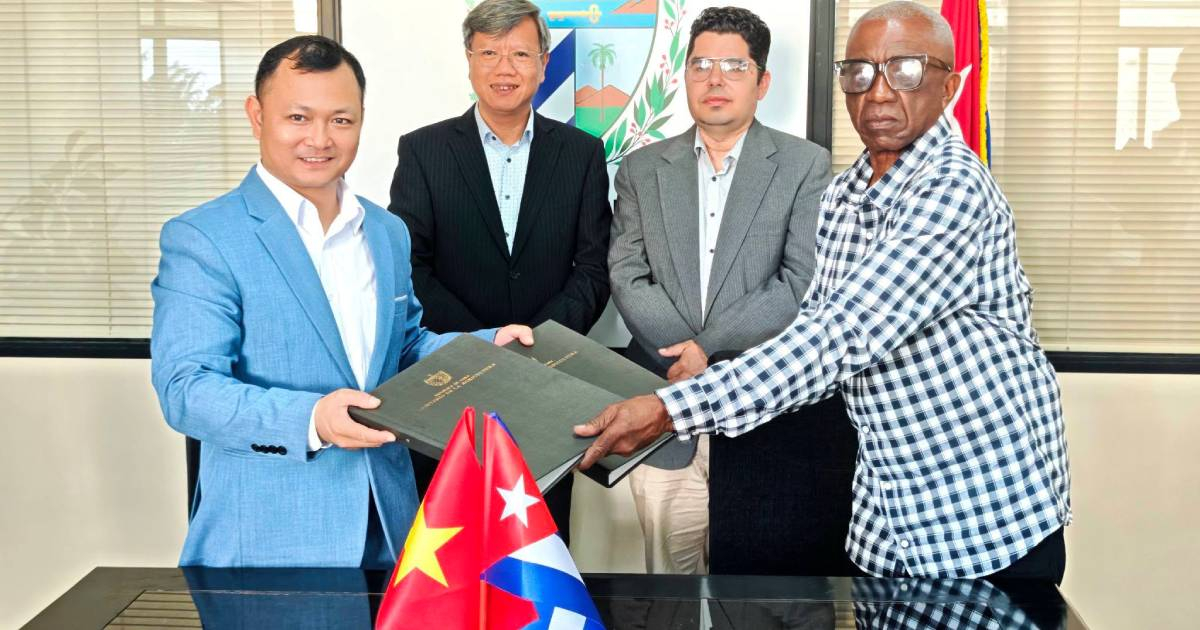
Vietnam has once again invested in Cuban agriculture. The Embassy of Vietnam in Cuba announced on Facebook that Hoang Gia Viet Food, JSC signed a joint venture contract in Havana with the Alquízar Agricultural Company, part of the Agroforestry Group of Artemisa, to develop over 25 years, with possible extensions, the value chain of cashew and other short-cycle crops.
The investment amounts to 50.56 million dollars, aimed at technology, transportation, and agricultural equipment. The official newspaper Nhan Dan confirmed the information, stating that the project is backed by the Cuban Foreign Investment Law and focuses on "processing and marketing cashew nuts." It described the agreement as "a concrete result of the strategic cooperation" between both governments.
The signing was solemnly celebrated by authorities from both countries. Present were Vietnamese ambassador Lê Quang Long, Cuban Deputy Minister of Agriculture Telce Abdel González Morera, and representatives from the province of Artemisa.
But while the speeches talk about "eternal friendship" and "strategic alliance," the reality in Cuba paints a different picture: a population trapped in the worst food and energy crisis in decades, waiting for solutions that never arrive from these multimillion-dollar projects.
Artemisa, where the new program will be implemented, is the same province that recently opened idle lands to Vietnamese companies for the cultivation of soybeans, green beans, peanuts, and cashews, primarily for export. Local markets, on the other hand, remain empty. Foreign investment is growing, but food on the Cuban table is not.
The new announcement comes months after Vietnam donated 15 million dollars to the “Cuban people”, which was received by the leader Miguel Díaz-Canel during his visit to Hanoi and that increased that amount to 23.3 million in a campaign that included contributions from Vietnamese children who “broke their piggy banks,” according to official propaganda.
Also, delivered four solar parks to Mayabeque to ease the energy collapse, yet another band-aid on a devastated power grid that forces millions of Cubans to live with endless blackouts.
Despite the wave of donations and investments, the impact on the population remains unseen. The regime has not explained how the millions received were used or what portion of the agricultural projects will be allocated for domestic consumption. What is clear is that Vietnam has become a key support for the Cuban government at a time of financial isolation and defaults that have distanced China and Russia.
Even Vietnamese companies have expressed frustration over frozen funds in Cuban banks, bureaucratic hurdles, and a lack of guarantees for investments. Nonetheless, the Vietnamese government continues to supply capital, technology, and energy to an economy that struggles to take off and meet the basic needs of its people.
The project in Artemisa presents itself as a model of cooperation, but for thousands of Cuban families who are desperately seeking oil, rice, or milk, these investments seem to fall within the same logic of alliances made at official events, while the crisis in households deepens.
The choice of cashew as the flagship crop of the project is symbolic, as it is a niche product, unrelated to the everyday diet of Cubans, but appealing for foreign trade. It is a gamble that reveals the priorities: to generate foreign currency, not to feed the country.
Filed under: