
Related videos:
An article published by the official newspaper Granma describes the dictator Fidel Castro (1926-2016) as “the least known filmmaker in the world,” supported by anecdotes, figures, and testimonies that reinforce a laudatory narrative, without addressing the censorship and conflicts in Cuban cinema under his unchallenged rule.
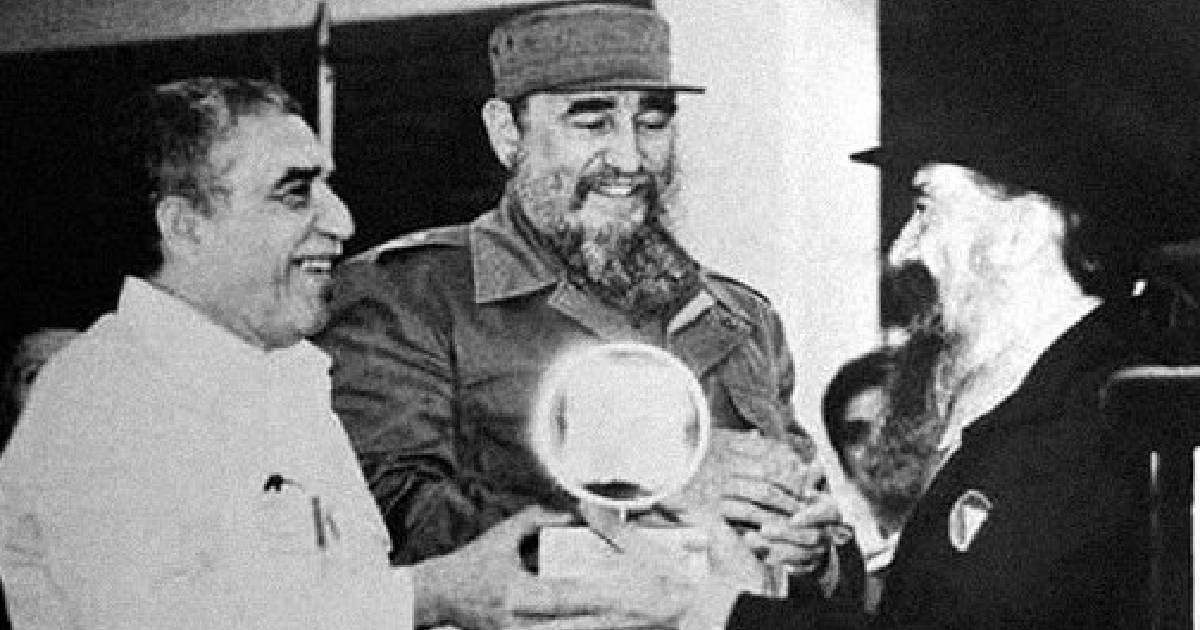
The text signed by retired colonel and historian René González Barrios, director of the Centro Fidel Castro Ruz, reconstructs the relationship of the former leader with the so-called seventh art, starting from a phrase uttered in 1986 by Gabriel García Márquez (1927-2014) and presents it as evidence of an exceptional artistic vocation.
From the outset, the text adopts a clearly hagiographic tone, typical of the official organ of the Communist Party, in which the Cuban leader is portrayed as a statesman of vast culture, a passionate cinephile, and a key promoter of Latin American cinema.
The article reviews the establishment of the Cuban Institute of Cinematographic Art and Industry (Icaic) in 1959 and the International School of Film and Television in San Antonio de los Baños in 1986, attributing them to Castro's "cultural vision" and his belief in film as a strategic tool of the Revolution.
It also details encounters with international filmmakers, actors, and producers, as well as an extensive list of films watched by Castro between 1966 and 1984, based on alleged logs maintained by members of his personal escort.
However, the piece avoids any critical analysis of the context in which Cuban cinema developed during decades of political control.
There is no mention of institutional censorship, the conflicts between creators and those in power, nor key episodes such as the case of the documentary PM (1960), directed by Sabá Cabrera Infante (1933-2002) and Orlando Jiménez Leal (1941), or the impact of Palabras a los Intelectuales (1961) on the limits of artistic freedom.
The use of cinema as an ideological tool is not examined, even though the text itself acknowledges its value as a means of "political education."
The central claim—presenting Fidel as a “filmmaker”—rests more on a rhetorical metaphor than on a rigorous definition.
The article conflates consumption, promotion, and institutional control of cinema with cinematic creation, deliberately blurring the line between political power and cultural production.
Nonetheless, the text provides interesting information for the cultural history of Cuba, particularly regarding the priority given to cinema by the new revolutionary state and the central role of Icaic in that project.
Its value, however, is more documentary than analytical, and it should be read for what it is: an official tribute that reinforces a carefully constructed image of power, not a critical review of its cultural legacy.
The Cuban regime has launched a commemorative program for the dictator's centenary in 2026, which aims to project Castro's ideology as a “living symbol of the Revolution.”
This plan includes intense political propaganda and activities to reinforce the cult of his figure, aiming to connect new generations with his ideological legacy.
In a context of rising social discontent and economic crisis, the government seeks to legitimize its current leadership by associating it with Castro's legacy.
During a recent meeting with student leaders, the ruler Miguel Díaz-Canel stated that "it is time to study Fidel" and urged the new generations to "act as he requested."
In his statements, the leader insisted that it is necessary to "interpret Fidel and bring him into the light of these times," a phrase that encapsulates the intention to impose the ideological indoctrination of the youth.
Filed under: