
Related videos:
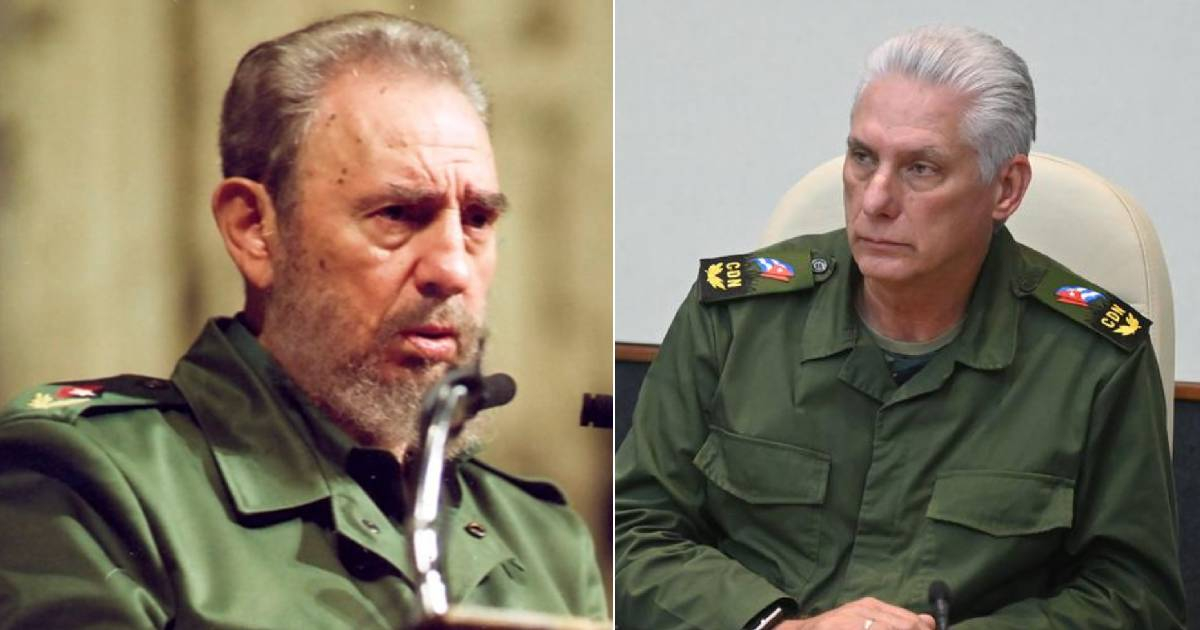
Nine years after the death of Fidel Castro, the Cuban leader Miguel Díaz-Canel once again invoked the figure of the dictator amidst the deepest deterioration that Cuba has experienced in decades.
In a message posted on X, Díaz-Canel assured that Castro, who passed away on a day like today in 2016, continues to communicate with the country through his "legacy" and his "immortality".
"Anyone who doubts it should read, watch, or listen to how much the Commander-in-Chief of the #CubanRevolution continues to speak to us, from the immortality of his ideas and the strength of his legacy, which continues to challenge us every day," wrote the Communist leader.
A message disconnected from the Cuban reality
Díaz-Canel's words come at an especially critical moment for the population, marked by: the worst economic crisis in 30 years; shortages of food and medicine; daily and prolonged blackouts; collapse of the healthcare system, increase in diseases and deterioration of basic infrastructure, and a historic migration exodus.
While the crisis continues to reach unprecedented levels of severity, the leader once again invokes the figure of Fidel Castro as an ideological guide, despite the fact that his political legacy is identified, both inside and outside the island, as the root of the structural crisis that Cuba is experiencing.
The use of the symbol Fidel in times of crisis
For many analysts and citizens, the government's continual reliance on the figure of Castro—nine years after his death—demonstrates a lack of independent leadership and an inability to provide concrete solutions to the national emergency.
The country today faces a landscape marked by economic paralysis, social discontent, thousands of political prisoners, and the repression unleashed after the protests of July 11, all under a government that insists on looking to the past to justify its continuity.
In the meantime, reality hits the citizen
Ordinary Cubans face daily challenges with salaries that barely last a week, empty markets, deteriorating hospitals, power outages exceeding 10 hours in rural areas, a collapsed transportation system, and an alarming rise in poverty.
In that context, Díaz-Canel's words generate criticism among citizens and sectors of the exile community who believe that the leader lives in an "ideological bubble" while the country sinks.
Filed under: