
Related videos:
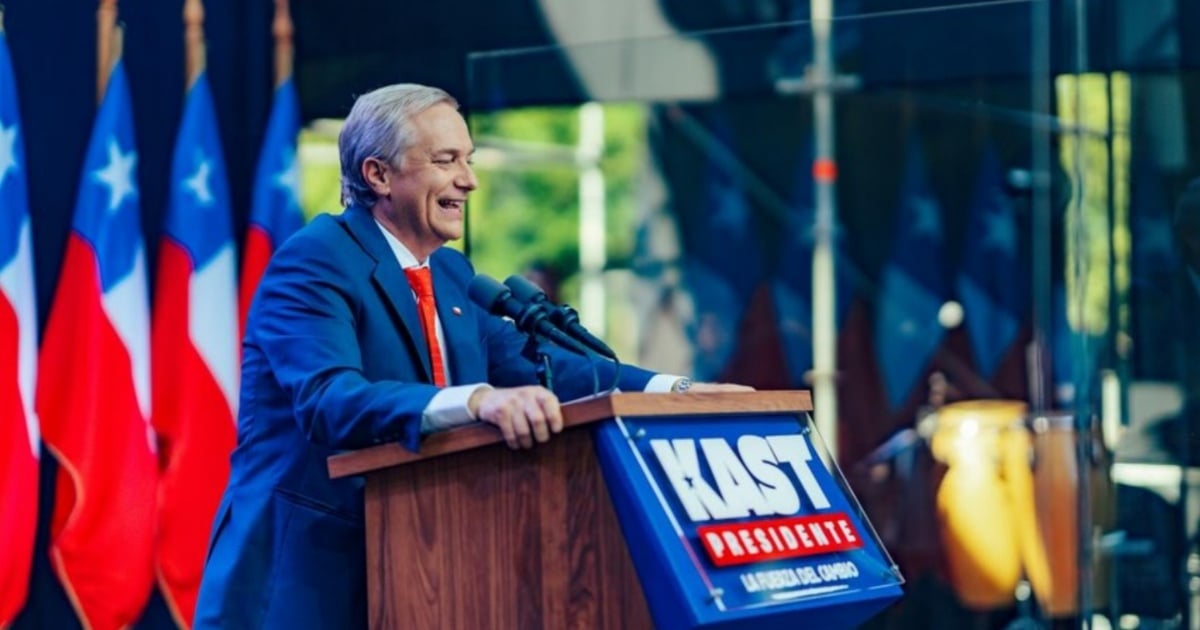
José Antonio Kast will be the next president of Chile for the next 4 years
After the third report from the Electoral Service of Chile (SERVEL), with 57.44% of the polls counted, the founder of the Republican Party reaches 59.16% of the votes, ahead of the communist candidate's 40.84%, giving him an unassailable lead.
Arturo Squella, the elected senator and president of the Republican Party, confirmed that Jara had called Kast to congratulate him and concede his defeat.
"Democracy spoke loud and clear. I just reached out to the elected president José Antonio Kast to wish him success for the good of Chile," Jara wrote shortly afterwards on X.
Kast, 59 years old, arrives at La Moneda on his third attempt, succeeding the leftist Gabriel Boric.
Their agenda focuses on a hardline approach to migration and security through the concept of "emergency governance."
"Chile is functioning backward: criminals are free and honest citizens live in confinement. The Unyielding Plan is the firm response that millions of Chileans were waiting for," he stated.
The new president also proposes a tax cut of 6 billion dollars within 18 months of his administration.
First round
On November 17, the official candidate Jeannette Jara and the far-right leader Kast, founder of the Republican Party, were set to meet for the runoff after the communist candidate led the elections without the necessary majority to govern.
With 98.4% of the polls counted, Jara secured 26.8% of the votes, compared to Kast's 23.9%, a minimal difference that kept one of the most polarized contests in recent years wide open.
The former Minister of Labor under President Gabriel Boric prevailed in the central regions —Coquimbo, Valparaíso, and the Metropolitan Region of Santiago— while Kast dominated in the southern part of the country, in areas such as La Araucanía, Los Lagos, and Biobío.
In the north, the populist economist Franco Parisi from the People's Party surprised everyone by achieving 19.6%, making him the key arbiter in the runoff election.
Filed under: