
Related videos:
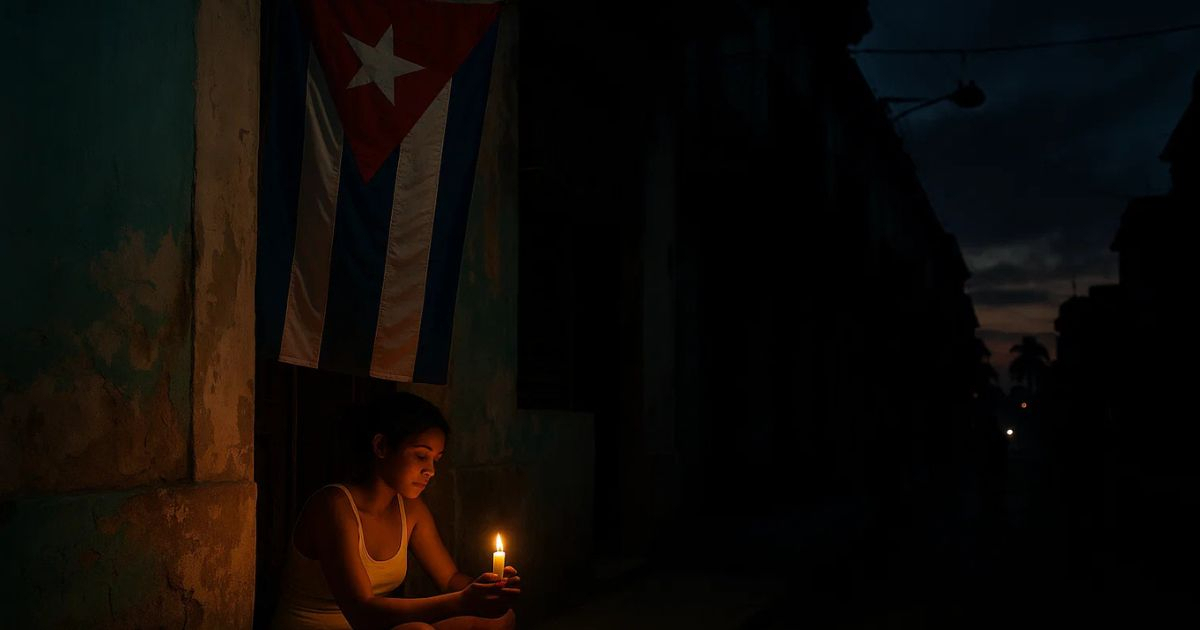
The Electric Union (UNE) reported that Cuba is once again facing widespread blackouts across the country, with sustained outages lasting 24 hours and a generation deficit approaching 2,000 megawatts (MW).
Thus indicated the entity in an information note published this Thursday, December 18, regarding the status of the National Electric System (SEN).
According to the report, on Wednesday the electric service was continuously affected. The peak impact due to generation capacity deficit was recorded at 6:30 PM, when it reached 1,948 MW, one of the highest figures reported in recent days.
This situation reflects the ongoing inability of the system to meet the national demand for electricity.
As for the state of the system this Thursday, at 6:00 AM the availability was 1,530 MW compared to a demand of 2,180 MW, resulting in an immediate shortfall of 660 MW due to capacity deficit.
For midday, UNE estimated that the impacts could reach about 1,100 MW.
The report highlights several serious incidents in thermal generation.
Units 5 of the Máximo Gómez CTE, 5 of the Nuevitas CTE, and 2 of the Felton CTE remain out of service.
In addition to these, four blocks are out of service due to scheduled maintenance at the CTE Mariel, Santa Cruz, and Carlos Manuel de Céspedes in Cienfuegos.
In total, the limitations in thermal generation account for 453 MW that are unavailable.
In addition to the technical problems, there are disruptions due to a lack of fuel and lubricants. The UNE reported that 91 distributed generation plants are out of service for this reason, which amounts to 768 MW.
In addition, another 82 MW are unavailable specifically due to a lack of lubricant, raising the total affected by such limitations to 850 MW.
As the peak nighttime hours approach, the situation is particularly critical.
The UNE predicts an availability of 1,530 MW against an estimated peak demand of 3,400 MW, which would result in a deficit of 1,870 MW. If these conditions persist, the impact could reach around 1,900 MW, leading to extensive blackouts across almost the entire country.
In the case of Havana, the Electric Company of the capital reported that the service was affected the previous day for nine hours and two minutes.
The maximum impact in the city was 282 MW at 6:00 PM, and service was restored at 11:02 PM.
According to the report, there were no impacts due to a generation capacity deficit during the early morning hours; however, the entity clarified that the interruptions in the capital are directly dependent on the demands of the SEN at the national level.
The 33 new photovoltaic solar parks contributed a total of 2,921 megawatt-hours (MWh) during the day, with a maximum power output of 600 MW delivered at midday.
However, this contribution is not enough to compensate for the multiple outages of thermal units and the fuel limitations.
The situation described by the electrical authorities confirms the ongoing energy crisis characterized by outages, extended maintenance, and a shortage of basic supplies, which continues to severely affect the daily lives of the Cuban population.
Filed under: