
Related videos:
The government of Nicaragua authorized the entry, transit, or parking in its territory of troops, ships, and aircraft from the Armed Forces of Russia, as well as from Cuba, the United States, Mexico, and Venezuela.
A presidential decree published in the Official Journal La Gaceta indicates that the measure will be effective from January 1 to June 30 of 2026, “for the purpose of mutual beneficial exchange and humanitarian assistance in cases of emergency.”
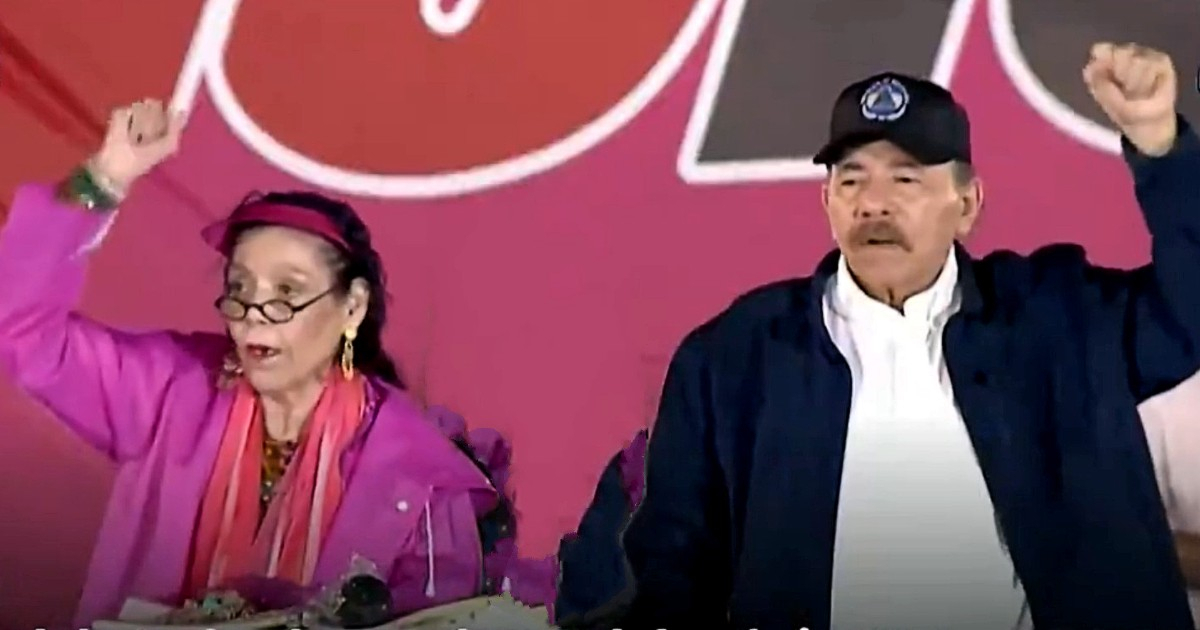
The agreement was signed by Daniel Ortega and his wife, Rosario Murillo.
The decree also includes the transit or presence of troops, ships, and aircraft from the armies of Guatemala, El Salvador, Honduras, and Dominican Republic, countries that are part of the Central American Armed Forces Conference (CFAC).
According to the document, the Russian military presence will participate alongside the Special Operations Command of the Nicaraguan Army in the exchange of experiences and training exercises related to humanitarian aid operations.
Additionally, actions for exchange and training are anticipated with the Nicaraguan Naval Force in operations against illicit activities in maritime spaces of the Caribbean Sea and in jurisdictional waters of the Pacific Ocean, as well as training related to search, rescue, and recovery in the event of emergencies or natural disasters.
The decree authorizes the entry of an unspecified number of Russian military personnel, ships, and aircraft during the indicated period.
The same "exchange and training" formula extends to military personnel from Venezuela, focusing on security tasks, planning humanitarian exercises, and disaster response.
In the case of Cuba and México, the entry for the exchange of humanitarian experiences and tasks is mentioned.
For the United States, the decree establishes that the arrival of personnel, ships, and aircraft must be pre-planned and coordinated with the Nicaraguan Army, for the purpose of conducting humanitarian aid operations and search, rescue, and recovery missions by air, sea, and land, including docking at ports and landing at national airports.
The measure must be ratified by Parliament, controlled by the ruling party, according to the published information.
It also arises at a time of extreme political tension due to the increasing military presence of the U.S. in waters near Venezuela.
Filed under: