
Related videos:
Cubans deported from the United States and sent to Mexico are finding themselves in a kind of limbo: they arrive without a legal status that allows them to live or work and end up surviving with informal jobs in markets, overcrowded shelters, or even on the streets, according to a report by Capital & Main from southern Mexico.
“I am lost in this country,” summarized one of the deportees interviewed after leaving a migrant detention center in Villahermosa, where he was released at night and without knowing what to do next.
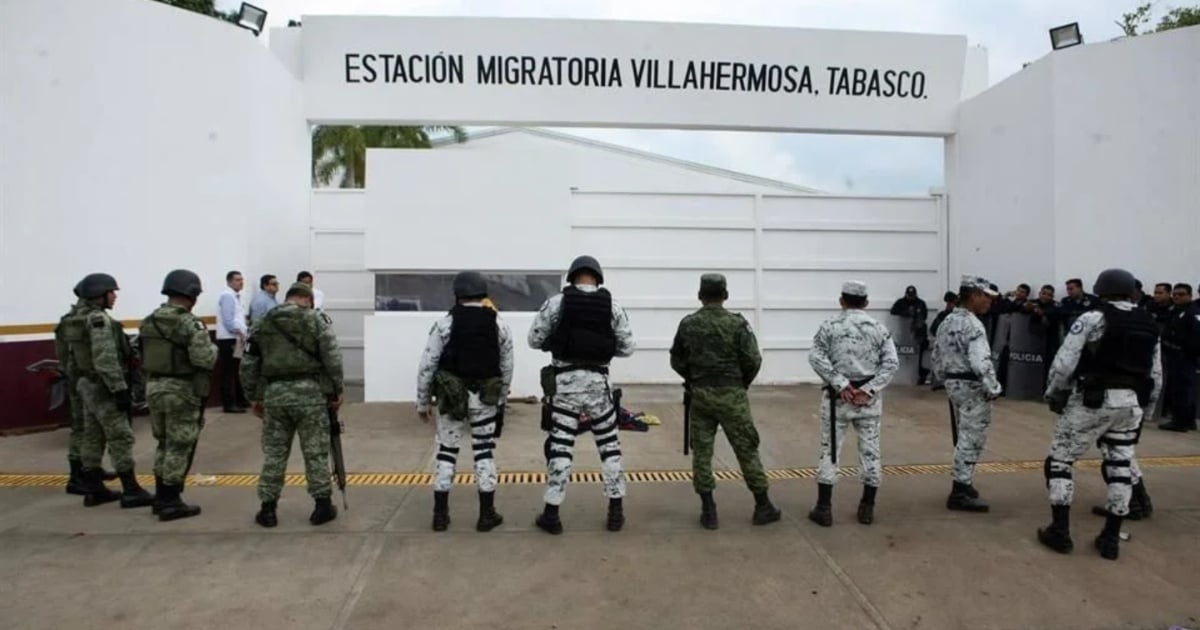
The report describes several Cubans working "in the black market" at the José María Pino Suárez Public Market in Villahermosa, after the U.S. government deported them to Mexico and the Mexican authorities transported them by bus to that city in Tabasco, a couple of hours from the border with Guatemala.
There, without papers and permits, some carry water jugs on delivery tricycles or manage fruit stands to be able to eat and pay for a place to sleep.
The research frames these cases within the strategy of the Donald Trump administration to seek agreements with third countries to deport individuals who are not originally from those destinations.
Capital & Main points out that, in addition to sending individuals to countries like El Salvador or African nations in other cases, the United States has been sending people from various countries in the Western Hemisphere to Mexico, including Cuba and Nicaragua.
In this scheme, Mexico welcomes the deported, but does not grant them legal status to reside or work, which pushes them into informality and vulnerability.
The report emphasizes that it is unclear how many individuals from third countries have been received by Mexico under this mechanism, as the country publishes periodic statistics on its own deported citizens but does not provide disaggregated data on other nationalities sent from the United States.
Yes, it cites a figure given in July by President Claudia Sheinbaum: Mexico would have received 6,525 deported individuals of other nationalities.
Capital & Main adds that the Department of Homeland Security and ICE did not respond to requests for comments, and that the Mexican government also did not answer questions on the matter.
According to human rights observers cited —the Coalition for the Human Rights of Immigrants and the Institute for Women in Migration (IMUMI)—, Mexico is relocating many of these deported individuals to Villahermosa, a city with approximately 834,000 inhabitants that, according to the report, has only one shelter for migrants.
That shelter, Oasis of Peace of the Holy Spirit Amparito, faces an especially complex situation because among the deportees are elderly individuals who lived for decades in the United States and now arrive without support networks, suffering from chronic illnesses and lacking resources to reintegrate.
The journey
The media details how the transfer works: once ICE decides to send a person to Mexico, they are put on a bus heading to the border; the deportees interviewed said they had crossed through various points, from Tijuana to Reynosa.
Once on the Mexican side, they are transported on another bus to Villahermosa, a journey that can take about 40 hours, depending on the crossing.
The bus arrives at an immigration detention center, and finally, they are released to decide where to go; one of the interviewees recounted that they were dropped off on the street around 11 p.m.
Among the cases mentioned is that of Louis Robaina, a Cuban who worked at a fruit stand in the Villahermosa market.
According to his testimony, he spent six years in prison in Miami after being convicted of fraud and money laundering, and was then transferred to immigration custody.
He said that a judge denied him protection from Cuba, but that Cuba refused to accept him back, and he ended up in Villahermosa at the beginning of summer.
He noted that he applied for asylum in Mexico and was waiting for the next steps in the process, while his family in the United States was helping him stay afloat.
The text also recounts the case of Damián De La Moneda, 49, who stated that his deportation occurred despite the fact that his criminal conviction happened over 20 years ago.
According to his account, he had rebuilt his life in Miami and was working with a Christian ministry, but after a traffic stop in Texas, ICE arrested him and sent him to Mexico even though he refused and filed a habeas corpus petition; the report indicates that court records show that the court did not process his request until after his arrival in Villahermosa.
Seniors, workers, and without a criminal record
A particularly harsh part of the report focuses on the elderly. Capital & Main mentions Ángel Insúa, 65 years old, with diabetes and hypertension, issues in one leg, and vision loss, who stated that he had lived in Orlando for about 45 years and lost his green card after a prison sentence decades ago.
He pointed out that during the deportation process, they took his money and a ring from him, and that he was chained.
It also mentions another Cuban with several health conditions (sciatica, high blood pressure, epilepsy, and asthma), who stated that he agreed to go to Mexico to avoid returning to Cuba, and Fidel Forten-García, 66 years old, deported without a phone and facing difficulties in communicating with his family and accessing medications.
Not all Cubans sent to Mexico have criminal records.
It presents the case of Yamil, who stated that he lost his asylum in 2017 and has been regularly reporting to ICE, unable to be deported to Cuba.
He stated that he married a U.S. citizen, but a lawyer explained to him that in order to obtain residency through that route, he would have to leave the United States and ask for forgiveness for the time spent without status.
According to what he said, when he went to his appointment for a check-up, he was detained, and shortly after, he found himself in Mexican territory.
Now try to make do with salaries in pesos while in the U.S. debts are piling up and you're receiving calls from creditors.
Filed under: