
Related videos:
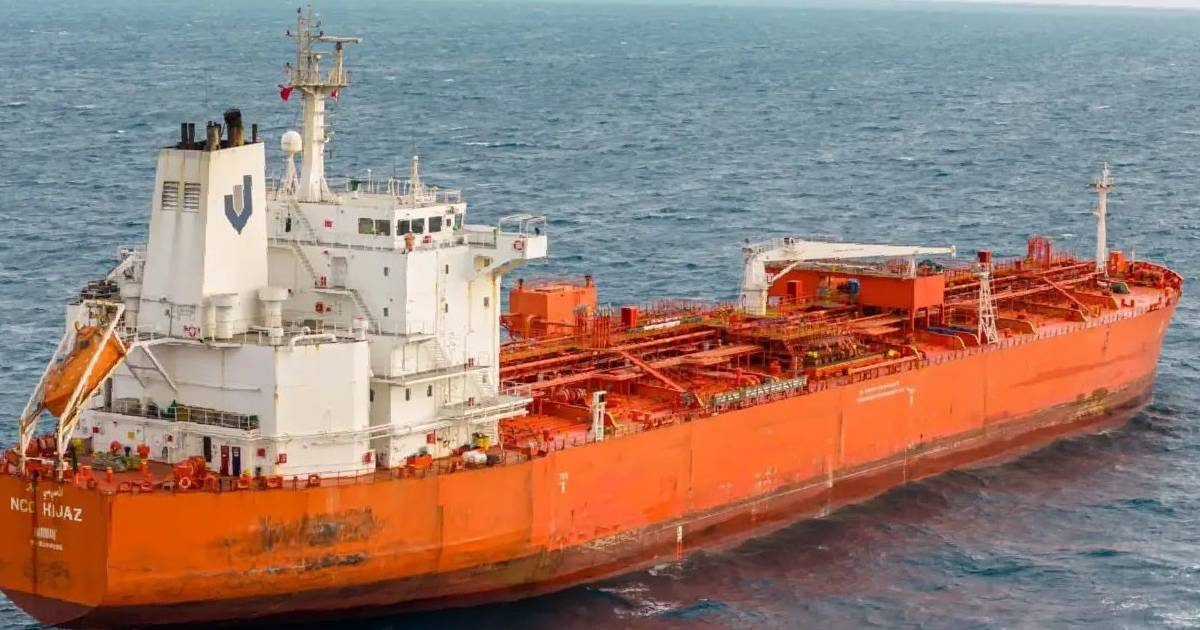
The vessel Jasper, sanctioned by the European Union for being part of the so-called "ghost fleet" used by Russia to transport oil, is expected to arrive at the port of Matanzas on Tuesday, December 23, according to satellite tracking data cited by Diario de Cuba.
The tanker, flying the flag of Vanuatu, carries approximately 300,000 barrels of Russian crude oil, according to information provided to the mentioned outlet by Jorge Piñón, non-resident researcher at the Energy Institute of the University of Texas.
The arrival of the Jasper to the island occurs just a few days after the United States strengthened the maritime blockade against sanctioned vessels transporting Venezuelan oil, which has led to the capture of three tankers in the last ten days.
In light of this situation, Russia demanded explanations from the United States last week regarding the seizure of an oil tanker in waters near Venezuela, an action that was announced the day before by the U.S. President Donald Trump as part of a crackdown on drug trafficking and oil smuggling.
The Russian Foreign Minister, Sergei Lavrov, expressed his concern and stated that he hoped that "out of respect for the other members of the international community, the United States would explain on what basis it is taking those measures."
The context raises a key question: Will the ships sanctioned by the European Union be able to continue operating in the Caribbean without similar consequences?
According to the EU, Jasper "is involved in the export of Russian crude oil and petroleum products" and is linked to the Turkish company Beks Tanker Isletmeciligi AS, one of the leading operators in that country, which in 2023 transported hundreds of millions of barrels of Russian crude oil and its derivatives.
Starting in March 2024, the tanker is managed by the Turkish company Sand Gemi Isletmeciligi AS. According to Brussels, eight tankers from these companies were operated by Beks Tanker in 2023 and early 2024, while another was managed by a previously sanctioned subsidiary, which served as a basis for the imposition of restrictive measures.
On May 20, 2025, the European Union formally sanctioned the Jasper for contributing to the Kremlin's revenue to sustain the invasion of Ukraine, noting that the vessel was using "high-risk irregular shipping practices," in violation of International Maritime Organization regulations. Switzerland joined the sanctions in June and the United Kingdom in July.
The arrival of Russian crude oil in Cuba coincides with the arrival of two other shipments from Mexico, transported by vessels managed by GAESA, the business conglomerate of the Cuban Armed Forces. The Ocean Mariner is scheduled to arrive in Havana on Monday, December 22, while the Eugenia Gas is expected to reach Moa during the same week.
Both ships, flying the flag of Liberia, loaded fuel at the Pajaritos petrochemical complex, owned by the Mexican state company PEMEX, and are transporting around 80,000 barrels.
Cuba needs about 110,000 barrels per day to meet its basic energy requirements, of which around 40,000 come from domestic production, according to official estimates.
Currently, the U.S. naval deployment off the coast of Venezuela and the reduction in shipments from Mexico—from an average of 22,000-25,000 barrels per day to about 5,000—have placed the island in an extreme energy situation.
Filed under: