
Related videos:
In the days leading up to Christmas, food prices in Cuban markets have surged, reflecting the deep economic crisis the island is experiencing.
The reports collected by CiberCuba on December 22nd show significant increases in both imported products and those produced domestically.
Prices in SMEs and private markets
In private establishments, known as MIPYMES, imported rice is sold for between 690 and 840 pesos per kilogram, while black beans can reach up to 840 pesos for a 500-gram bag.
The imported coffee is priced around 2,100 to 2,200 pesos per package, and sugar is sold for 290 to 300 pesos per pound.
Regarding meats, the pork loin is sold for between 1,150 and 1,300 pesos per pound, the leg at 1,150 pesos, and the minced meat at 320 pesos per pound.
The chicken breast —one of the most sought-after products during this time— costs between 4,500 and 5,100 pesos per 2-kilogram package, while a 2.5 kg package reaches 6,100 pesos. The whole chicken is offered at 2,200 pesos for 1.3 kilograms.
The carton of eggs containing 30 units is sold for 3,000 pesos, or 100 pesos per unit, a price that is out of reach for many Cubans, whose average salary hovers around 5,000 pesos monthly.
Agricultural products also reflect rising prices
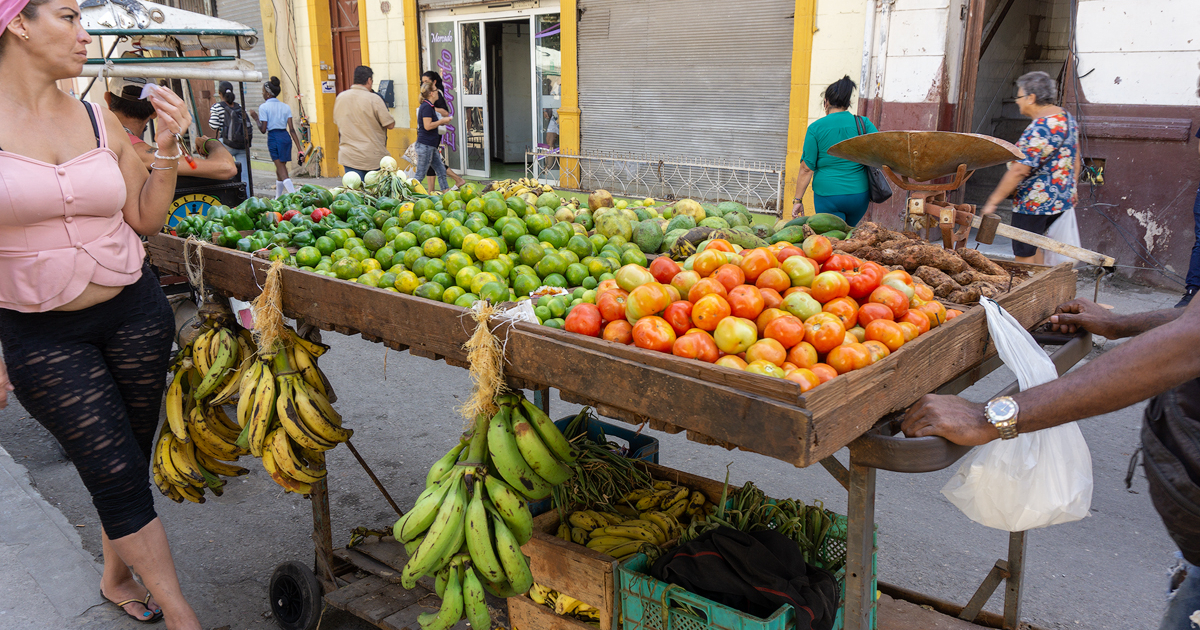
In the agromarkets, where prices were traditionally lower, the situation is not better. The papaya is sold for between 80 and 100 pesos per pound, the salad tomato costs 150 pesos, and the pineapple reaches 250 pesos per unit.
The onion —white or purple— remains around 350 pesos per bunch, while the medium white onion reaches 450 pesos per pound. The cucumber and guava are sold at 150 pesos per pound, the bell pepper at 260 pesos, and the lemon at between 500 and 550 pesos.
Among the cheapest products are cassava and sweet potato, priced at 60 and 50 pesos per pound respectively, although even these prices seem high when compared to previous years.
A Christmas marked by scarcity and inflation
The rise in prices in Cuba further complicates the possibility of having a traditional Christmas dinner. The combination of scarcity, inflation, and the devaluation of the Cuban peso has turned basic food items into luxury goods.
While the government continues to blame the U.S. embargo for the crisis, the population is facing an increasingly dollarized market, with prices changing daily and no short-term relief in sight.
"This year, I can't buy pork or rice," said a woman from Havana. "Just the price of eggs takes up half my salary."
On the eve of Christmas Eve, the Cuban table reflects the harsh economic reality of the country, marked by food shortages, a salary that is insufficient for living, darkness, and the empty chairs of loved ones.
Filed under: