
Related videos:
In the midst of a Cuba suffocated by blackouts, shortages, and repression, the Catholic Church once again finds itself at the center of the confrontation with the authorities.
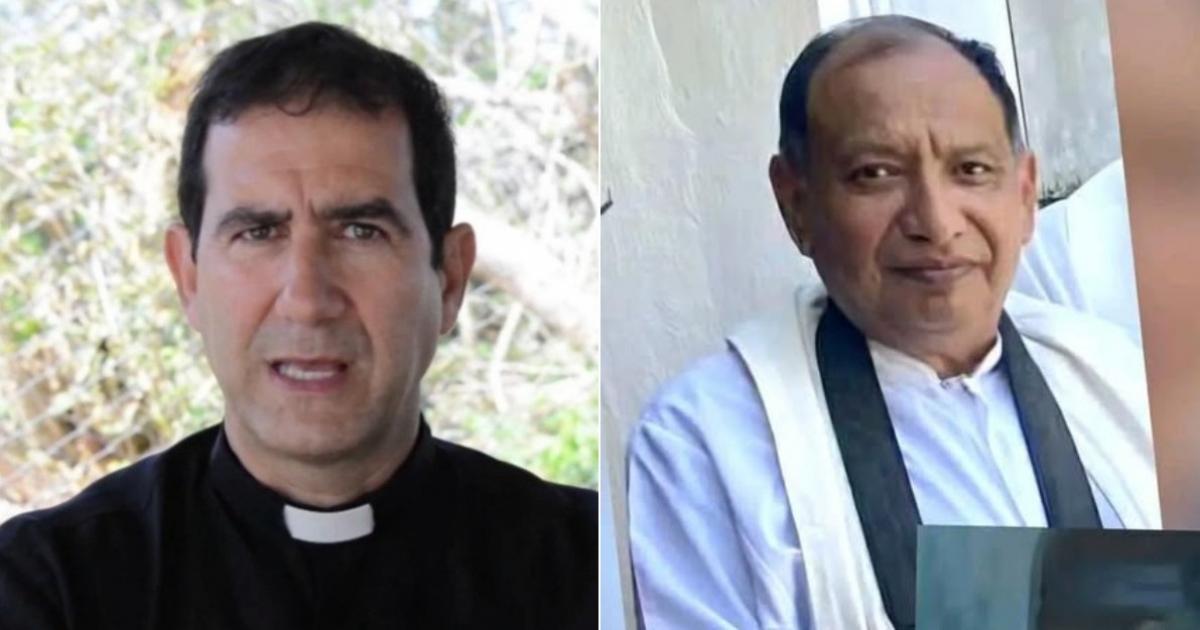
The Cuban priest Alberto Reyes Pías published a strong message in which he defends the historical role of the Church as "the voice of the voiceless" following the recent expulsion of the Mexican priest José Ramírez, who was sanctioned by the regime after a gesture of solidarity with the people protesting against the power outages.
In his most recent reflection, Reyes recalls that the mission of the Church is not limited to religious preaching, but also involves denouncing everything that "harms, crushes, or destroys the human being."
According to him, this role makes the Church an uncomfortable voice for any system that seeks to perpetuate itself by suppressing freedoms, something that, he claims, explains the fear dictatorships have towards symbols like the bells of temples.
"Dictatorships fear bells, because they know their sound tastes like freedom," wrote Reyes.
For him, the ringing of a church bell is not just a liturgical tradition, but an audible reminder that the people are not alone, that there is an institution that accompanies and supports their cry.
That symbolism became evident when, last week, the Castro regime decided not to renew the temporary residence of the Mexican priest José Ramírez, a member of the Congregation of the Mission, after he rang the bells of the La Milagrosa temple in the Havana neighborhood of Santos Suárez, while residents banged on pots and protested against the power outages.
It was not a violent gesture, but a peaceful expression of solidarity with a population exhausted by the lack of electricity, food, and basic services.
It happened on December 8 and went viral through a video published by the activist Adelth Bonne Gamboa, where the sound of pots is heard mixed with the ringing of the bells.
Subsequently, Martí Noticias confirmed that State Security ordered the priest to leave the country and return to Mexico, thus effecting a de facto expulsion.
Reyes Pías emphasized that this retaliation is not an isolated incident.
He recalled that previously -in 2022- Father David Pantaleón, the superior of the Jesuits in Cuba, was also expelled for his defense of the political prisoners from July 11 and for denouncing the government's injustices.
Both cases, he asserts, illustrate a pattern of harassment against ecclesial voices that dare to publicly support the people in their demands.
"Will this silence the Church? No. It will intimidate some, slow others down a bit, but the Church cannot cease to be a voice, and as a Church, we are all part of it; here and there, that voice will continue to rise for those who have no voice," he pointed out.
Far from being intimidated, Reyes warns that the Church will not abandon its mission.
It ensures that the voices of bishops calling for "structural, social, economic, and political changes" will continue to rise, warning that "things are not well. We cannot go on like this. Something must be done to save Cuba."
The Father emphasizes that this is the voice of the whole Church: that of priests, religious, and committed laypeople, both Cubans and foreigners, who continue to denounce injustices, stand by the most vulnerable, and remind those in power that human dignity cannot be subordinated to political interests.
In that regard, he mentioned figures like Oswaldo Payá, Dagoberto Valdés, and many other believers who, from various positions, have taken the risk of speaking out when others remain silent.
Reyes insists that repression will not succeed in silencing the Church. He emphasizes that the very essence of the Church is to be a voice, and that this identity cannot be abandoned without betraying itself.
"As a Church, we are all together," he reminds us, asserting that this voice will continue to rise "here or there," in a homily, in a pastoral letter, in a gesture of solidarity, or even in the sound of another bell.
"The Church is called to be the voice of conscience for any social regime, regardless of its political spectrum," he said.
In his reflection, the parish priest makes it clear that the bells of La Milagrosa, which Father Ramírez had rung in Havana before being expelled, will not be the last to sound.
For him, every bell tower that rises, every peal that is heard in the midst of imposed silence, will be a sign that there are still spaces of freedom, awareness, and support for a people enduring blackouts, scarcity, repression, and an unprecedented social crisis.
In that context, Alberto Reyes' message transforms into something more than a spiritual reflection: it is a moral denunciation and an explicit endorsement of those who dare to demand dignity.
The sound of a bell is not a subversive act, but a reminder that consciousness cannot be confined, that faith cannot be tamed, and that even under pressure, there will always be a voice that rises again for those who have no voice.
Filed under: