
Related videos:
Important notice: This article is a satire. Everything you will read below is humor —both dark and light— inspired by the absurd way in which the Cuban regime explains its perpetual food crisis.
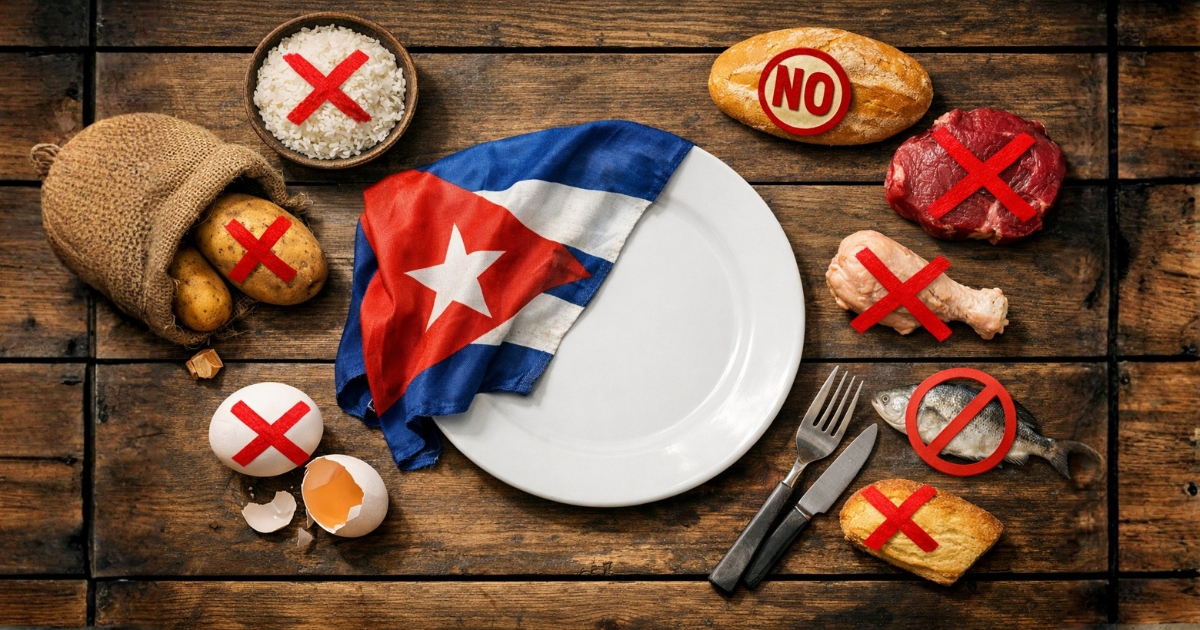
In a new act of revolutionary brilliance, the Cuban government seems to have found the culprit behind the food shortage: "non-national" foods. Yes, according to this logic, the problem lies not in poor management or lack of investment, but in the fact that Cubans have the bad habit of eating things "that aren't from here."
The magical solution, it seems, would be to eliminate from the diet any food that did not originate from Cuban soil. Thus, regardless of whether the fields remain unproductive, we could achieve "food sovereignty." Of course, the menu would be empty, but at least we would eat with revolutionary pride.
Below, we present —with patriotic affection and Creole humor— the foods that, according to this official logic, should be removed from the Cuban plate. Spoiler: in the end, not even garlic will remain. Enjoy your meal, compatriots!
Papa (potato): the treacherous one of the Andes
The despised potato tops the blacklist. This South American tuber "has never adapted to the climate and soils of Cuba," some officials claim. The blame, of course, is not on the lack of resources or poor governance: it's the potato that isn't cooperating with the Revolution. So forget about mashed potatoes or French fries. If malanga shows up, consider yourself lucky.
Rice: the Asian grain they want to remove from the congrí
"We are not Asians. Eating rice is not a Cuban habit," said an official with a smile. According to him, culinary traditions need to change, even though we have been eating rice and beans for centuries. Ironically, before 1959, Cuba produced more rice than it does now. But it doesn’t matter: the revolutionary future will be based on boiled sweet potatoes… if they appear.
Beef: the Uruguayan luxury that is a crime here
It's been a while since the average Cuban has tasted beef, and it seems there's a "patriotic" reason for that: "Cubans have stopped eating beef because we are not Uruguayans." In the end, the number of cattle is limited, and selling meat freely is almost a sin. So, goodbye to picadillo and ropa vieja. Being a good Cuban now means saying "moo" from a distance.
Fish: the height of indulgence on an island surrounded by the sea
We could also stop eating fish because—according to old official excuses—“there are hardly any fish in the waters of Cuba.” Apparently, the Caribbean is a protein-free soup. By that logic, the pargo stew and fish fillet are colonial remnants. Even the claria, of African origin, could be accused of being foreign.
Eggs: the anti-patriotic omelet
Another suspect is the humble chicken egg. If the hens aren't Cuban, why keep eating their eggs? After all, they are hardly available anymore. Perhaps we should return to casabe and jutía, like the Taínos did. The next time you look at a scrambled egg, remember: you could be betraying food sovereignty.
Bread (wheat): out with the colonial bread, in with the national casabe
Wheat does not grow well in the Caribbean and was brought by the colonizers. Therefore, bread and cookies would be "imported vices." Following the revolutionary manual, the right thing to do would be to return to casabe, which also does not require electricity. Imagine an ideal breakfast: coffee without milk, casabe without butter, and a lit candle. Food and spiritual sovereignty at the same time!
Chicken: the Yankee infiltrator of the Cuban dish
The uncomfortable truth is that most of the chicken consumed in Cuba comes from the United States. Yes, from the empire. But since the current doctrine dictates the elimination of foreign imports, perhaps we should also give up frozen chicken drumsticks. Of course, that would remove 40% of the protein we consume... but who needs protein when you have ideology?
In summary, the official strategy seems to be to blame food rather than those who have been destroying agriculture for decades. As a social media user put it: "According to the Government, the problem is not the economic disaster, it’s that Cubans eat poorly." Perhaps the day we stop eating "non-native" foods—or stop eating altogether—Cuba will achieve its true food independence.
Final note: This article is a satire. Laughing is still free (for now).
Filed under: